
Left-Handed Kids: Helping With Scissors and Writing Without the Struggle
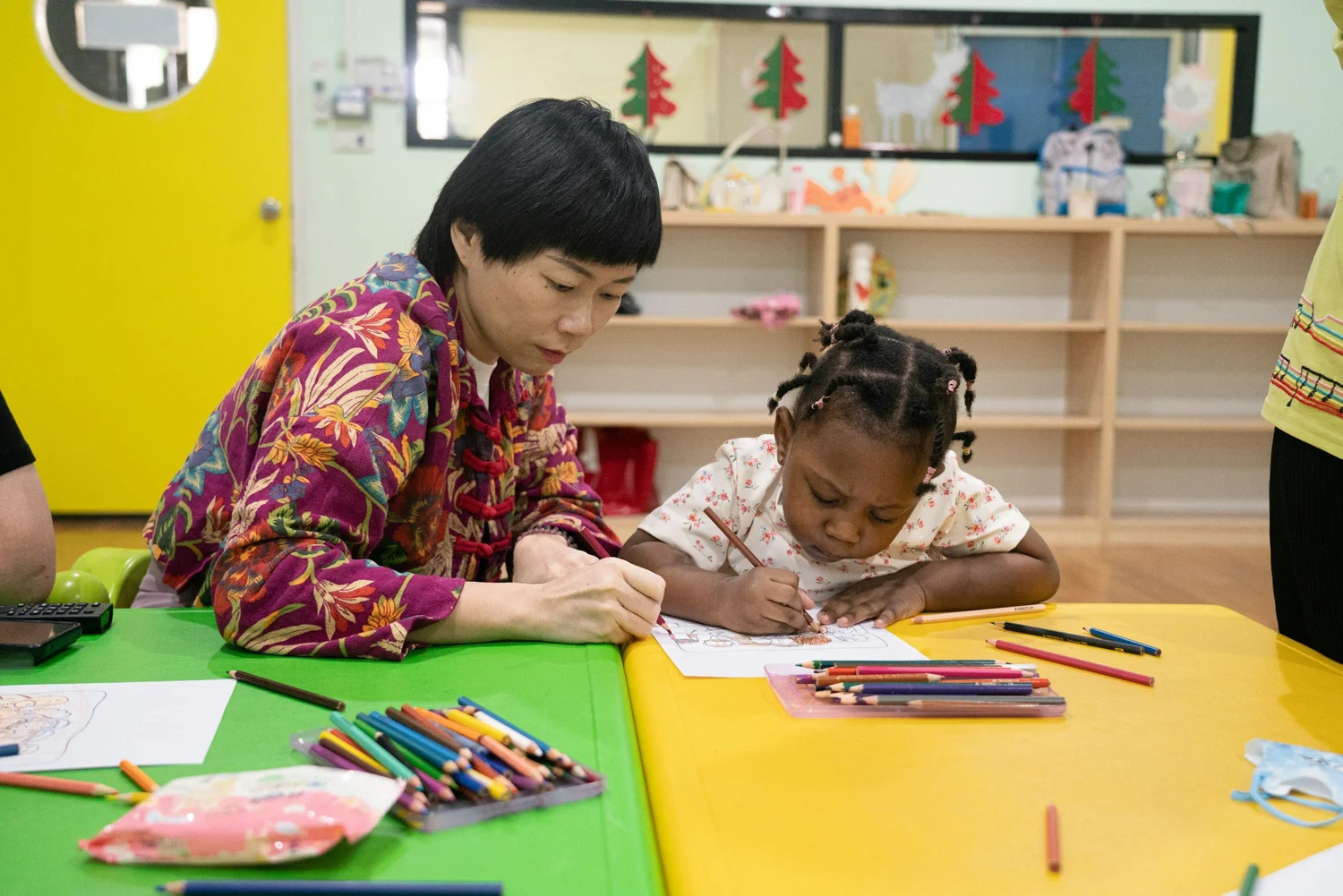
You notice your little one keeps reaching for the crayon with their left hand. Then you spot the smudged, silver-edged mess dragging across the page, the scissors that just won't cut, the paper turned every which way — and a tiny voice in your head wonders if you should be "correcting" it. Take a breath. Being left-handed is not a problem to fix, and once you know a few small tweaks, left-handed child writing gets so much smoother for everyone.
Here's what I want you to hear first: roughly one in ten kids is a lefty, and a left hand is every bit as capable as a right one. The struggles you're seeing almost never come from the hand itself — they come from a world (and a lot of worksheets) built for righties. Fix the setup, and most of the frustration melts away. Let me walk you through the order I actually support in sessions, my go-to trick, and the playful ways to build it at home.
Helping a Left-Handed Child With Writing: What to Support at Each Age
Left-handers hit the exact same milestones as righties, on the exact same timeline — there's no delay baked into being a lefty. What changes is which little setup tweaks matter most at each stage. Read this as a stage guide, not a deadline, and go by where your child is.
2–3 years: let the hand choose
Around this age a true hand preference is still settling in — lots of toddlers switch back and forth, and that's completely normal. Please don't nudge a child toward the "right" hand. Offer crayons, spoons, and toys at their midline (right in front of their belly) and let them reach with whoever wants the job. The hand that keeps winning is the one to follow.
Hand preference3–4 years: set the angle early
Once the left hand is clearly the leader, this is the sweet spot to build good habits before any "bad" ones stick. Tilt their paper so the top-right corner is higher, seat them so no righty is bumping their left elbow, and cheer on big scribbles. My correct pencil grip for kids guide shows what a healthy grip looks like as it develops.
Setup4–5 years: scissors that actually cut
Cutting is where lefties get quietly stuck, because most "kid" scissors are molded for a right hand and simply crush the paper in a left one. This is the age to get true left-handed (or spring-loaded ambidextrous) scissors and practice the basics. My cutting skills guide breaks down the whole cutting sequence.
Scissors5–6+ years: beat the smudge
As real letters and words arrive, the classic lefty gripe shows up: the writing hand drags right across what was just written, smearing pencil and hiding the work. This is the stage where paper angle, a slightly higher grip, and light coming from the right make a genuine, visible difference.
HandwritingNotice there's no "behind" anywhere on that list — just a handful of small adjustments layered in at the right moment. Get those in place and a left-handed kiddo cruises.
✏️ My go-to trick: "Tilt Right, Hold High, Light on the Right"
This is the whole left-handed handwriting fix in one little chant, and I use it constantly. Tilt right: angle the paper so the top-right corner points up (the mirror image of what a righty does) — this drops the wrist below the writing line so it stops dragging through fresh pencil. Hold high: have them pinch the pencil a touch higher up, about an inch from the tip, so their own hand isn't blocking the view of what they just wrote. Light on the right: put the lamp (or the window) on their right side so their writing hand doesn't cast a shadow over the page. Three tiny changes, zero dollars, and the smudge-and-squint battle basically disappears. Tape a little arrow on the desk pointing to where the paper corner should sit — kids love resetting it themselves.

Playful Ways to Build It With Stuff You Already Have
None of this needs special "lefty" gear or drills. The best practice barely looks like practice — it just quietly builds the strength and coordination a left hand leans on. Here are the games I reach for most.
1. Pop bubble wrap left-to-right
Have your kiddo pop a strip of bubble wrap starting on the left and moving right — the same direction writing flows. It's silly, satisfying hand-strength work that also trains the left-to-right sweep lefties sometimes have to think a little harder about.
Directionality2. Vertical scribbles on the wall
Tape paper to the wall or the fridge and let them color big and bold standing up. Working on a vertical surface builds the wrist and shoulder strength that steadies both cutting and writing — and it naturally sets the wrist in a smudge-proof position.
Strength3. Snip play-dough snakes
Before paper, let scissors "cut" rolled play-dough snakes or drinking straws. It's forgiving, it builds the open-close hand motion, and with a proper left-handed pair it lets a lefty feel a clean cut — the confidence booster that makes paper less scary.
Cutting4. Trace in a salt tray
Pour a thin layer of salt or sugar on a dark tray and let them draw letters and shapes with their left index finger. A quick shake erases every "mistake," so there's no pressure — and it grooves the movement without any smudge to fight.
Sensory5. Sky-write it big first
Draw the letter or shape huge in the air together before it hits paper — "down, around, up!" Big arm movements teach the path before tiny fingers try it, and it works exactly the same for a left hand as a right one.
Gross motorWant even more no-prep hand-strength ideas that help any little hand — righty or lefty? My roundup of fine motor activities using things you already have is packed with clothespin, tong, and sticker games. And if the classroom side of being a lefty is on your mind too — seating, worksheets, the whole school setup — I cover all of that in left-handed at school.
Heads up: this post has Amazon affiliate links. If you grab something through them, Tiny Hands earns a small commission at no extra cost to you — it's what keeps the free worksheets free. Thank you!
Two lefty helpers I actually reach for
You can do all of this with a crayon and a tilted page — but two grab-it-off-the-shelf tools make a lefty's life easier. An LCD writing tablet is a little magic trick for a kiddo who smudges everything: nothing to smear, no shadow to squint through, just draw, doodle, and erase with one button. And for cutting, a pair of true left-handed scissors — reversed and blunt-tipped for little hands — finally lets a lefty cut cleanly instead of crumpling the paper. (Right-handed "kid" scissors are the reason so many lefties think they're "bad at cutting" — they're not, the tool was just wrong.)
When to Check In With an OT
First, the reassuring part: being left-handed is not a delay, a disorder, or anything that needs fixing. A smudgy page, a funny paper angle, scissors that fight back — those are setup problems, not child problems, and the tweaks above solve most of them.
That said, a quick, no-pressure chat with a pediatric OT can be reassuring if — well past the ages above — you're consistently seeing things like a child who still hasn't settled on a hand by five or six and switches mid-task in a way that frustrates them, who grips so tightly or twists the wrist so far that writing hurts or tires them fast, who avoids drawing, cutting, and writing altogether and gets upset when asked, or whose letters stay far harder to form than same-age friends' across several months even with the setup dialed in.
None of those is an emergency — they're gentle "let's take a closer look" flags, and there's almost always a simple, playful tweak that helps. Once the setup clicks, letters are the natural next step, and my guide on teaching your child to write their name works beautifully for lefties too. You've got this.
Want the print-and-play version?
My Scissor Skills Pages live in the membership — big, bold cutting lines that build from straight snips to curves and corners, perfect for a lefty getting comfortable with a proper pair of scissors. Hand your kiddo a page and let it run itself. Ready in about two minutes.
Get the Scissor Skills PagesNew here? Grab the free pack first 🎁
Join the list and I'll send you the Fine Motor Starter Pack — 40+ print-ready pages to build those little hands at home, whichever hand your kiddo leads with.
Send My Free PackWant the whole library, sorted and ready? Peek at the membership →
This post is for learning and support — it isn't a diagnosis. © Tiny Hands