
Beginner Scissor Skills: Start With Tongs, Not Scissors
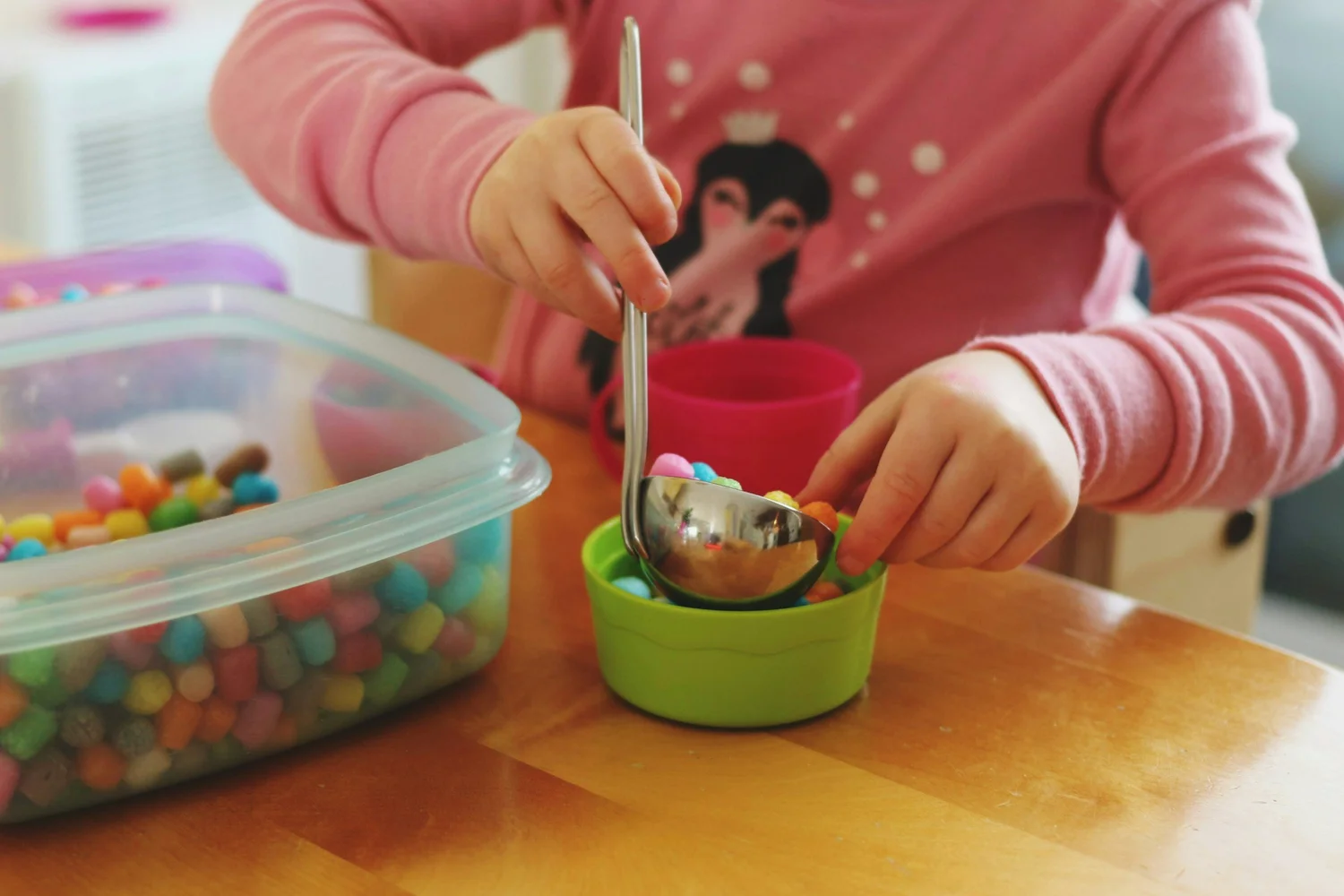
“When should my kiddo start using scissors?” It's the question I get most from parents — and my answer always catches them off guard: you start before the scissors ever come out. The thing nobody tells you is that scissor skills don't start with scissors. They start with the open-shut hand motion, and you can build that for weeks before a real blade enters the picture.
Here's exactly how I start with the littlest kids in my OT sessions: scoop tongs first, then plastic scissors. Two cheap tools, zero pressure, and a whole lot of sneaky hand-strengthening disguised as play.
Heads up: this post has Amazon affiliate links — if you grab something through them, Tiny Hands earns a small commission at no extra cost to you. Thanks for keeping the free worksheets free!
Why I start before the scissors
Cutting is really just open, shut, open, shut — while the other hand holds and turns the paper. That's a lot of jobs for one little body. If the hand isn't strong enough to open and close on demand yet, handing over scissors just leads to frustration. So we practice the motion first with something safe and satisfying.
Tool one: scoop tongs
Scoop tongs are my number-one starter tool. That squeeze-and-release is the exact motion scissors need, and because both hands get involved — one tongs, one holds the bowl — you're building bilateral coordination too. They're forgiving, they're fun, and a toddler will happily "rescue" pom-poms for ten minutes straight without realizing they're working.
The pair I use are these scoop tongs from Amazon — chunky enough for a toddler fist, light enough that the squeeze isn't a fight.
Sensory bin ideas with scoop tongs
This is where the magic happens. Drop the tongs into a bin and suddenly "practice" turns into the best game of the afternoon. Start easy and light, then work up to slippery and small as their grip gets stronger. A few of my go-tos:
Cotton ball snow scoop
Lightest possible win — perfect for a first try. Scoop cotton balls from a bowl into a muffin tin. Easy squeeze, instant success, big confidence.
Hand strength · first winPom-pom color sort
Tong pom-poms out of a bin and drop one color into each cup or egg-carton cup. You sneak in color sorting and counting while the hands do the work.
Sorting · pincer prepFeed the hungry monster
Cut a mouth in an old container or shoebox and let them "feed" it pom-poms, crinkle paper, or dry pasta with the tongs. Open, shut, chomp — over and over.
Repetition · motor planningDry bean or pasta dig
Fill a bin with dry pasta or beans and hide little treasures inside — letters, coins, mini animals. They scoop and dig to find each one, then drop it in a bucket.
Hand strength · letter huntWater bead rescue
Once they've got the hang of it, slippery is the next level. Fish squishy water beads out of water and into a cup — they squirt away, so it takes a real, controlled squeeze.
Grip control · challengeIce cube transfer
Cold, slippery, and a little tricky — tong ice cubes from a bowl of water into an empty tray and watch them shrink. Bonus sensory input from the chill.
Endurance · sensoryBackyard nature bin
Acorns, pebbles, pinecones, leaves — tong your finds from a bin of sand or dirt into sorting buckets. Free, outdoorsy, and great for bigger squeezes.
Bilateral · sortingStart light, then make it slippery
Cotton balls and pom-poms are easy to grab, so they're great for building confidence. Once that's solid, switch to wet water beads, ice, or cooked noodles — slippery things force a stronger, more controlled squeeze. Same tongs, brand-new challenge.
Tool two: plastic scissors
When the squeeze is getting strong and your kiddo can open and shut the tongs with control, it's time for the first real cuts — with plastic scissors. They cut paper and playdough but not hair, skin, or much of anything you'd worry about, so you can relax and let them learn. That safety net is everything for a nervous first-timer (and a nervous parent).
I start everyone on these plastic safety scissors. First we snip playdough snakes — one squeeze, one cut — then cooked spaghetti (slippery, silly, and a total kid favorite), then thin paper strips, and from there toward cutting on a line. Tiny snips count as a win; you're not aiming for shapes yet.
The two tools I start every beginner with
Scoop tongs to build the squeeze, plastic scissors for those first safe cuts. Cheap, durable, and they grow with your kiddo.
How I move from tongs to scissors
There's no rush and no exact date — you follow the hands, not the calendar. When tongs feel easy and your kiddo can squeeze on purpose (not just slam them shut), bring in the plastic scissors for snipping. Keep the tongs in the rotation too; they're still building strength. And if your kiddo can snip but can't pry the scissors back open on their own, Koopy spring-assist scissors are a lifesaver — they spring open after every cut, so the only job left is the squeeze. The day those little snips turn into a cut across a whole strip, you'll know the groundwork paid off.
My First Snips: Start Here
My first-snips strips start cutting before scissors feel scary — short, single-snip lines built for brand-new little cutters.
Grab It in the LibraryThis post is for learning and support — it isn't a diagnosis. © Tiny Hands