
Scissor Skills by Age: What's Actually Normal
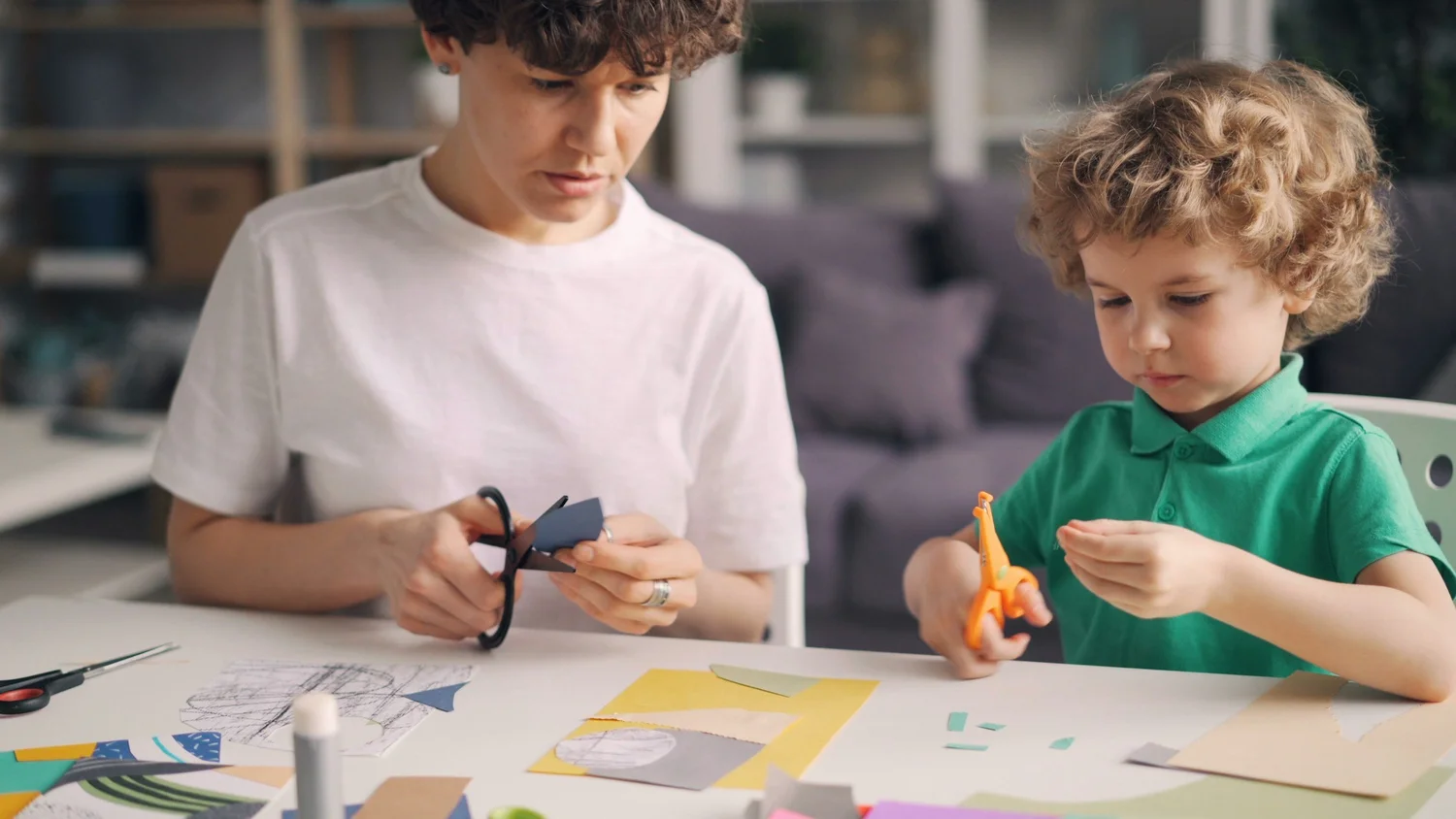
Somewhere around age three, almost every parent has the same little panic: the kid next to yours at the birthday party is cutting out shapes like a tiny tailor, and yours is still chewing on the scissors. Deep breath — cutting is a skill that builds in steps, and most kids are right on track even when it doesn't look like it.
Here's the timeline I actually use in my OT sessions.
The real timeline
Before scissors (any age)
The open-shut hand motion comes first. Squeezing spray bottles, using scoop tongs in a sensory bin, tearing paper — that's all scissor prep in disguise.
First snips (~2–3 years)
Single little snips along the edge of a paper strip or a playdough snake. One squeeze, one cut. That's the whole skill right now — and it's enough.
Cutting on a line (~3–4 years)
Now they can keep the scissors moving forward across a strip, then follow a thick straight line without stopping.
Curves & shapes (~4–6 years)
Circles, then simple shapes, then trickier ones with smooth turns. This is the longest stage — give it time.
The thumbs-up trick
Scissors work best when both thumbs point at the ceiling. If your kiddo's elbow wings out and the whole hand flips sideways, try this: tuck a small stuffed animal between their upper arm and their body and ask them to keep the stuffy from falling. The elbow stays in, the thumb stays up, and the cuts suddenly get cleaner. It feels like a game — that's the point.
Let them cut weird stuff
Paper is honestly the boring option. Playdough snakes, paper straws, junk mail, ribbon, leaves from the yard — and the all-time favorite, cooked spaghetti. Slippery, silly, and a great workout for little hands.
The scissors I reach for
For brand-new cutters I start with plastic safety scissors — blunt enough to relax about, cheap enough to keep a few around. And if your kiddo can snip but can't get the scissors back open on their own yet, Koopy spring-assist scissors are my secret weapon: they spring open by themselves after each cut, so all your child has to practice is the squeeze.
Heads up: this post has Amazon affiliate links — if you grab something through them, Tiny Hands earns a small commission at no extra cost to you. Thanks for keeping the free worksheets free!
The two scissors I hand new cutters
Plain safety scissors for those first snips, and spring-assist scissors that reopen themselves when the squeeze is still hard work.
When to check in
Cutting takes a lot of practice, so don't rush to worry. But if your child can't snip at all with help by around 3½–4, holds the scissors upside-down in a whole fist, keeps switching hands mid-cut, or gets so frustrated they avoid it completely — that's a good moment to check in with an OT. Usually a few small tweaks to the scissors and the hold make a big difference.
Want the whole guide on one page?
My Scissor Skills, Step by Step handout has the full progression, my favorite scissors, and the thumbs-up trick — ready to print.
Grab It in the LibraryThis post is for learning and support — it isn't a diagnosis. © Tiny Hands