
Sensory Bin Ideas for Toddlers That Won't End Up in Their Mouth
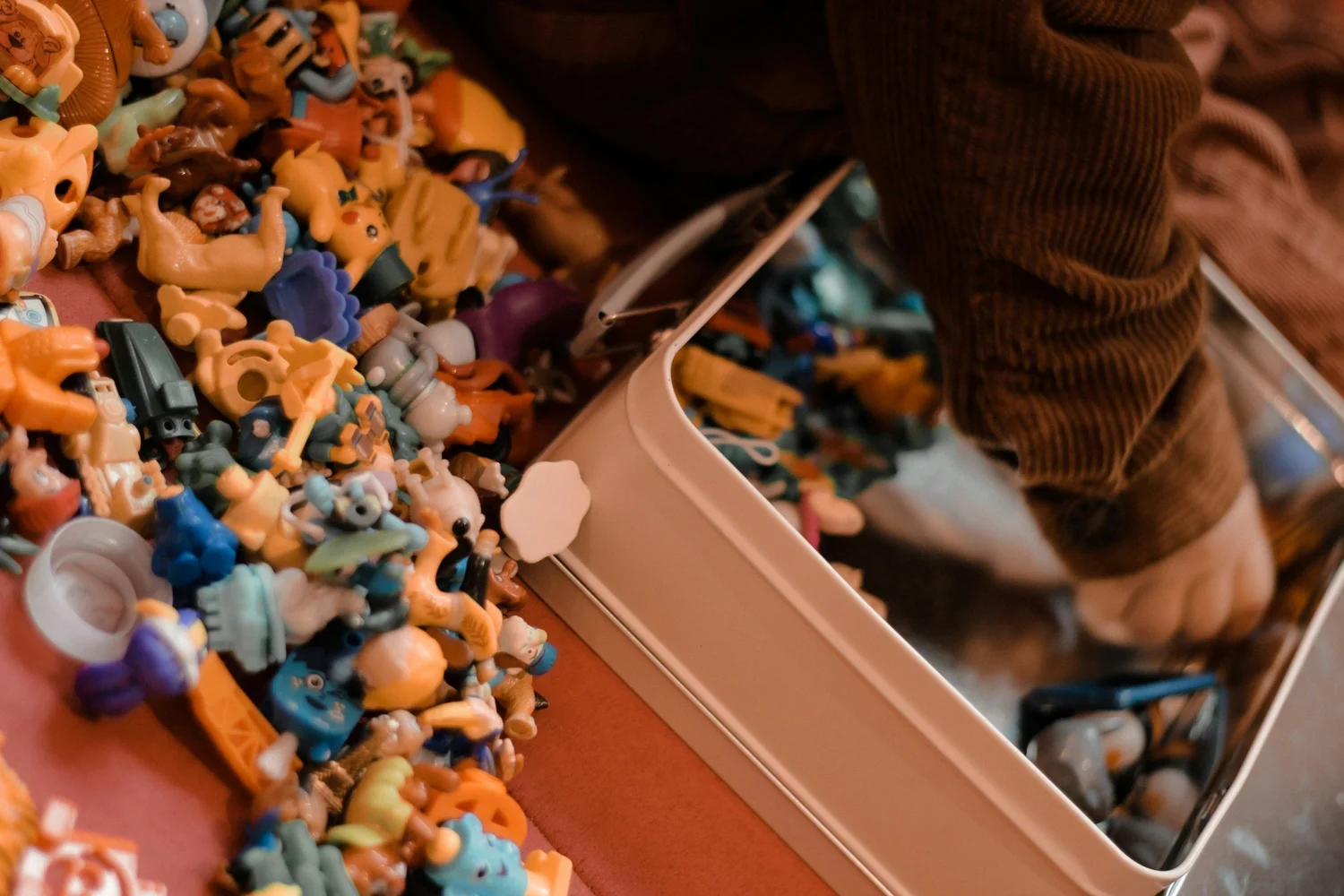
You saw the dreamy sensory bin on the internet — the rainbow rice, the tiny scoops, the calm, focused toddler — so you made one. Ten seconds later your kiddo has a fistful of rice headed straight for their mouth and half the bin is on the floor. Sound familiar? If you've decided sensory bin ideas for toddlers just aren't for your kid, I'd love to talk you out of that.
Take a breath — nothing's wrong with your toddler. Mouthing, dumping, and flinging aren't you doing it wrong; that is how a one- or two-year-old explores a new texture. The trick isn't a better-behaved kid. It's picking the right filler, the right container, and the right expectations for their age. Let me show you the exact setup I use.
The Toddler Sensory Bin Order I Actually Use
Little ones aren't ready for a bin of tiny beads at 15 months, and that's completely normal. Here's the rough order I follow so the bin matches the kiddo in front of me — go by where your toddler is, not their birthday.
12–18 months: taste-safe & chunky
Everything still goes in the mouth at this age, so everything in the bin should be safe if it gets there. Think a bin of plain cooked pasta, big pom-poms that can't be swallowed, or oats. Skip small fillers entirely and expect lots of dumping — dumping is the skill right now.
Taste-safe only18–24 months: add a tool
Now we hand them a scoop or a big spoon. Filling a cup and dumping it out, over and over, is prime toddler work — it builds the two-hands-together coordination that scissors and self-feeding will need later. Still keep fillers taste-safe and chunky.
Scoop & pour2–3 years: hide-and-find & sorting
Once mouthing calms down, you can bury little toys to "rescue," add tongs, or sort by color into muffin tins. This is where the pincer grasp and early problem-solving really take off — and where a bin can hold a toddler for a genuinely long stretch.
Pincer & sortingNot sure whether your toddler's a texture-lover or a texture-avoider? That's worth understanding before you fill the bin — my guide to sensory-friendly setups walks through seekers vs. avoiders and how to read your own kid.
🪣 My go-to: the "One Bin, One Tool, One Rule" trick
The reason toddler bins go sideways is usually too much at once. So I keep it to three things: one bin (a single filler, not a Pinterest rainbow), one tool (just a scoop, or just tongs — not five gadgets), and one rule ("the rice stays in the bin," said once and calmly). When it gets flung, we don't lecture — we hand back the scoop and model "scoop… and pour… in the bin." Fewer choices means a calmer kid and a bin that actually lasts more than a minute. Add a towel or an old sheet under it and the "mess" becomes a two-second shake-out instead of a meltdown for you.
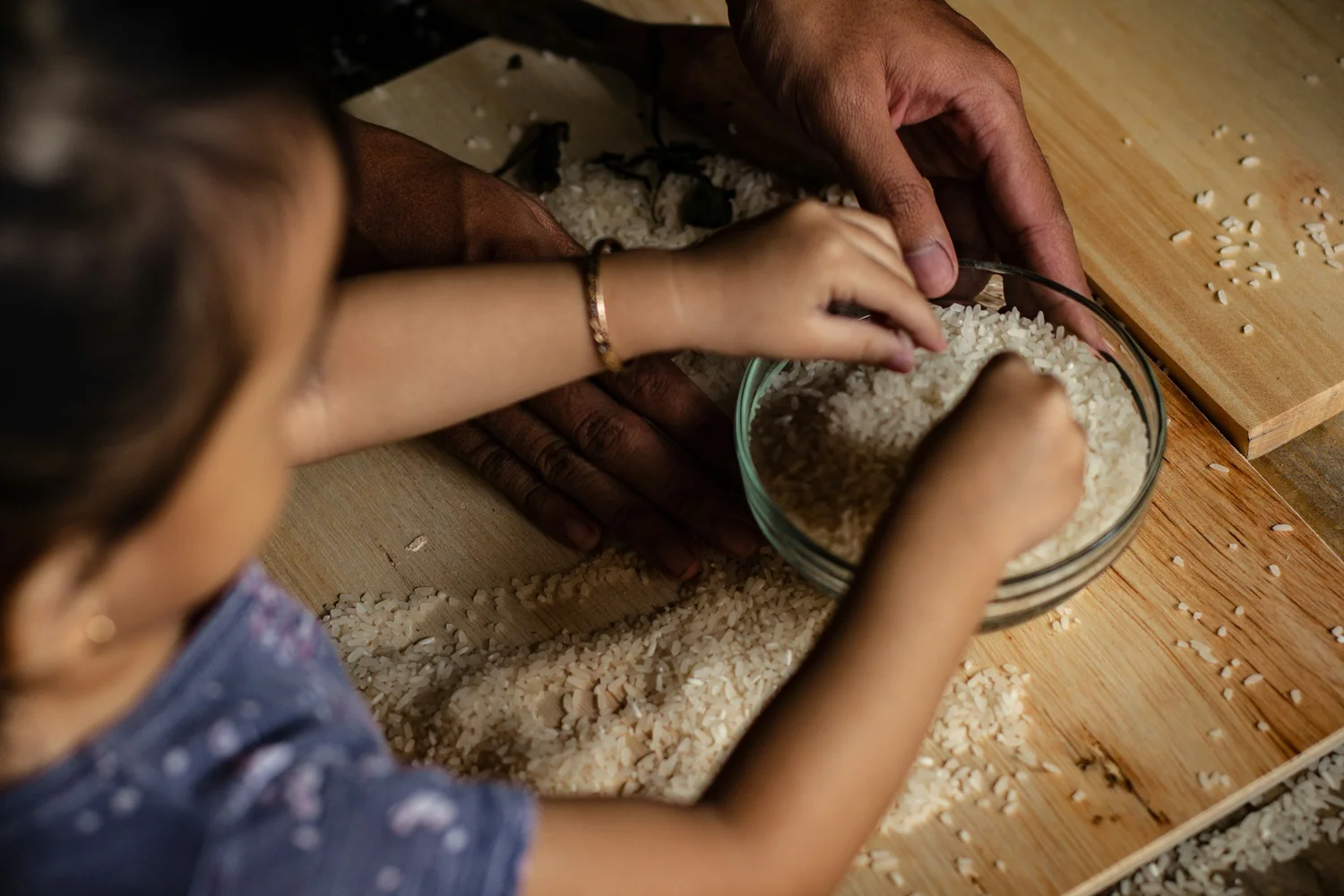
Taste-Safe Sensory Bins From Stuff in Your Kitchen
You do not need to order anything to start today. Here are toddler-tested fillers I love — most are already in your pantry, and every one is safe if a little ends up tasted.
1. Cooked & cooled pasta
Boil spaghetti or penne, cool it, and toss with a drop of oil so it won't stick. Squishy, slippery, and totally taste-safe — the perfect first bin for a mouther. Add a splash of food coloring for older toddlers.
First bin2. Oats or oatmeal
Dry oats pour like sand but are safe to taste. Bury a few measuring cups and let them scoop, dump, and repeat. Cheap enough that you won't wince when half of it lands on the floor.
Scoop & pour3. Water + floating toys
The simplest bin there is: a few inches of water and some bath toys or spoons. Scooping and pouring water is endlessly regulating for a busy toddler — and cleanup is a towel. When they're ready to graduate past water, my go-to sensory bin fillers post has the ones I keep pre-made and ready to grab.
Calming4. Big pom-poms in a muffin tin
For 2+ toddlers who are past mouthing: sort jumbo pom-poms by color into a muffin tin using fingers, then tongs. Instant pincer and color-matching practice disguised as a game.
Pincer & sorting5. Frozen treasure rescue
Freeze small toys in a container of water overnight, then let your toddler "rescue" them as it melts, with a little warm water and a spoon. Great for a hot afternoon and a surprisingly long attention-holder.
Problem-solvingWant more fillers with the "what each one builds" breakdown, plus a few for the older sibling? I keep a whole running list in my post on sensory bins for kids. Craving a food-based bin? My fine motor snack activities post is basically a pantry's worth of edible sensory play. And if you're heading out the door, these bins fold neatly into the no-screen busy bags for toddlers I never travel without.
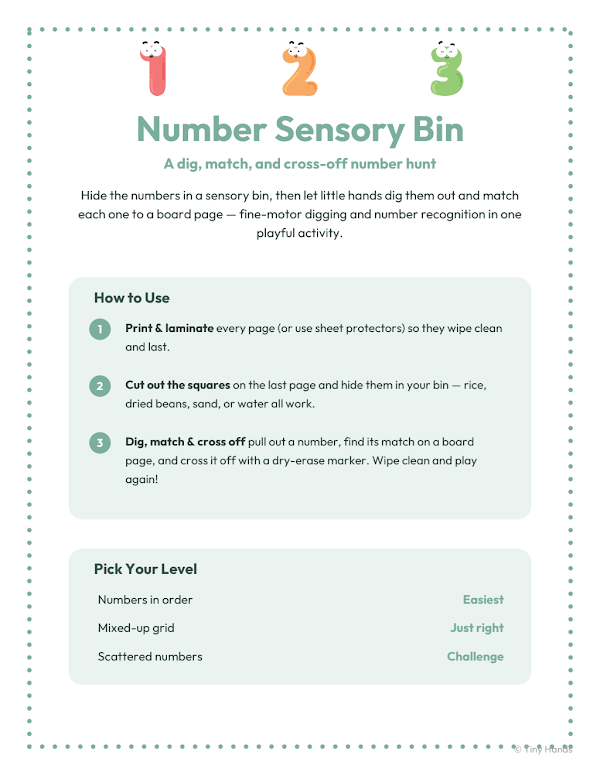
Want the print-and-play version?
My Sensory Bin Task Cards live in the membership — each card is one simple bin activity with a picture prompt (scoop it, sort it, find the hidden letter), so you can hand your toddler a card and let the bin run itself. No more staring at a tub of rice wondering what to do next. Ready in about two minutes.
Get the Task CardsHeads up: this post has an Amazon affiliate link. If you grab something through it, Tiny Hands earns a small commission at no extra cost to you — it's what keeps the free worksheets free. Thank you!
The one tool set that makes any bin better
A sponge and a kitchen spoon will get you started, but a little set of chunky scoops and easy-squeeze grabbers is the upgrade I reach for most — the scoops fit small hands for pouring, and the grabbers turn a plain bin into a grip-and-release workout that builds the exact muscles a pencil and scissors will need. It's the one bin accessory worth owning.
When to Check In With an OT
Dumping, mouthing, and the occasional handful of rice on the rug are all developmentally normal — a toddler's job is to explore, and bins are just a tidy way to let them. Most kids grow out of the mouthing and into the sorting on their own timeline, no worrying required.
That said, a quick, no-pressure chat with a pediatric OT or your child's provider can be reassuring if, past age two, you're consistently seeing things like a big meltdown at the sight of any messy texture (not just a preference — real distress), a toddler who still mouths nearly everything nonstop and it's affecting eating or safety, no interest at all in using their hands to explore even after lots of low-pressure invitations, or a kiddo who seems to crave so much intense sensory input that it's hard to keep them safe.
None of those is an emergency — they're just gentle "let's take a closer look" flags, and there's almost always a simple, playful tweak that helps. Watching a hesitant little one go from "no way" to elbow-deep in a bin is one of my favorite things. You've got this.
New here? Grab the free pack first 🎁
Join the list and I'll send you the Fine Motor Starter Pack — 40+ print-ready pages to build those little hands at home, from first scoops to strong little grips.
Send My Free PackWant the whole library, sorted and ready? Peek at the membership →
This post is for learning and support — it isn't a diagnosis. © Tiny Hands