
Building Kindergarten Stamina for a Full School Day

Pickup line, 3:15pm: your kid shuffles to the car looking like they ran a marathon, and honestly? In a way, they did. If you're watching your kindergartner come home wrecked — snappy, tearful, or just done — every single afternoon, take a breath. That's not a bad fit for school, and it's not a sign something's wrong. Kindergarten stamina — the ability to sit, listen, work, and reset through a full six-and-a-half-hour day — is a genuine physical and attentional skill, and like any skill, it gets built in reps, not overnight. Here's the honest, by-stage plan I use with families to build it gently, plus the trick that's saved more than one family's after-school hour.
Kindergarten Stamina: Why the Whole Day Feels So Long at First
Before this year, most kids' "school" was a half-day, or a couple hours of preschool with lots of built-in play and choice. Kindergarten asks for something totally different: sitting near-still for stretches, following multi-step directions, working through a task even when it's boring, and doing all of that without a nap to reset in the middle. That's a lot of new muscle at once — physical muscle (core and hand endurance), attentional muscle (staying with a task), and emotional muscle (managing frustration without a grown-up hovering). None of it arrives fully built on day one; it's the same stamina first grade leans on even harder the following year, which I map out fully in first grade readiness.
Building Kindergarten Stamina, Stage by Stage
Here's the order I actually expect to see across a kindergarten year — not because every kid matches it exactly, but because it keeps panic out of a totally normal Tuesday.
3–4 (preschool): short bursts are the whole job
Five to ten focused minutes at a table before needing to move is right on schedule. A rough afternoon after even a half-day is completely expected — there's no "behind" here.
5–10 min is a full rep4–5 (Pre-K): 10–15 minutes, with support
Kids start holding a task a little longer, especially with an adult nearby, but still need a real movement break every 20–30 minutes across the day to stay regulated.
Support still does a lot of lifting5 (K, first 6 weeks): this is brand-new muscle
Most kids are genuinely wiped by early afternoon the first month of full-day kindergarten — that's not a red flag, that's a kid using a muscle for the first time. Expect an early-bedtime season.
Exhausted ≠ struggling5–5.5 (K, mid-year): stamina starts catching up
Focused work stretches to around 20 minutes at a time, and the school day starts feeling less like a marathon and more like a routine — though lunch and recess are still doing real "refueling" work.
The day starts to click6 (K, spring): a full day feels normal
Most kids can move through several subjects in a row without falling apart, and after-school meltdowns get noticeably rarer (though never fully gone — everyone has a Tuesday).
The new normal settles in6–7 (1st grade): stamina stretches further still
Desk work gets longer and movement breaks get fewer, so whatever foundation got built in kindergarten becomes the floor first grade builds on next.
Building on last year's reps🔋 My go-to trick: "The Five-Minute Add-On"
Don't try to manufacture a full school day at home — that backfires fast. Instead, pick one calm table task your kid already tolerates (a puzzle, coloring, a lacing card) and stretch it by five minutes every few days, the same way a training plan adds a little mileage at a time instead of jumping straight to race day. Start wherever your kid actually sits still today, even if that's only five minutes — that's the real starting line, not a failure. By the time the "official" stamina-builder feels boring, that's exactly the sign it's time to add five more.

Stamina-Building Play You Already Have
None of this needs flashcards or a formal program — it's mostly play, aimed a little more deliberately (the same kind of play I lean on all summer in summer activities to prepare for kindergarten).
Heavy work before the "work"
A few minutes of pushing, pulling, or carrying something heavy — laundry basket, wheelbarrow, wall push-ups — settles a busy body before you ask it to sit still, the same trick I lean on in core strength for handwriting.
Regulate first, focus second"Beat the timer" table stretches
Set a visual timer for whatever your child's current stamina ceiling is, then quietly nudge it up over the weeks — it turns "how much longer" into something they can watch instead of something they're told.
Same trick as the Five-Minute Add-OnIndependent play, no narrating required
Let your kid sit with a puzzle or building toy while you're nearby but not entertaining them — resisting the urge to jump in builds the exact "keep going on my own" muscle a classroom asks for all day.
Boredom is part of the repPractice the "refuel" rhythm
Run a mini dress rehearsal at home — quiet work, then a real snack-and-movement break, then quiet work again — so the school day's rhythm feels familiar before it's real.
Rehearse the whole shape of a dayHeads up: this post has an Amazon affiliate link. If you grab something through it, Tiny Hands earns a small commission at no extra cost to you — it's what keeps the free worksheets free. Thank you!
The highlighted paper that lets a tired hand keep going
A colored block marks exactly where each letter starts and sits, so a hand that's already worked hard all day doesn't have to think as hard about the "where" — it's one less thing standing between your kid and finishing the page. I loved the idea so much I made my own.
The kid-safe drill that builds stamina one bolt at a time
Twisting a toy drill to place each bolt is exactly the kind of muscular-endurance play kindergarten stamina is built on — the Design & Drill ABCs & 123s set turns that hand workout into building letters and counting, so the "keep going" muscle grows while your kid is busy having fun.
When to Check In With an OT
Rough afternoons in the first weeks (or even months) of kindergarten are wildly common — every stage on that timeline above, meltdowns included, is completely normal, and stamina almost always catches up with time and a little practice.
That said, it's worth a friendly chat with an occupational therapist if exhaustion or shutdown isn't budging by winter break, if a full day is causing regular toileting accidents or skipped meals from a kid "holding it together" too hard, or if a teacher reports your child can't engage even in short bursts on most days. None of that means something's wrong — it just means that stamina might want a little extra, individualized building, the same way we'd build any other skill.
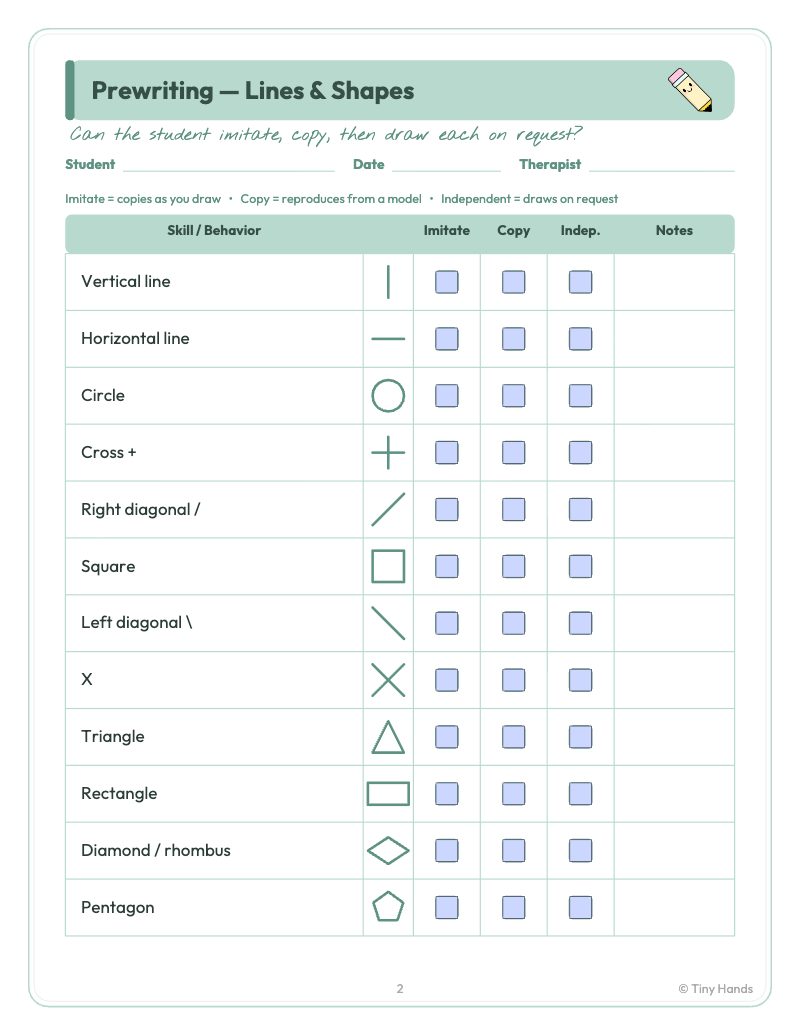
Want the Printable Version?
It's ready to print, right in the membership.
See OT Developmental ChecklistsThis post is for learning and support — it isn't a diagnosis. © Tiny Hands