
Core Strength for Handwriting: Why the Wiggly Sitter Can't Write — It Starts in the Belly, Not the Hand
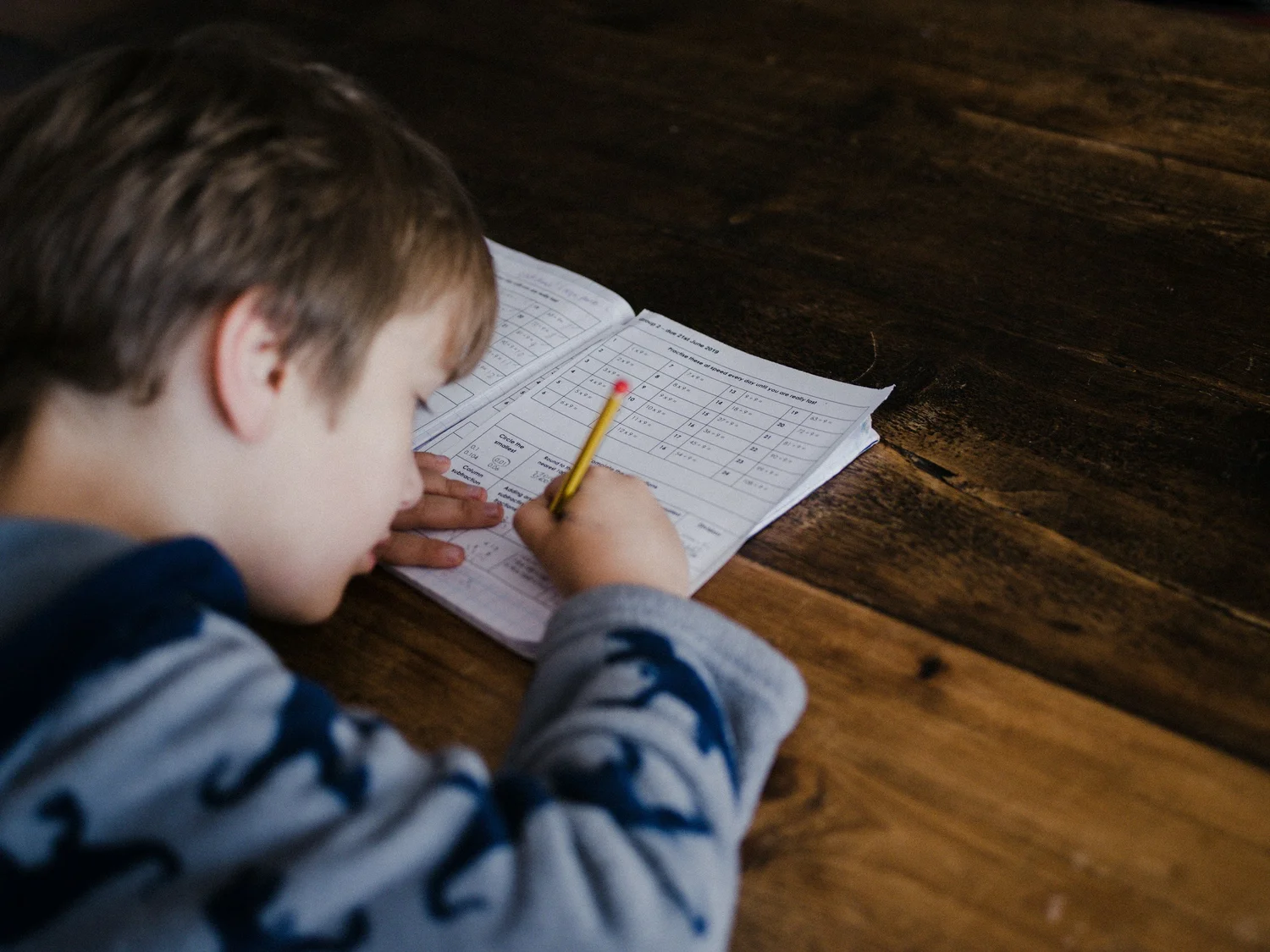
Five minutes into a worksheet, your kiddo is halfway under the table. One leg's tucked, an elbow's holding their whole head up, they've slid so far down the chair they're basically horizontal — and the letters are getting messier by the second. You hear yourself say "sit UP" for the tenth time today, and you wonder: why can't they just sit still and write? Take a breath.
Here's the plot twist most people miss: neat handwriting doesn't start in the hand. It starts in the belly. Core strength for handwriting is the quiet foundation under every letter — a strong, steady middle is what holds the trunk upright so the shoulder can stay still, so the hand can do the tiny, precise work of forming letters. A wiggly sitter isn't lazy or defiant. They're usually a kiddo whose core is still catching up, so their body spends all its energy just staying upright and has none left for the pencil. Good news: this is one of the most fixable things I work on, and almost all of it looks like play. Let me walk you through the timeline I use, my go-to trick, and the movement games that build it at home.
First, the Why: You Can't Fire a Cannon From a Canoe
That's the old therapy saying, and it's perfect. Picture trying to write your name while sitting on a wobbly pool float — every time your hand moves, your whole body has to correct, and the writing turns to scribble. That's daily life for a kid with a weak core. This is called proximal stability for distal mobility: the closer-in parts (trunk, shoulders) have to be steady before the far-out parts (wrist, fingers) can move with control.
So when a child slumps, leans on a hand, wraps their legs around the chair, or W-sits on the floor, they're not being difficult — they're borrowing stability from furniture and floor because their own middle can't provide it yet. Fix the foundation, and the handwriting very often follows without you ever drilling a single letter.
The Core & Posture Timeline I Actually Use in Sessions
Before you decide your kiddo is "behind," read this as a stage guide, not a stopwatch. A strong, sit-and-work core builds slowly over years, and lots of flopping is completely normal along the way.
12–18 months: the core wakes up
Standing, cruising, and those first wobbly steps are all core work. At this age we just want lots of floor time, climbing, and reaching — no table sitting required. The middle is only beginning to fire up.
Foundation2–3 years: brief sits, big flops
A toddler can perch at a little table for a minute or two, then they're up, leaning, or sliding off. Totally expected. Movement is their work right now — climbing couches and hauling toys builds more core than any chair ever will.
Movers3–4 years: sitting, but leaning
Now you'll get a few real minutes at a table, but with a lot of propping — head on hand, chest on the table, one foot up. Short, feet-supported bursts work best. Expect W-sitting and slumping; it's the body taking the easy road.
Building4–5 years: upright, in short stretches
Most kids can now sit fairly upright for a 10–15 minute tabletop activity, especially if their feet are supported. Endurance still fades fast — when the writing gets sloppy or the slouch creeps in, that's a "time for a movement break" signal, not misbehavior.
Emerging5–6 years: real writing stamina begins
Around kindergarten, the trunk is strong enough to hold steady through a longer writing task — but they still need to move between activities. A kiddo who can't sit upright for even a few minutes without collapsing onto the table is worth a closer look (more below).
Stamina6–7+ years: a steady base
By now most kids sit and write for a real stretch with an upright, stable trunk. If yours is still constantly sliding out of the chair, propping their head, or complaining their body's "too tired" to write, that's the point where a friendly check-in makes sense.
ConsistentNotice there's no "failing" anywhere on that list. Flopping at three is a Tuesday. Melting out of the chair at six, every single day, is just a nudge to build a little more base — with play, not pressure.
💪 My go-to trick: "Color Like a Lizard"
This is the single move I sneak into more sessions than any other, because it turns coloring time into a full-body workout without a kid ever knowing. Have your kiddo lie on their tummy on the floor, propped up on their forearms, and color, do a puzzle, or read there instead of at the table. That "belly-down, up on elbows" position (we call it prone) makes them lift their head and chest against gravity — which lights up the exact back, neck, shoulder, and core muscles that hold a body upright at a desk. Bonus: propping on the forearms builds the shoulder stability handwriting leans on, too. Ten or fifteen minutes of belly-down coloring a day, and you're strengthening the whole handwriting foundation while they think they're just playing. Toss a pillow under their chest if it's tiring at first, and build up from there. It's my favorite because it costs nothing, needs no gear, and works.
Playful Ways to Build a Strong Middle With Stuff You Already Have
The best core practice barely looks like practice — and none of it happens at a desk. These all build the steady trunk that handwriting needs, while your kiddo thinks they're just goofing around.
1. Animal walks across the room
Bear crawls (hands and feet, bottom up), crab walks (belly to the sky), and slithering like a snake all fire the core hard. Make a silly "zoo parade" from the couch to the kitchen — it's the closest thing to a plank a preschooler will happily do.
Whole body2. Wheelbarrow walks
You hold their legs, they "walk" on their hands to grab a toy across the room. This is a full trunk-and-shoulder workout disguised as a giggle fest. Start by holding at the hips (easier) and work toward holding at the ankles.
Heavy work3. Superhero flights
Lie on the tummy and lift arms, chest, and legs off the floor like flying — "hold your best superhero for 10 seconds!" That lift is pure back-and-core strengthening, and kids love racing the count. Make a whooshing sound; it's non-negotiable.
Extension4. Couch-cushion "hot lava"
Pile up cushions and pillows into a wobbly obstacle course and have them climb, balance, and crawl across without touching the "lava" floor. Every wobble is the core firing to keep them steady — balance work and belly laughs in one.
Balance5. Wiggle-seat puzzles
Have them sit on a couch cushion, a rolled-up towel, or a big beach ball while doing a puzzle at a low table. That slightly-unsteady surface makes the trunk work the whole time — the same reason therapists love wiggle cushions. Sneaky core practice while they sit and think.
Dynamic sittingWant a whole stack more of these? A lot of the calm-and-strong magic here overlaps with heavy-work play — those push-pull-carry games build the exact trunk strength (and settle a busy body at the same time). Many of these same games double as crossing the midline activities too — reaching, twisting, and stretching across the body builds both skills at once. And when it is time to sit and write, warming the body up first helps a ton; my handwriting warm-ups loosen and wake up the muscles before the pencil even comes out.
The Quiet Fix Almost Nobody Thinks Of: Get the Feet Right
Before you build a single muscle, try this free tweak: make sure their feet are flat on something. When a kid sits at a big-person table with their feet dangling, they've got nothing to brace against, so they wrap their legs, slump, and tire fast. Slide a sturdy box, a stack of books, or a step stool under their feet so knees and hips make tidy 90-degree angles. It's astonishing how much straighter a "weak" sitter sits the second their feet have a home.
That's the heart of flexible seating, and it's not just a home trick — a lot of "wiggly kids" at school just need a different setup. My post on helping a child sit still in class has the seat swaps and foot fixes that help a busy body settle enough to focus and write.
Heads up: this post has Amazon affiliate links. If you grab something through them, Tiny Hands earns a small commission at no extra cost to you — it's what keeps the free worksheets free. Thank you!
Two easy helpers for a stronger, steadier sitter
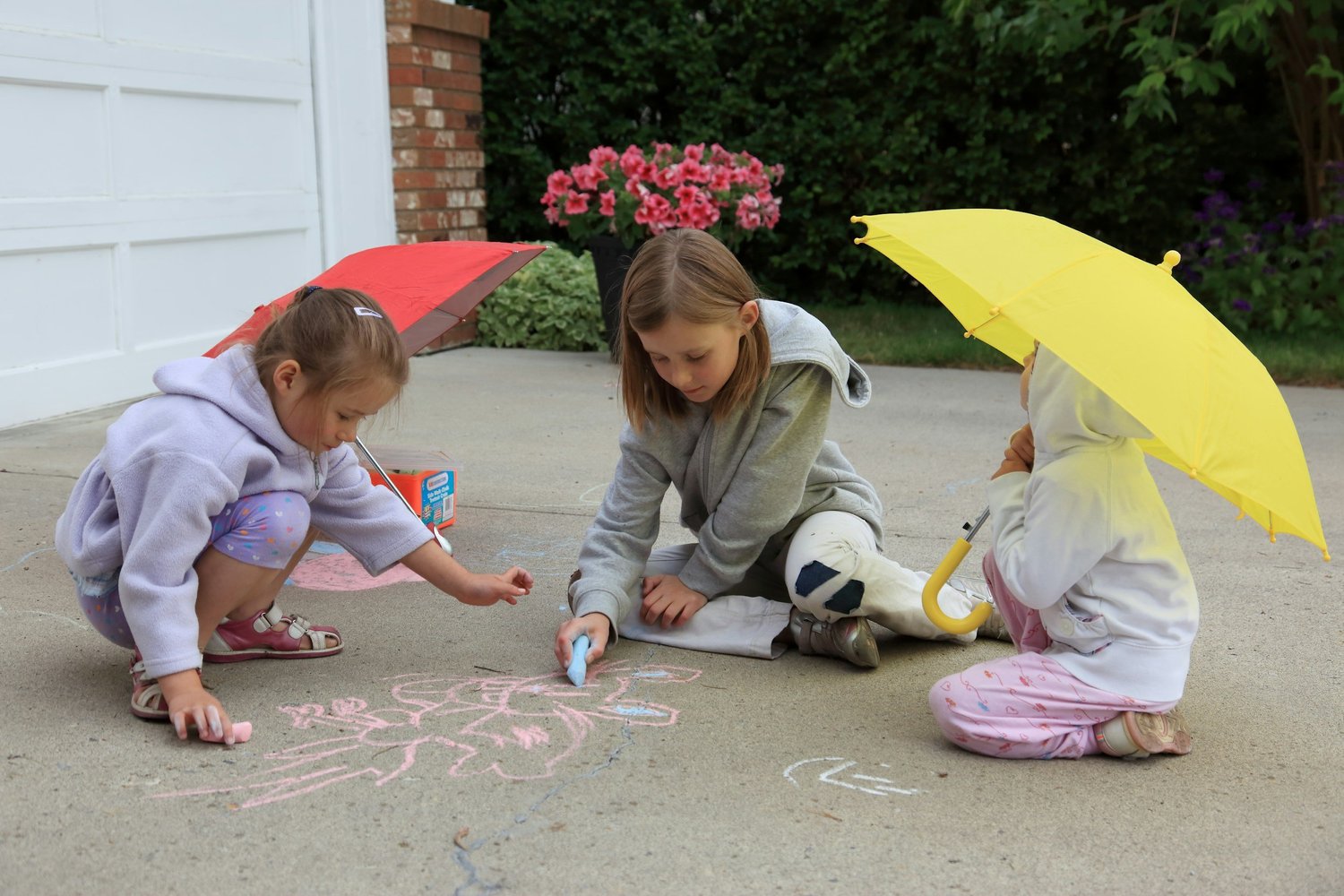
You can do every bit of this with couch cushions and floor time — but two things on my shelf make it even easier. The stand-up sidewalk chalk holder is sneaky-brilliant: it lets kids draw big while standing tall, so those whole-arm strokes build shoulder and core strength out in the driveway (no hunching, no fussy grip — pure gross-motor play). And a little weighted lap pad is my quiet go-to for the kiddo who just cannot stop wiggling at the table — two pounds of gentle deep pressure that helps a busy nervous system settle enough to sit and work. One gets them moving, one helps them land.
When to Check In With an OT
First, the reassuring part: flopping, slumping, and running out of sit-still steam are normal for years, and nearly every kid grows a stronger core with the playful movement above. A wiggly sitter is almost always a still-building sitter.
That said, a quick, no-pressure chat with a pediatric OT can be genuinely reassuring if — well past the ages above — you're consistently seeing things like a child who truly can't hold themselves upright for even a couple of minutes and collapses onto the table, a body that seems generally floppy or "loose" day to day, a kiddo who avoids anything at a table like it's physically hard, or one who tires and complains their body hurts almost immediately with any sitting task. If W-sitting is the only way they'll sit and it's constant, that can be worth a mention too.
None of those is an emergency — they're gentle "let's take a closer look" flags, and there's almost always a simple, playful plan that helps. Build the base, and the handwriting has something to stand on. You've got this.
Want the print-and-play version?
Once the body's warmed up and the feet are planted, my Handwriting Practice Pages in the membership are the perfect "now let's write" step — big, forgiving letter lines with built-in start dots, ready in about two minutes. Do your belly-down warm-up, plant those feet, then hand them a page.
Get the Handwriting PagesNew here? Grab the free pack first 🎁
Join the list and I'll send you the Fine Motor Starter Pack — 40+ print-ready pages to build those little hands at home, from first scribbles to steadier letters.
Send My Free PackWant the whole library, sorted and ready? Peek at the membership →
This post is for learning and support — it isn't a diagnosis. © Tiny Hands