
Crossing the Midline Activities: The Hidden Skill Behind Reading and Writing

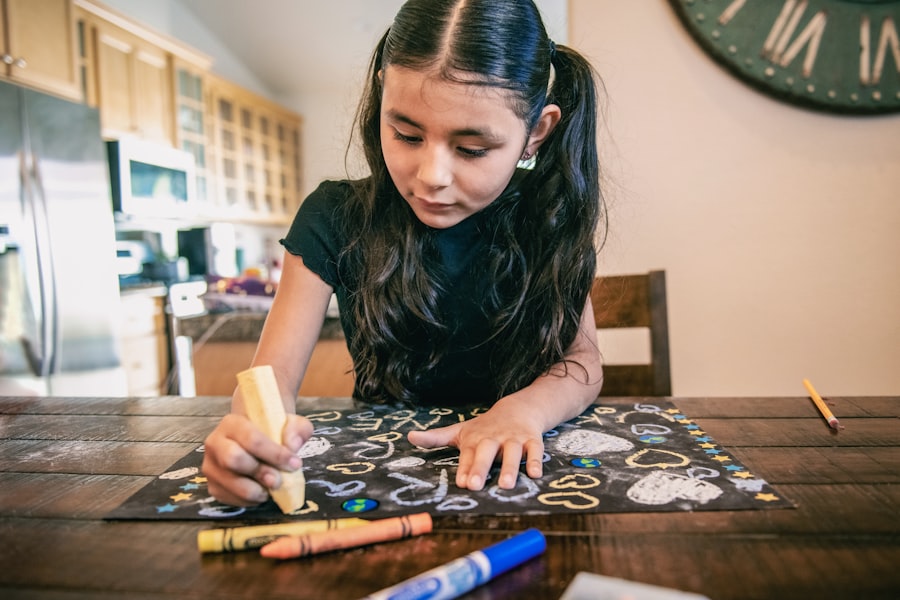
You're watching your kiddo color, and you notice it: instead of reaching across the page, they swap the crayon to the other hand every time they get to the far side. Or they draw the left half of the picture with the left hand and the right half with the right, meeting neatly in the middle like a tiny border patrol. Cue the worry — is that normal? Are they going to be a lefty? A righty? Both? Take a breath. What you're seeing has a name, and it's one of my favorite things to work on because the fixes look exactly like play.
That invisible line running straight down the center of the body — head to belly button to toes — is the midline. Crossing the midline means reaching one hand (or foot, or even the eyes) over to the other side of the body without turning the whole trunk to get there. It sounds tiny. It's actually huge: crossing the midline is quietly under handwriting, reading left-to-right, cutting, tying shoes, catching a ball, and even doing up a zipper. So let's walk the real by-age timeline I use in sessions, the one named trick I reach for most, and a pile of easy crossing-the-midline activities using stuff already in your house.
Crossing the Midline, Age by Age
Like most things with little hands, this develops on a ladder — and your kiddo may sit a rung above or below on any given day. That's normal. Here's the rough order I hold in my head.
Around 1–2: the body starts to talk across itself
Babies begin bringing both hands to the middle to hold a toy, pass a block from one hand to the other, and clap. Those first hands-meet-in-the-middle moments are the earliest hint that the two sides of the body are learning to talk to each other.
Hands to the middle2–3: reaching starts, hand preference is still wobbly
Toddlers reach for things a little past center, but they often just use whichever hand is closest, or swap hands mid-task. You'll see them turn their whole body instead of reaching across — totally expected. A clear "favorite hand" hasn't settled yet, and that's fine.
Whole-body turns3–4: crossing shows up more, a hand starts to lead
Now you'll catch them reaching across to grab a crayon on the far side, or one hand starting to steady the paper while the other draws. A dominant hand is beginning to emerge, though it may still flip-flop. Occasional hand-swapping here is not a red flag.
A leader emerges4–5: a true "helper hand" and a "doing hand"
This is the big one. Most kids settle into a dominant hand that does the work and a helper hand that holds and turns. They can cut across a page, draw a line all the way from one side to the other, and reach across their body without thinking about it. Crossing the midline becomes automatic.
Dominance settles5–6+: fully in service of school
By kindergarten, crossing the midline is doing its quiet job behind the scenes — eyes tracking left-to-right across a line of text, a hand sweeping across the whole page to write a sentence, two hands working together to tie a bow. You don't see it anymore because it just works.
The invisible engineSo, Should I Worry About the Hand-Swapping?
Here's the honest answer parents want: a little hand-swapping in the toddler and preschool years is completely normal, and a firm dominant hand often isn't settled until somewhere around 4 to 6. So a three-year-old who colors with whichever hand is handy is right on track. What I'm quietly watching for is the pattern — a child who, well past 4 or 5, still avoids reaching across and instead rotates their whole trunk, or who swaps hands right at the center line every single time because reaching over feels awkward.
Why does it matter so much? Because crossing the midline is really two sides of the brain learning to cooperate — and that same cooperation is what lets one hand write while the other holds the paper, lets the eyes glide across a line of text instead of jumping, and lets kids do all the two-handed jobs of a school day. It's a close cousin of bilateral coordination (two hands working as a team), and it feeds straight into the pre-writing strokes kids need before letters. The good news: it responds beautifully to play, and you don't need anything fancy to build it.
🌈 My go-to trick: "Sticker Steal"
This is the single best midline activity I know, and every kid I've ever pulled it out for lights up. Stick a row of dot stickers (or those little sticky gems) all the way up one of your child's arms — wrist, forearm, elbow, shoulder. Then tell them the rule: they have to peel each sticker off using the opposite hand. To reach a sticker on the left shoulder with the right hand, that right arm has to travel all the way across the body — crossing the midline — again and again, without them even noticing they're "working." You can up the ante by sticking them on the opposite leg, or on their back so they have to twist and reach. It's silly, it's quick, and it turns the exact skill under handwriting into a giggly little game. When they beg to do it again, you say yes, because more reps is the whole point.

Easy Crossing-the-Midline Activities With Stuff You Already Have
The best midline activities are big, playful, and put the "good stuff" just far enough to one side that a hand has to travel to reach it. Here's what I reach for.
Pop bubbles across the body
Blow bubbles and give one rule: pop them with a specific hand. When a bubble drifts to their far side, that hand has to swing across the midline to get it. Cheap, joyful, and impossible to resist.
Reach and popPaint big rainbows on a wall
Tape a huge sheet of paper to the wall or fence and have them paint giant rainbow arcs from one side all the way to the other with one hand. Working on a vertical surface forces a big cross-body sweep and builds shoulder strength while you're at it — a two-for-one I love.
Big vertical sweepsRace a car down a long road
Make a long strip of "road" on the floor or table with tape and have them drive a toy car the whole length with one hand, never switching. The longer the road, the more the hand has to cross over. Add a car wash or a garage at the far end for motivation.
Drive the whole wayCross-body cleanup & sorting
Set a basket on their left and toys on their right (or vice versa) and have them transfer everything one at a time with a single hand. Wiping a table or window with big "windshield-wiper" arm sweeps does the same thing — chores that secretly build brains.
Sort across the middleCross-crawls & "touch the opposite knee"
March in place and have them touch the right hand to the left knee, then left hand to right knee. Elbow-to-opposite-knee, big toe taps, "criss-cross" clapping games — any move that reaches an arm over to the far side of the body counts, and it doubles as a great wiggle-out-the-energy break.
Whole-body midlineString, lace, and thread everything
Threading is quiet midline gold: one hand holds the lace still in the center while the other reaches over to push the bead on. Pasta necklaces, lacing cards, beads on a shoelace — all of it builds the two-hands-across-the-body control a bow and a sentence both rely on. This pairs closely with in-hand manipulation activities — the in-the-palm finger skills that grow alongside a strong midline crossover. More no-cost ideas live in fine motor activities using things you already have.
Threading = midlineNotice the thread through all of it? Big, playful, and one hand at a time, with the target parked off to one side so a hand has to travel to reach it. No drills, no worksheets required — just play that happens to sweep across the middle.
Want the print-and-go version?
My Fine Motor Pack in the membership is full of ready-to-print pages that build crossing the midline and two-handed control without you having to invent a single activity — big sweeping paths to trace, cut-and-cross mazes, and rainbow arcs sized for little arms. Print, hand it over, and let the page do the reaching.
Get the Fine Motor PackHeads up: this post has an Amazon affiliate link. If you grab something through it, Tiny Hands earns a small commission at no extra cost to you — it's what keeps the free worksheets free. Thank you!
The one tool I reach for most
When I want quiet, sit-down midline work, I reach for lacing beads almost every time. Threading a bead onto a lace is sneaky-hard hand work: the helper hand holds the string steady right at the center while the doing hand reaches over to guide the bead on — crossing the midline with every single bead. Toddlers and preschoolers think it's a game, not practice, which is exactly why it works. It's not a must-have (a shoelace and some pasta will do), but a good chunky set makes it easy to say yes to on a rainy afternoon.
The big-movement pick for whole-body midline work
When I want a bigger, gross-motor version of crossing the midline, I reach for an indoor scooter board. Lying belly-down and pulling along the floor hand-over-hand is powerhouse core, shoulder, and cross-body work — and it's the kind of heavy-body play that helps a wiggly kid settle right down afterward.
When to Check In With an OT
For the vast majority of kids, crossing the midline sorts itself out through exactly the kind of play above — you don't have to teach it so much as give lots of chances for it. So please don't read a preschooler who occasionally swaps hands as "behind." A wobbly hand preference in the toddler and early-preschool years is developmentally right on time.
That said, it's worth a friendly, no-pressure chat with an occupational therapist if — even with plenty of relaxed practice — you're consistently seeing things like: a child past 4 or 5 who still has no clear dominant hand and truly uses both equally for everything, a kiddo who almost always rotates their whole body instead of reaching across, hand-swapping right at the center line on nearly every task, or noticeable trouble with two-handed jobs like cutting, catching a ball, or managing a zipper. Skipping and struggles with gross-motor cross-crawls can be part of the same picture.
None of those mean something is wrong — they're just gentle "let's take a closer look" signs, and an OT can usually pinpoint which building block wants more play and hand you a few games that fit. Until then: blow the bubbles, tape the road, steal the stickers, and let those two little sides of the body learn to reach for each other. You've got this — and so do those busy little hands.
New here? Grab the free pack first 🎁
Join the list and I'll send you the Fine Motor Starter Pack — 40+ print-ready pages to build those little hands at home and at school, from first pinches and squeezes to the strong, coordinated, cross-the-body control that reading and writing are built on.
Send My Free PackWant the whole library — including the Fine Motor Pack — sorted and ready? Peek at the membership →
This post is for learning and support — it isn't a diagnosis. © Tiny Hands