Sidewalk Chalk Activities: The Driveway Is the Worksheet
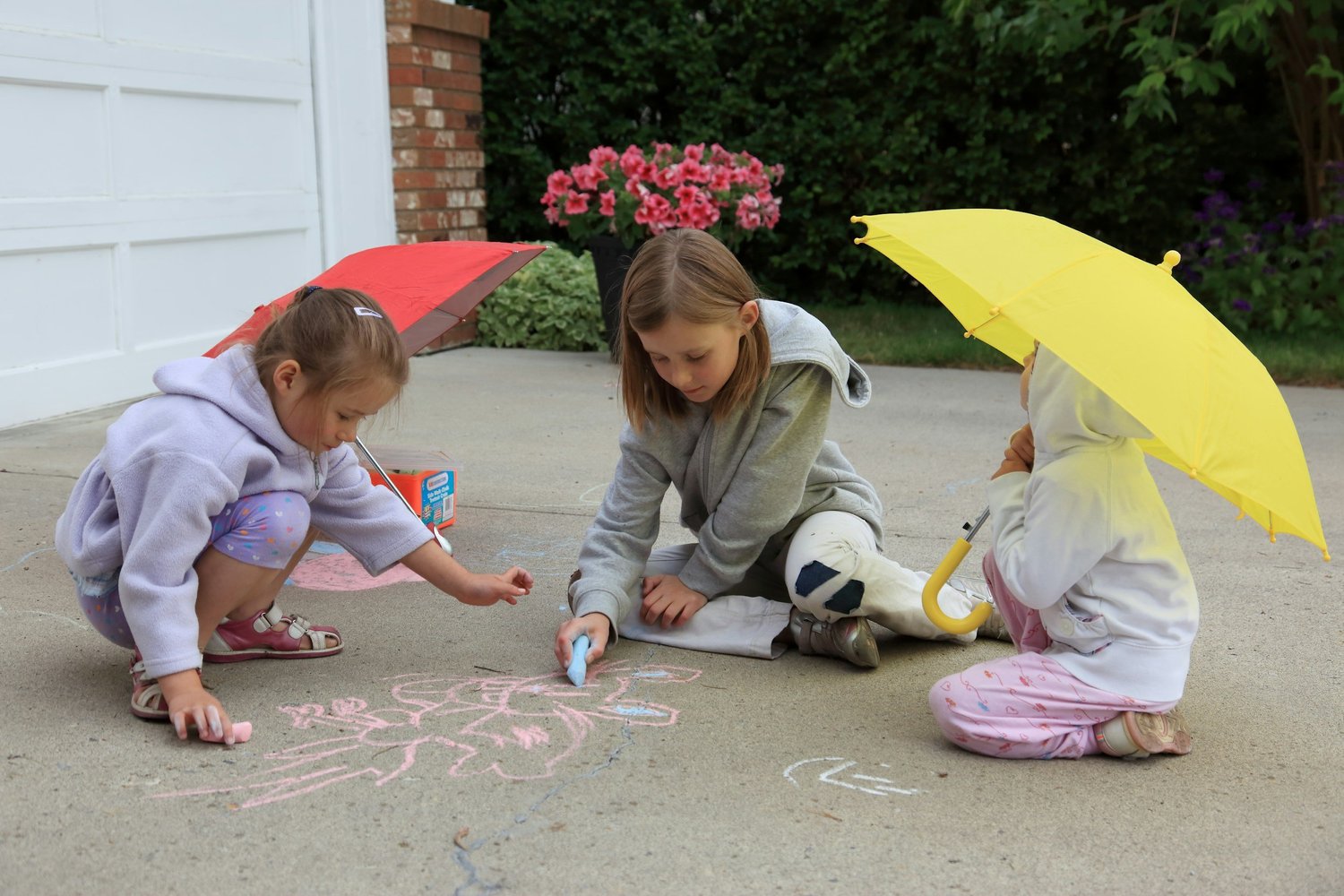
It's the third hot afternoon in a row, everyone's a little melty, and you fish a dusty tub of chalk out of the garage just to get outside. The kids scribble, smear it everywhere, and somehow get more on themselves than the pavement. You're already bracing for the bath.
Here's the happy secret: that messy driveway scribble is one of the best things you can do for little hands all summer. Sidewalk chalk activities quietly build the exact strength, coordination, and prewriting skills that handwriting needs later — no worksheet, no whining, no screen. Take a breath, grab the chalk, and let me show you the games I actually reach for as a pediatric OT.
Why Chalk Punches So Far Above Its Weight
Drawing on the ground is hand work disguised as goofing off. Chalk drags against rough pavement, so every stroke gives the muscles real resistance — resistance your kiddo's fingers, wrist, and shoulder all have to push through. Working down low or up on a fence also pulls the wrist back into the strong "ready to write" position you almost never get at a flat table.
And it's big. Huge arm-sized circles and lines build the shoulder and core stability that steady, neat handwriting is secretly built on. Chalk is where I practice every prewriting shape — just supersized and out in the sun. Curious about the order those shapes usually come in? My post on pre-writing skills for preschoolers breaks it down. Warming up those same muscles before you even pick up the chalk helps too — my fine motor warm-up activities post has a bunch of quick options.
☀️ My go-to: the Spray-and-Erase Trick
Hand your kiddo a cheap spray bottle of water and turn "erasing" into the activity. Draw a big chalk shape, letter, or number, then have them squirt it away by tracing the line with the spray. That squeeze-squeeze-squeeze is hands-down one of my favorite hand-strengtheners — it's the same muscles that power a strong pencil grip — and kids will erase your whole driveway begging for more. A little pump-up garden sprayer they have to pressurize first is even better.
Chalk Games That Secretly Build Big Skills
You don't need a fancy set or a Pinterest plan. Here are the ones I come back to again and again — each is genuinely fun and quietly working on a real skill. Mix and match.
1. Chalk roads & car tracks
Draw a winding road, a parking lot, or train tracks, then let them drive toy cars along the lines. Steering a car down a chalk path is sneaky pencil-control practice — the same "stay on the line" skill they'll need for letters — and it buys you a solid half hour.
Tracing · control2. Hopscotch & jump paths
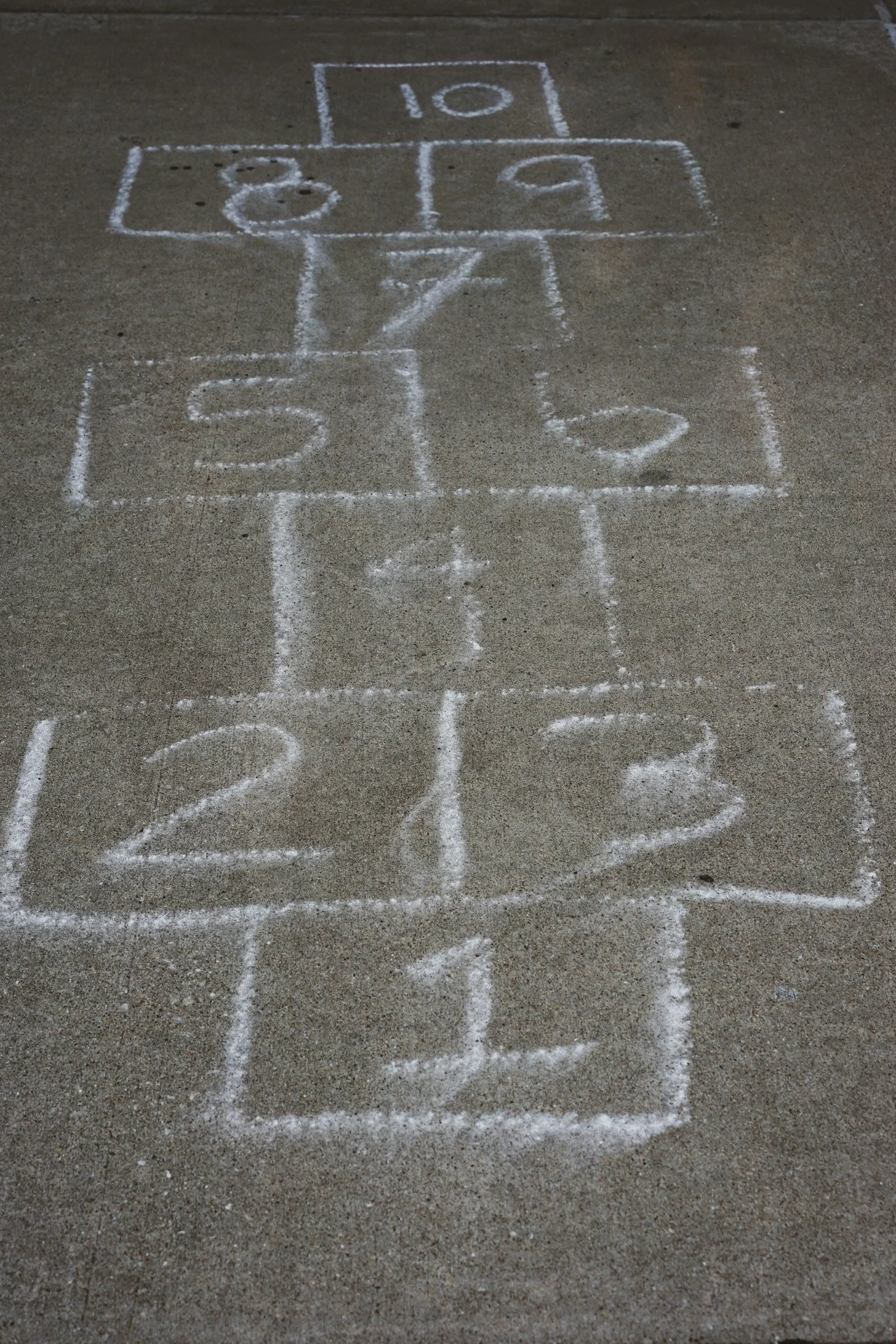
Numbers to hop, a line to balance-walk, lily pads to leap between. Big-body hopping builds the core strength and balance that holding a good desk posture depends on — and you're sneaking in number recognition and counting while they play.
Gross motor · core3. Giant name & letter tracing
Write their name (or a letter of the day) arm-sized and let them trace over it, drive a car on it, or hop each letter. Going huge first makes the same letters far easier when they shrink to pencil size — big-muscle memory transfers straight to the page.
Letter formation4. Chalk mazes & follow-the-line
Draw a wiggly maze or a curvy path and have them "walk" a finger, a rock, or a toy through it without crossing the walls. It's eye-hand coordination and impulse control (go slow, stay in!) rolled into one calm little challenge.
Visual motor · control5. Chalk target toss
Draw a few circles worth different points, then toss beanbags, pebbles, or wet sponges at them. Throwing at a target is huge for eye-hand coordination and shoulder strength — and keeping score sneaks in a little math.
Eye-hand · aim6. Chalk paint
Stir chalk dust (or a little cornstarch, water, and food coloring) into a muddy "paint" and let them brush it on with old paintbrushes. Brush strokes build the same wrist rotation as writing, the mixing is great sensory play — and cleanup is just a hose.
Wrist · sensory7. Trace-your-body mural
Have your kiddo lie down and trace around them, then let them fill in the face, clothes, and silly details. Reaching all the way across that big outline is wonderful crossing-the-midline and shoulder work, plus a gentle boost for body awareness.
Shoulder · midline8. Chalk obstacle course
Draw footprints to jump on, swirls to spin at, a line to crab-walk, and arrows to follow. Kids read the "instructions" and move their body to match — that's motor planning and following directions, and it burns off a ton of wiggly energy.
Motor planning9. Trace-and-find splash
Scatter chalk letters or numbers across the driveway, then call them out to stomp, splash with a wet sponge, or trace with a finger. Movement plus marks keeps wiggly kids learning their letters without it ever feeling like a lesson.
Cross-body · recognition10. Copy-my-shape
You draw a big circle, cross, or zigzag; they copy it right beside yours. Copying shapes is the exact prewriting skill that comes right before letters — and turning it into a "can you match mine?" game makes the practice feel like a win, not work.
Prewriting · imitationWant to keep the cool-down going on the truly scorching days? My sensory bin ideas use the same pour-squeeze-scoop hand work — pair them with chalk for a no-screen summer afternoon that basically runs itself.
Heads up: this post has Amazon affiliate links. If you grab something through them, Tiny Hands earns a small commission at no extra cost to you — it's what keeps the free worksheets free. Thank you!
My two sidewalk-chalk picks
Start with a big tub of washable sidewalk chalk so you never run out mid-driveway. Then, if bending down is a battle (or that grip's still growing), a stand-up chalk holder lets them draw standing tall — turning those big strokes into real shoulder and core work.
When to Check In With an OT
Chalk is play, not a test — a kiddo who'd rather smash the chalk than draw with it is just being a kid. But a quick, no-pressure chat with a pediatric OT can be reassuring if, well into the preschool years, you notice things like a grip that still looks fisted or very tight and tires fast, a child who can't yet copy a simple line or circle by around age 3, or hands that quit almost instantly on anything that pushes or presses.
None of these is an emergency — they're just gentle "let's take a closer look" flags. Helping these little skills click, through play, is genuinely an OT's favorite job.
Want the print-and-play version?
When you're ready to bring those big chalk strokes down to paper, my prewriting line and stroke pages live in the membership — lines, curves, crosses, and zigzags, ready to laminate and reuse. Ready in about two minutes.
Get the Prewriting PagesNew here? Grab the free pack first 🎁
Join the list and I'll send you the Fine Motor Starter Pack — 40+ print-ready pages to build those little hands at home, prewriting strokes included.
Send My Free PackWant the whole library, sorted and ready? Peek at the membership →
This post is for learning and support — it isn't a diagnosis. © Tiny Hands