
Bilateral Coordination Activities for Two Hands That Team Up
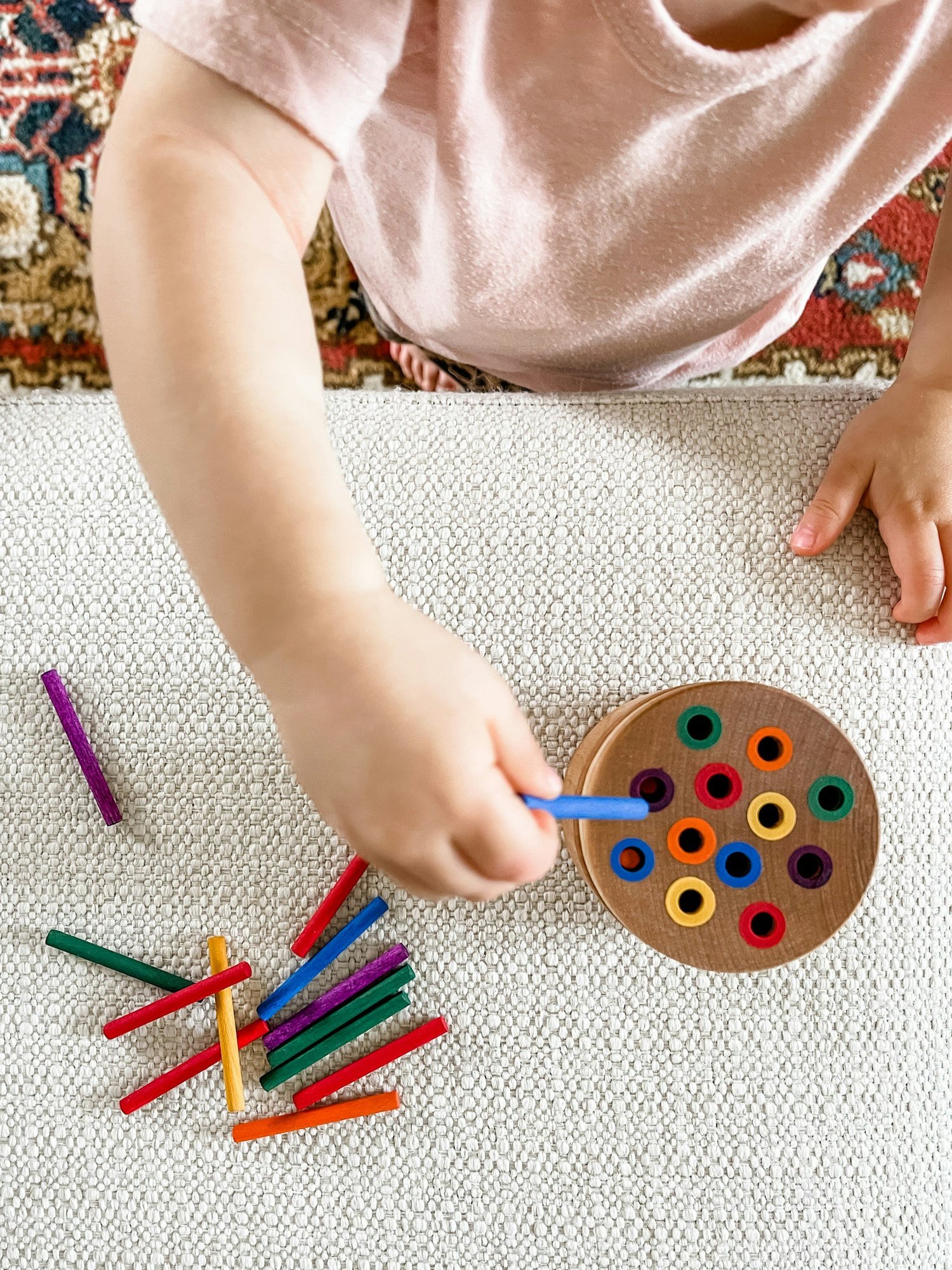
You hand your kiddo scissors, and one hand does all the work while the other just… hangs there. The paper slides around, the cut goes crooked, and they get frustrated. Or you're teaching them to pour, and the bowl tips because nobody's holding it. If you've watched your child fight with tasks that clearly need both hands, this post is for you — because the missing piece is usually bilateral coordination, and there are easy activities that build it.
Take a breath — this is one of the most fixable things I work on. "Bilateral coordination" just means using both hands together in a smart, organized way. It's not something kids are born knowing; it develops in a predictable order, and it grows fast with the right kind of play. Let me walk you through the order I actually use in sessions, plus the games that make it click.
The Bilateral Coordination Order I Actually Use
Two hands don't start out as a team — they learn to cooperate in stages. Here's the rough progression I follow so the activity matches the kiddo in front of me. Go by where your child is, not their birthday.
Baby–18 months: both hands doing the same thing
The first stage is symmetrical — both hands doing the exact same job at the same time. Banging two blocks together, holding a big ball, pulling pop-beads apart. It looks like play (it is!), but it's the brain learning that two hands can work as a pair.
Symmetrical18 months–3 years: hands taking turns
Next comes alternating — hands trading off in a rhythm. Think drumming hand-over-hand, climbing, or crawling through a tunnel. You'll also see the start of transferring a toy from one hand to the other. This back-and-forth is huge for both sides of the brain talking to each other.
Alternating3–5 years: a leading hand and a helper hand
This is the big one for school. Now one hand does the job while the other stabilizes — holding the paper while cutting, steadying the bowl while stirring, pinching a bead still while the other hand threads. Most kids who struggle with scissors are stuck right here, and it's very trainable.
Lead + helper5–6 years: smooth and automatic
By now the two hands work together without a thought — cutting curves while turning the paper, tying shoes, holding a ruler steady while drawing a line. This is the goal, and it's built on all the stages before it.
AutomaticIf cutting is where you're seeing the struggle, it's worth knowing what's actually normal at each age — my scissor skills for preschoolers guide breaks down the real timeline so you know whether to nudge or just wait. Two-handed teamwork is also a close cousin of crossing the midline — reaching one hand across the body to the other side — so that's a great next read if this stage sounds like your kiddo too.
🙌 My go-to trick: name "The Helper Hand"
Here's what I see over and over: the kiddo's dominant hand is busy cutting or coloring, and the other hand is just flopping in their lap. The paper slides, the cut wanders, and we blame the scissors. So I give that quiet hand a name and a job: "Where's your helper hand? Put it on the paper and hold it still." Suddenly there's a clear, concrete cue — not "use both hands" (too vague for a 4-year-old), but "helper hand holds, working hand works." I'll even draw a little handprint on the corner of the page so they know exactly where the helper hand parks. Once a child can name it, they start catching it themselves — and that's when the crooked cuts straighten out.
Bilateral Coordination Activities From Stuff You Already Have
You don't need a therapy catalog to build two-handed teamwork. Here are the activities I reach for most — nearly all of them use things already in your house, and every one sneaks in real hand work while your kiddo just thinks they're playing.
1. Roll and cut play dough
Rolling a pin takes both hands pushing together (symmetrical), and rolling a "snake" then holding it still to snip it with scissors is the leading-hand/helper-hand combo in action. Bonus: it's great scissor practice with zero paper stakes.
Lead + helper2. Lacing and threading
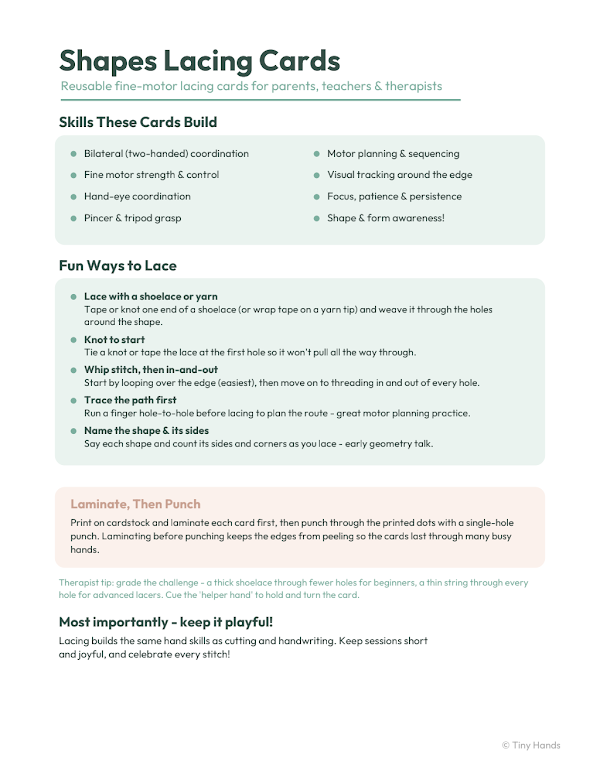
Threading a bead or lacing a card is bilateral gold — one hand holds and steadies while the other pushes the lace through. It's the exact "two hands, two jobs" pattern kids need. I've got a whole post of easy lacing and threading activities if you want to start today with a shoelace and some pasta.
Steady & thread3. Wring out sponges
Bath time or dish time, hand them a wet sponge and let them squeeze the water out. Wringing takes both hands twisting in opposite directions — surprisingly hard, sneakily strengthening, and toddlers love the drama of the drips.
Symmetrical4. "Real" kitchen jobs
Holding the bowl steady with the helper hand while the working hand stirs. Tearing lettuce. Squeezing a lemon. Kneading dough. Everyday cooking is packed with two-handed jobs, and kids feel like a million bucks doing the "real" work.
Lead + helper5. Pop-beads, blocks & building
Pulling snap-blocks apart and pushing them together is classic symmetrical work, and building a tall tower quietly trains a steady base hand. Connecting and separating anything that takes a two-handed effort counts.
Build & pullWant even more no-prep ideas? My roundup of fine motor activities using things you already have at home is full of clothespin, tong, and sticker games that double as bilateral practice.
Want the print-and-play version?
My Fine Motor & Cutting Pack lives in the membership — cut-and-hold strips, lacing cards, and roll-and-snip mats that all build the helper-hand habit, with a picture prompt on every page. Hand your kiddo a page and let it run itself. Ready in about two minutes.
Get the Fine Motor PackHeads up: this post has Amazon affiliate links. If you grab something through one, Tiny Hands earns a small commission at no extra cost to you — it's what keeps the free worksheets free. Thank you!
Two toys that make two-handed teamwork a game
You can build every bit of this with a shoelace and some pasta — but if you want a grab-it-off-the-shelf option, these are the two I reach for. Wooden lacing beads are pure "one hand holds, one hand threads" practice, and The Fuzzies is a tong-and-stack game that builds bilateral coordination and tool use while your kiddo giggles through it. Both turn "practice" into "again, again!"
When to Check In With an OT
A little one who's still figuring out two-handed tasks is almost always right on track — this skill builds gradually, and "he uses one hand more" is developmentally normal for years. A hand preference showing up is a good thing, not a red flag.
That said, a quick, no-pressure chat with a pediatric OT or your child's provider can be reassuring if, past age four or five, you're consistently seeing things like a child who avoids or can't hold the paper still while cutting or coloring no matter how you cue it, who switches the pencil or scissors back and forth between hands for the same task (no settled preference by kindergarten), who seems to "forget" one hand exists during two-handed jobs, or who struggles with almost everything that needs both hands — dressing, utensils, opening containers.
None of those is an emergency — they're just gentle "let's take a closer look" flags, and there's almost always a simple, playful tweak that helps. Watching a kiddo go from a floppy helper hand to a confident little cutter is one of my favorite things. You've got this.
New here? Grab the free pack first 🎁
Join the list and I'll send you the Fine Motor Starter Pack — 40+ print-ready pages to build those little hands at home, from first scoops to strong, steady helper hands.
Send My Free PackWant the whole library, sorted and ready? Peek at the membership →
This post is for learning and support — it isn't a diagnosis. © Tiny Hands