
First Grade Readiness: The Skills That Smooth the Jump
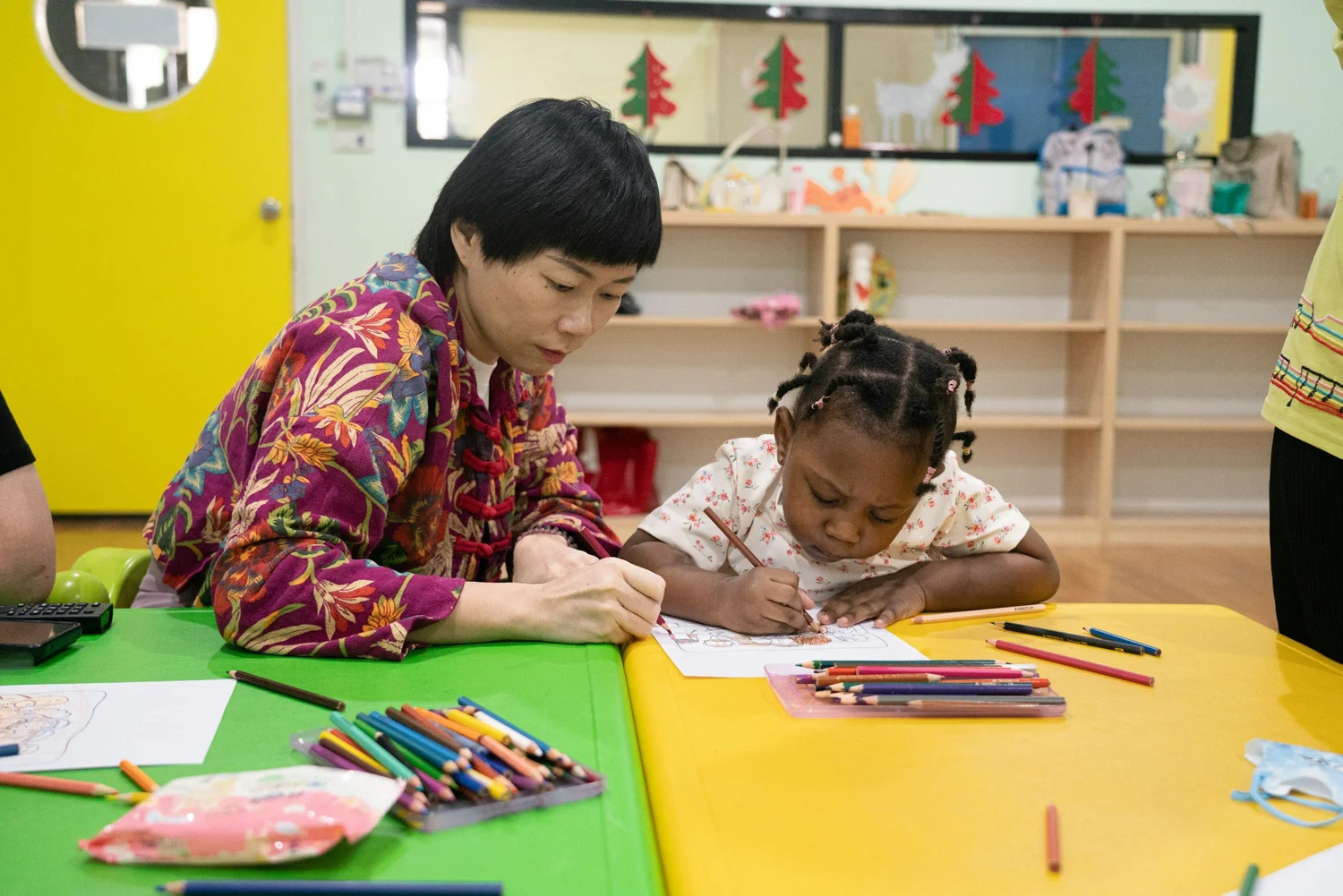
Kindergarten felt like a big leap — and just when you caught your breath, first grade is on the horizon. Suddenly there's talk of real reading, longer writing, less play, and a whole lot more "figure it out yourself." If you're quietly wondering whether your kiddo is ready, take a breath. You're already doing the right thing by thinking about it.
Here's the honest, OT take on first grade readiness: it's less about academics than parents fear, and more about stamina and independence. The kids who settle in fastest aren't the ones who read first — they're the ones whose hands don't tire, who can sit and listen a little longer, and who can manage their own backpack. Let's build those, the gentle way.
What's Actually Different About First Grade
Kindergarten is the on-ramp; first grade is where the highway speeds up. The school day is longer, there's more sitting and seatwork and less free play, writing gets longer (full sentences, not just their name), reading really takes off, and kids are expected to manage their own materials and follow two- and three-step directions on their own.
None of that is scary once you see it coming. If your kiddo is heading into kindergarten instead, start with my kindergarten readiness post — this one picks up right where that leaves off.
The Readiness Skills I'd Focus On This Year
You don't need flashcards or a workbook. These are the skills that actually smooth the jump — most build through everyday play.
Handwriting stamina
First grade means writing more, for longer — and tired hands are the number-one complaint I hear. Build endurance gradually with short, fun bursts, and strengthen the hands behind it. (If your kiddo's grip still looks young, my correct pencil grip for kids guide will reassure you.)
Handwriting · enduranceRefined fine motor
Cutting on lines, managing glue, opening their own supplies — first grade asks for more precision than kindergarten did. Keep those little hands strong with the same playful work in my fine motor warm-up activities.
Fine motor · precisionIndependence & organization
Packing a backpack, finding their folder, zipping a coat, opening every lunch container without help — this is the sleeper skill that makes a first grader's day run smoothly. Practice it now, at home, with no morning rush.
IndependenceSitting & focus stamina
Longer lessons mean longer sitting. You're not aiming for stillness — you're building the ability to stay with a task a few minutes longer, then take a movement break and come back. Little and often beats one big push. If this is the piece you're most worried about, my kindergarten stamina post has the whole build-up-slowly approach.
Attention · regulationFollowing multi-step directions
"Get your journal, write the date, and start question one." First grade is full of these. Practice two- and three-step directions at home through cooking, chores, and games like Simon Says.
Listening · planningA love of letters & sounds
Reading is the teacher's job — your job is to keep it joyful. Read together, play with rhymes and sounds, and let them see you write. Curiosity now beats drilling every time.
Early literacyIf you only remember one thing: stamina and independence beat academics for a smooth first-grade start. The reading and writing get taught — the staying power has to be built.
🪜 My go-to: the Stamina Ladder
Don't ask a tired six-year-old to write for fifteen minutes — you'll both lose. Start with whatever they can do happily (even two minutes), then add just one more minute every few days. Same with sitting and reading. Climbing the "ladder" one small rung at a time builds real endurance without the battle, and they barely notice it's getting harder.
First Grade Readiness at Home
Here's how I'd build all of the above without it feeling like school — mostly with stuff you already have.
Write on a wall
Tape paper to the wall or use an easel for drawing and letters. Working upright builds the wrist and shoulder strength that powers neat, no-fatigue handwriting at a desk.
Handwriting · strengthWrite for real reasons
Grocery lists, a note to grandma, a menu for dinner, a comic. Real-purpose writing builds stamina and motivation far better than a worksheet ever will.
Handwriting · motivationBeat-the-timer challenges
Pack the backpack, tie shoes, or set the table before the timer dings. Kids love the race, and you're quietly building speed and independence for busy school mornings.
Independence · speedCook from a recipe
Following the steps of a simple recipe is multi-step directions, sequencing, measuring, and fine motor all at once — plus a snack at the end.
Directions · fine motorMovement brain breaks
Between focused tasks, throw in ten jumping jacks, a bear crawl down the hall, or wall push-ups. That reset is exactly what helps a wiggly kid come back and focus again.
Regulation · focusHeads up: this post has Amazon affiliate links. If you grab something through one, Tiny Hands earns a small commission at no extra cost to you — it's what keeps the free worksheets free. Thank you!
The screen-free way to build writing stamina
An LCD writing tablet lets them practice letters, words, and lists, then wipe it clean and go again — no stack of worksheets, no pressure. It's my favorite low-key way to grow handwriting endurance before first grade.
The little window that keeps a wandering eye on the line
First grade asks for a lot more reading and copying, and a lot of that "I lost my place" frustration is just a tracking problem. The FingerFocus reading highlighter frames one line at a time so a kid who keeps losing their spot can finally track across the page — simple, and it works.
When to Check In With an OT
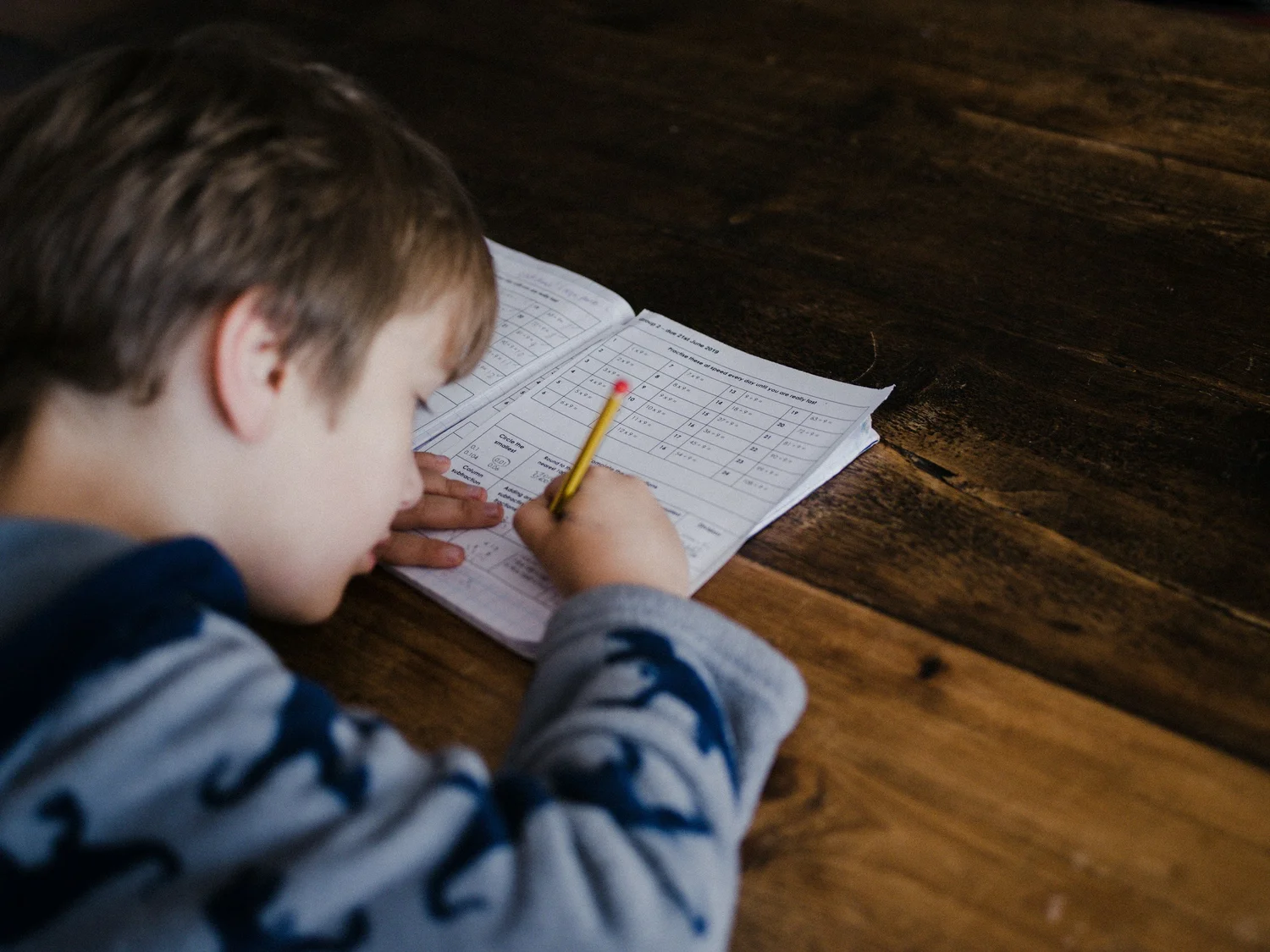
Readiness is a range, not a finish line — kids arrive at first grade with all kinds of strengths. But a quick chat with a pediatric OT before the year starts can be reassuring if you notice your child still has a painful or very tight pencil grip, tires or melts down after just a minute or two of writing, can't yet manage basic self-help like buttons, zippers, or opening lunch containers, or struggles to follow a simple two-step direction.
None of these is an emergency — they're just "let's take a closer look" flags, and they're exactly the kinds of things an OT helps click into place, through play, before they become a daily struggle.
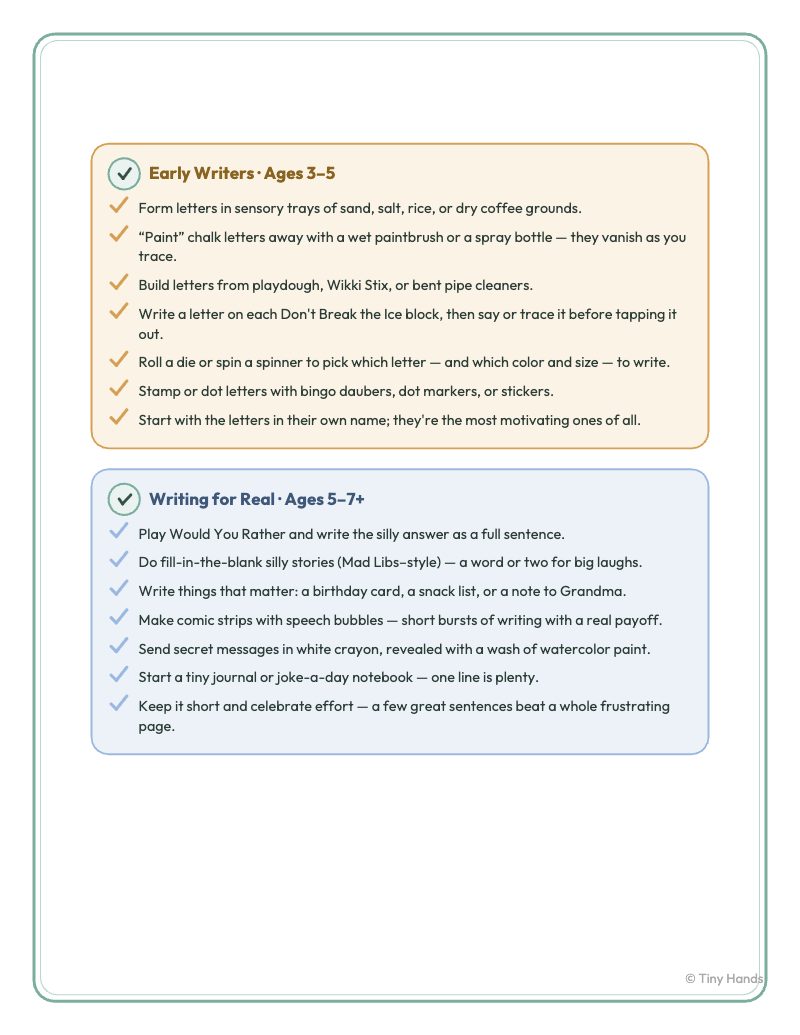
Want the Printable Version?
It's ready to print, right in the membership.
See Making Handwriting FunNew here? Grab the free pack first 🎁
Join the list and I'll send you the Fine Motor Starter Pack — 40+ print-ready pages to build the strong, ready hands first grade asks for.
Send My Free PackWant the whole library — sorted and ready?Peek at the membership →
This post is for learning and support — it isn't a diagnosis. © Tiny Hands