
Pencil Grasp by Age (and Why the Fist Is Fine)
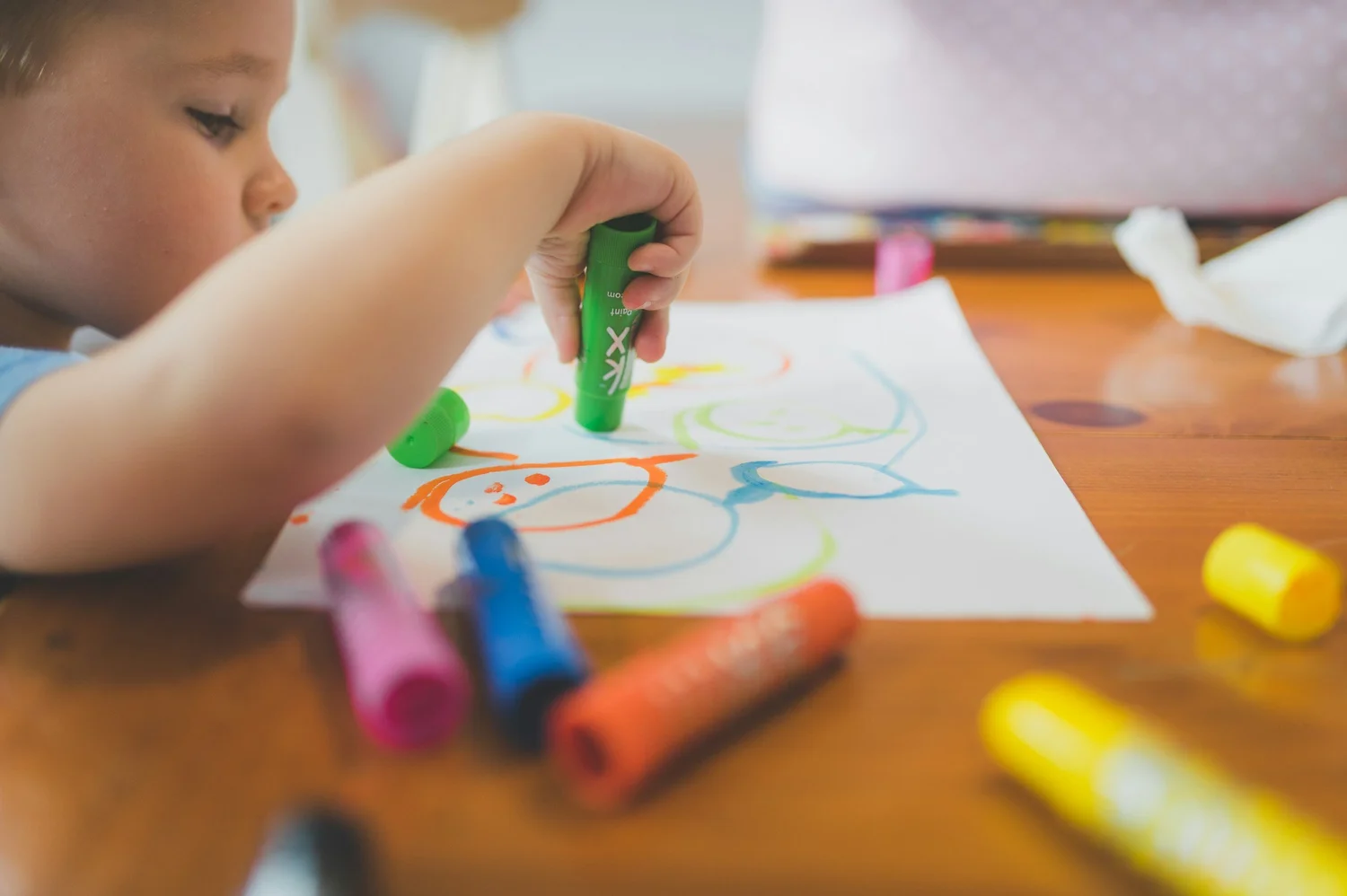
You've probably seen it: the crayon buried in a little fist, the whole arm scribbling, maybe a hole torn right through the paper. And someone — a grandparent, a preschool teacher, the internet — has probably told you to "fix" it.
Here's the thing: a pencil grasp isn't taught in a day. It matures in stages as the hand gets stronger, and that fist is exactly where it's supposed to start.
How grasp grows
Whole-hand grasp (~1–2 years)
Crayon in a fist, whole arm doing the work, big joyful scribbles. Perfect for this age — don't change a thing.
Fingers-down grasp (~2–3 years)
Fingers point down toward the paper, arm still moving as one unit. Strength and control are quietly building.
Static tripod (~3½–4 years)
Thumb and two fingers hold the pencil, but the hand still moves from the wrist. So close.
Dynamic tripod (~4½–6 years)
The mature grasp: thumb, index, and middle finger make small precise movements while the ring and pinky tuck in.
There's no one "right" grasp
This surprises a lot of parents: OTs don't chase a textbook grip. A good grasp is one that's comfortable, doesn't tire the hand, and makes readable writing. Three fingers on the pencil or four — both are great. The main thing I look for is an open circle ("O") between the thumb and index finger, not a collapsed, white-knuckle clamp.
Sneaky ways to help (zero nagging)
- Break the crayons. Tiny crayon stubs and golf pencils make a fist physically impossible — a tripod just happens.
- Go vertical. Tape paper to the wall or use an easel; it sets the wrist in the perfect position automatically.
- The pom-pom trick. Tuck a cotton ball under the ring and pinky fingers to keep them gently curled while the other three work.
- Build strength first. Playdough, tongs, and clothespins do more for grasp than a hundred reminders to "hold it nicely."
My Favorite Grasp Tool: Rock Crayons
If I could sneak one thing into every crayon box, it'd be rock crayons — those little egg- or pebble-shaped crayons. There's nothing to wrap a fist around, so your kiddo has to pinch them with the fingertips — thumb, index, and middle finger — which is the exact tripod grip we're building toward. The shape does the teaching, no nagging required. They're chunky and tough too, so they're forgiving for the littlest hands, and they nudge heavy-handed kids toward a lighter touch.
These are the rock crayons I use and recommend — swap them in for a week and watch those fingers shift.
Heads up: that's an Amazon affiliate link — if you grab a set through it, Tiny Hands earns a small commission at no extra cost to you.
When to check in
Grasp matures at different speeds, so give it room. But around age 5–6, if your kiddo still writes with a full fist, wraps the thumb over the pencil, presses super hard or feather-light, complains their hand hurts, or keeps switching hands — that's worth a check-in with an OT. Usually a few small changes make writing feel a whole lot easier.
Build the Grip Behind the Grasp
My dough mats and grip-building pages put those little fingers to work — the squeeze-and-trace practice that grows a comfy pencil grasp, no nagging required.
Grab It in the LibraryThis post is for learning and support — it isn't a diagnosis. © Tiny Hands