
Kindergarten Writing Expectations: How Much Should a Kindergartner Write by Fall? Probably Less Than the Kid Next to Yours

You picked up the folder at back-to-school night, and the kid two cubbies down already has a full name written in neat, even letters. Your kindergartner's paper has three wobbly shapes and a backward S. Your stomach drops a little. Are they already behind — in September?
Take a breath, because here's the honest, by-the-book answer: by fall of kindergarten, most kids can attempt their own first name, and that's genuinely it. Letters reversed, sizes all over the map, capitals and lowercase mixed together in the same word — that's not behind, that's exactly on schedule. Full sentences, neat letter formation, and writing without any help usually don't show up until winter or spring of kindergarten, sometimes later. Fall is for attempting, not perfecting. If your kid is picking up a pencil and giving it a genuine try, they're doing exactly what a fall kindergartner should be doing.
How Much Should a Kindergartner Be Able to Write by Fall?
Writing isn't a light switch — it's a slow climb, and where your child lands depends more on the calendar than on any worksheet taped to the fridge. Here's the timeline I actually use when a parent asks me this exact question in session:
Preschool (Age 3–4)
Scribbly lines, maybe a wobbly attempt at the very first letter of their name. Mock "writing" that isn't real letters yet — that's completely normal here, not a red flag.
Before KindergartenPre-K Spring (Age 4–5)
Usually writes the first letter of their name from memory. Other letters, if they attempt them at all, are often backward, floating, or shaky — expected, not concerning.
Right Before KKindergarten, Start of Year
Attempts their name. Some letters are recognizable, upper and lowercase get mixed in the same word, and sizing is all over the place.
Aug–SeptKindergarten, Fall
Writes their first name with some accuracy. Reversed letters and uneven spacing are still completely normal at this point — full sentences are not expected yet.
This Is "By Fall"Kindergarten, Winter–Spring
Starts copying and writing simple words, with first attempts at sentences (usually with support). Real independence tends to settle in by spring.
Later in the YearIf you want the step-by-step, nuts-and-bolts version of actually teaching name writing (not just the timeline), I've got the full how-to here: How to Teach Your Child to Write Their Name.
What's the Trick I Use for a Reluctant Writer Who Won't Even Try?
Most of the resistance I see in session isn't a skill problem — it's a pressure problem. The second writing starts to feel like a test, kids shut down and refuse the pencil altogether. So instead of correcting every letter, I do this one thing: The Dated Index Card. Every couple of weeks, hand your child a blank index card and ask them to write their name — nothing else, no fixing it in the moment, no comparing it to a sibling's or a classmate's. Jot the date in the corner and drop the card in a shoebox. Come January, you flip through the stack and see real, physical proof of progress, instead of a vague worry about where they "should" be. It quietly turns writing from a performance into a tiny, low-stakes habit — and it hands you actual evidence instead of a feeling.

What Are Easy Ways to Practice Writing With Stuff You Already Have?
None of this needs a workbook. Five minutes of playful practice a few times a week does more for a reluctant writer than a worksheet they resent:
Shaving Cream Name Writing
Squirt a layer on the counter or a tray, write the first letter of their name big with a finger, smoosh it flat, and try again.
2 MinutesSalt Tray Tracing
A thin layer of salt or sand in a baking pan, traced with a fingertip. The texture makes mistakes low-stakes — just shake the tray and start over.
5 MinutesPlay-Doh Letter Rolling
Roll a snake, then shape it into the first letter of their name. Hands learn a letter's shape long before a pencil ever has to prove it.
10 MinutesGiant Sidewalk Letters
Chalk outside, writing their name as big as their whole arm can reach. It builds the same shoulder strength that makes small, neat letters possible later.
OutsideMatch-the-Name Magnets
Fridge letter magnets and an index card with their name written underneath — match each magnet letter on top of its twin.
No Mess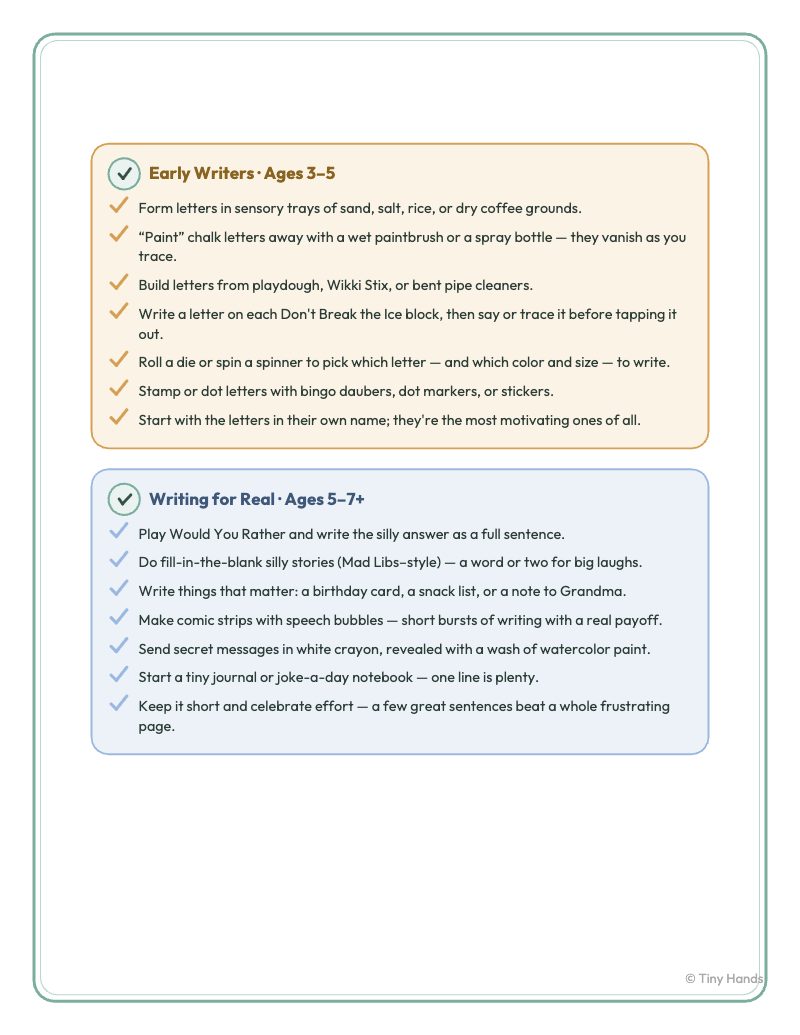
Want the Printable Version?
It's ready to print, right in the membership.
See Making Handwriting FunHeads up: this post has an Amazon affiliate link. If you grab something through it, Tiny Hands earns a small commission at no extra cost to you — it's what keeps the free worksheets free. Thank you!
The Tool I Reach For First
For a kid who needs to feel a letter before they can write it, I reach for the hand2mind Letter Tracing Sensory Pad — trace a letter with a finger, feel the squish, then try it again with a stylus. The extra sensory feedback makes letter formation click for a lot of reluctant writers.
When Should I Check In With an OT About My Child's Writing?
Here's the calm version: most kids who look "behind" on writing in fall of kindergarten are simply... in kindergarten. Give it the school year before you worry. It's worth a conversation with the teacher or a pediatric OT if, by winter break, your child still avoids pencils completely, can't hold one in any functional grip, complains of real hand pain or fatigue after just a minute of writing, or shows zero interest in even attempting a single letter. None of that automatically means something's wrong — it just means a little extra support could help things click faster. For the bigger picture of what actually matters before day one, this post rounds it all up: Kindergarten Readiness: The Skills That Actually Matter.
New here? Grab the free pack first 🎁
Join the list and I'll send you the Fine Motor Starter Pack — 40+ print-ready pages to build those little hands at home, from first scoops to strong little grips.
Send My Free PackAnd if letters still feel early, don't skip the step before it — Pre-Writing Lines Every Preschooler Needs Before Letters covers the strokes that make every letter so much easier later.
This post is for learning and support — it isn't a diagnosis. © Tiny Hands