


How Do I Teach My Child to Use an Eraser? The Light-Touch Sweep Trick

If your child rubs a hole straight through the paper, smudges the whole page, or melts down over one wrong letter, here's the quick answer on how to teach a child to use an eraser. Have them hold the paper still with their helper hand, then sweep the eraser in short, light strokes in one direction, and brush the crumbs away with a flat hand. Most kids can erase a little by age 4 to 5, and fix a mistake cleanly by 6 to 7. It's a small skill with a big payoff, because kids who can fix a mistake are braver about trying.
The method I use in sessions is the Light-Touch Sweep Trick. Pretend the eraser is a feather brushing dust off the page. Light, short, one direction. Say "feather sweep" out loud and it sticks.
From the Tiny Hands shop
Practise the Light Touch Somewhere Fun
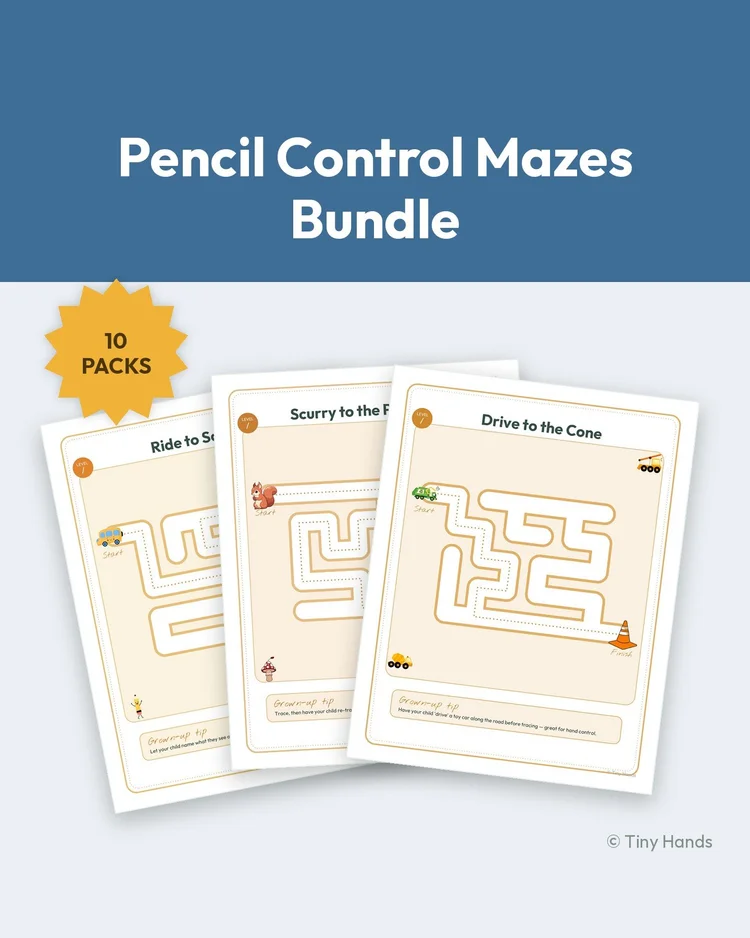
Erasing well is really a pressure-control skill — press softly, stay on the line, stop where you mean to. The Pencil Control Mazes Bundle trains exactly that, and mazes feel like a game rather than handwriting homework.
Shop the Pencil Control MazesAt What Age Can Kids Erase Without Tearing the Paper?
Here's the order I usually see. Think of it as a loose map, not a deadline.
Ages 3 to 4: scribble erasing for fun
They rub back and forth on a big scribble, often with a whole fist. Totally normal, and a great way to learn what an eraser does.
ExploringAges 4 to 5: erasing a line or a letter
They can target a spot with a little help, though the paper may wrinkle. A big pink eraser is easier to hold than the tiny pencil-top one.
With a grown-up nearbyAges 5 to 6: kindergarten fixes
Most kids erase on their own, but they still press hard when they're frustrated. Expect a few smudges.
Mostly independentAges 6 and up: clean, quick corrections
They steady the page, erase just the mistake, and brush the crumbs off before writing again.
Neat fixerA 5-year-old who still tears the paper is right on track. Erasing asks both hands to do two different jobs at once.
⭐ The Light-Touch Sweep Trick, step by step
Helper hand flat. The non-writing hand lies flat on the paper like a paperweight. No wiggling page, no wrinkles.
Feather sweep. Short strokes, one direction, no pressing. If the paper bends under the eraser, ease up.
Check, don't scrub. Lift, peek, and sweep again only if you still see the mark.
Brush, don't blow. Sweep the crumbs off with the flat hand. Blowing sends them straight into the carpet.
Why Does My Child Rub Holes in the Paper?
Nine times out of ten it's pressure. A child who writes hard usually erases hard, too. If that sounds like yours, my post on pencil pressure walks through how to dial it down.
The second culprit is the helper hand. If one hand can't hold the page still, the paper slides and crinkles while the other hand scrubs. That teamwork is called bilateral coordination, and the games in my bilateral coordination activities post build it in a playful way.

How Can I Practice Erasing at Home?
No worksheets needed. A few relaxed minutes beats a long practice session, and most of this is stuff already in your house.
Window-marker erasing
Draw on a window or mirror with a washable marker and wipe it away with a dry cloth. Big arm sweeps are great practice for the motion.
Easy startDusty tray erasing
Sprinkle flour or sand on a baking tray, draw a squiggle with a finger, then sweep it flat with a soft brush. Light touch is the whole game.
Mistake of the day
Make one wrong line on purpose and let them fix it. Kids love being the one in charge of the eraser.
Confidence boostIf the tiny muscles in their hand tire out fast, my hand-strengthening exercises make a fun add-on.
Want printable activities for strong little fingers?
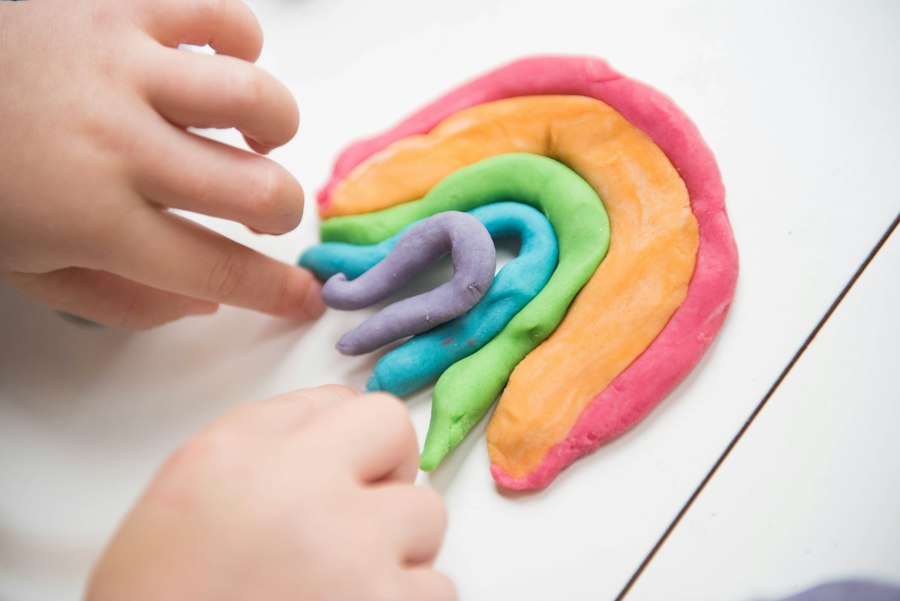
A few minutes of pinching, squeezing and tracing makes pencil and eraser jobs so much easier. The fine motor activities in the Tiny Hands library are print-and-go pages for exactly that.
See the Fine Motor LibraryWhile you're setting up their school kit, my pencil sharpener guide and pencil grip guide are good next reads.
When Should I Check In With an OT?
Give it a few weeks of relaxed practice first. Erasing tends to click quietly once pressure settles down.
It's worth a chat with your pediatrician or an OT if your child is 6 or older and still tears the paper nearly every time, if they get very upset about mistakes, or if writing, cutting, and buttons all feel tough at once. An OT can see which piece is tripping them up, and it's usually very workable.
Until then, a clean sheet and a calm "feather sweep" will go a long way.
Grab the free Fine Motor Starter Pack 🎁
Join the list and I'll email you the free Fine Motor Starter Pack: 40+ pages of pinching, tracing, tearing and snipping activities you can print today.
Send Me the Free PackWant everything I use in sessions, sorted by skill? Peek inside the membership →
This post is for learning and support — it isn't a diagnosis. © Tiny Hands