


How Do I Teach My Child to Peel a Banana or Orange? The Thumb Pop Trick

Here's the quick answer on how to teach a child to peel a banana or orange: start the peel for them with a small tear, then let them do the rest. Most kids can peel a banana on their own around 3 to 4, and an orange by 5 or 6. The trick is a thumb pushed into the top first, because that first break is the hardest part. After that it's just pulling.
I call mine the Thumb Pop Trick. Your child pokes their thumb into the top of the fruit (the stem end of a banana, the little dimple on an orange) and "pops" the peel open. Then both hands pull the peel away like they're opening a present.
Here is what I like about it: a kid who can peel their own fruit is a kid who isn't waiting in the cafeteria line for a grown-up to do it. And the pinch, push and pull build the same hand muscles that hold a pencil. Here's how I'd go about it.
From the Tiny Hands shop
Build the Peel-and-Pull Grip
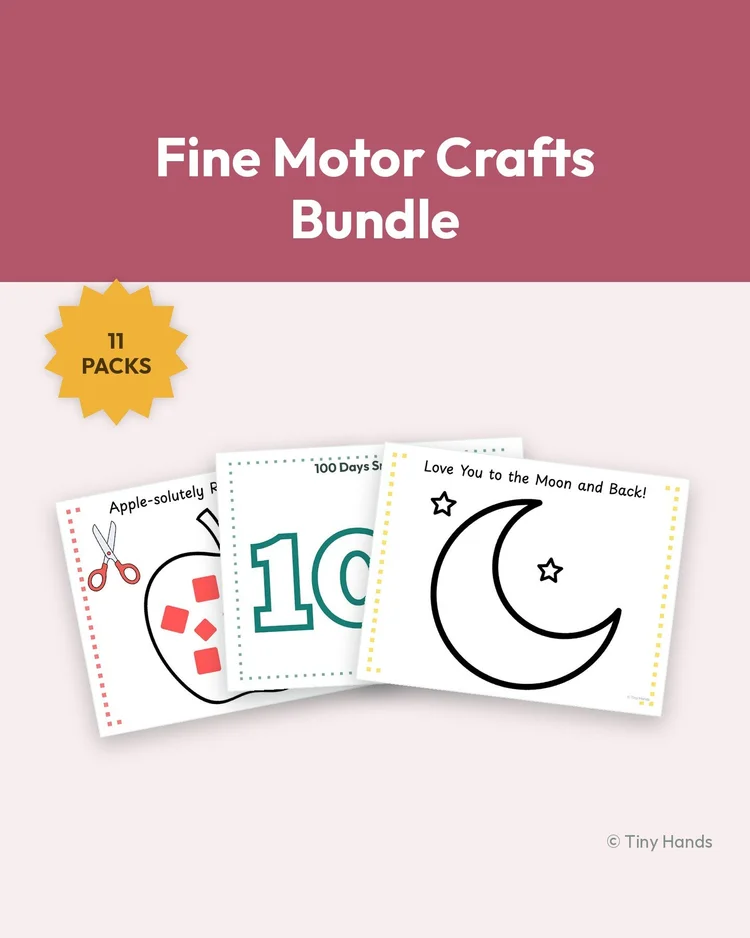
Starting a peel is a pinch with a pull behind it — thumb and finger doing one job while the other hand holds firm. The Fine Motor Crafts Bundle rehearses that split-hand teamwork through tearing, folding and sticking.
Shop the Fine Motor Crafts BundleAt What Age Can a Child Peel Fruit on Their Own?
This is roughly the order I see. Treat the ages as loose, kids skip around.
2 to 3: pulling the peel off a started banana
You split the top, they pull the strips down. That alone is a big job for little fingers.
You start it3 to 4: the thumb pop on a banana
Now they can push a thumb in at the top and pull. Expect a squished banana or two. It still counts.
Thumb Pop begins4 to 5: easy-peel citrus with a head start
Clementines and mandarins first, since the skin is loose. A tiny nick in the top from you makes it doable, and the thumb takes over from there.
Easy-peelers only5 to 7: a regular orange, mostly solo
Thicker skin means more hand strength and patience. A lunchroom kid who can do this saves everyone a lot of time, and some still want you to start it. Totally fine.
Peel and snackIf your 5-year-old still hands you every clementine, you haven't missed anything. Citrus is just hard work for small hands.
⭐ The Thumb Pop Trick, step by step
Find the starting spot. Show them the stem end of the banana or the dimple on the orange. Point at it like it's treasure.
Pop it. Thumb in, push down, and say "pop!" out loud. The sound makes it stick.
Two hands, one peel. One hand holds the fruit still, the other pulls the peel away. That's it.
Finish with a pinch. For oranges, pinch off the leftover white fluff. It's fiddly on purpose.
Why Is Peeling a Banana So Hard for My Child?
Peeling looks easy because we do it half-asleep. But it asks a lot from small hands. The thumb has to push hard while the fingers stay steady, and the other hand has to hold still. That's bilateral coordination, the same teamwork behind cutting and buttoning.
Kids also have to judge how hard to pull. Too gentle and nothing moves, too hard and half the banana goes flying. And some kids really dislike sticky, slippery fingers, which makes the whole job feel not worth it. If your child wipes their hands after every bite, that's a sensory thing and it's worth knowing about.

How Can I Practice Peeling Skills at Home?
You don't need a fruit bowl full of bananas. Try these first.
Banana "surgery"
Let them peel a banana at the weekend when mess doesn't matter. Cut the top off first if the stem is too tough. They'll do it again and again if there's a snack at the end.
Weekend practiceSticky-finger fixes
Keep a damp cloth or wipe at the table so wet hands aren't a reason to quit.
Reduce the yuckPlay-dough oranges
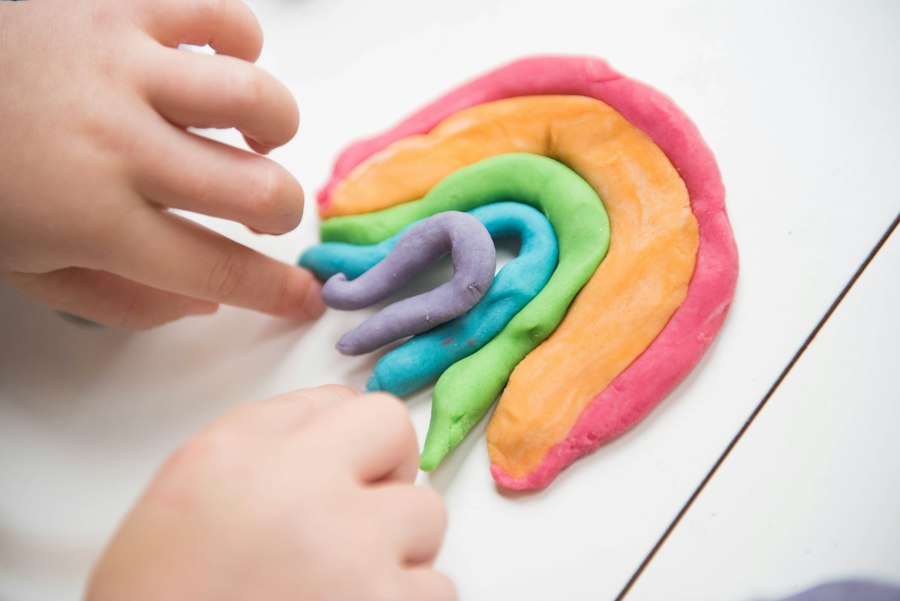
Wrap a ball of play-dough in a thin flat "peel" and let your child pinch and tear it off. Same moves, no juice on the couch.
Mess-free versionPeeling fits right in with the rest of lunchroom skills. You might like my guides to opening lunch containers and using a fork and knife. Both use the same hand skills, and I've put the whole school independence picture in one place.
Want printable hand-strength practice?
Pinching, tearing and pushing build the same muscles peeling needs. The fine motor activities in the Tiny Hands library are quick print-and-go pages for exactly that.
See the Fine Motor LibraryWhen Should I Check In With an OT?
Some kids are just slow to peel. It happens, and it's usually fine.
I'd mention it to your pediatrician or an OT if your child is 6 or older and can't start a banana even after you've shown them, if they avoid sticky or messy foods so much that it limits what they eat, or if their hands tire out fast during other everyday jobs like opening snacks or holding a pencil. An OT can look at the hand strength and the sensory piece together.
For now, pop, pull, and eat. You've got this.
Grab the free Fine Motor Starter Pack 🎁
Join the list and I'll email you the free Fine Motor Starter Pack: 40+ pages of pinching, tracing, tearing and snipping activities you can print today.
Send Me the Free PackWant everything I use in sessions, sorted by skill? Peek inside the membership →
This post is for learning and support — it isn't a diagnosis. © Tiny Hands