
How Do I Teach My Child to Use a Fork and Knife? The Pointer Saddle Trick
Cafeteria lunch is coming up, and your kid is still eating chicken nuggets with their fingers and a very brave fork. If you're wondering how to teach a child to use a fork and knife, here's the short version: it's a skill that arrives in stages, and it's very teachable.
Most toddlers can stab and scoop with a fork by 2 or 3. Around 4, many can spread with a butter knife. Cutting soft foods (banana, pancake, cooked pasta) with a fork in one hand and a knife in the other usually comes together around 5 to 7, and tough stuff like chicken can take until 8 or later. The knife hand and the fork hand have two very different jobs, and that's why it feels so hard.
My go-to fix is the Pointer Saddle. The pointer finger rides on the back of the knife like a rider on a horse, and the fork holds the food still. Once that finger has a job, the whole hand calms down.
What Age Can Kids Use a Fork and Knife Properly?
Here's the order I see in sessions. Your kid may skip around, and that's normal.
Around 2–3: fork stabs and spoon scoops
Fists wrapped around the handle, lots of spilling. Totally on schedule.
Fist gripAround 3–4: spreading
A butter knife for cream cheese or sunflower butter. It's the first time the knife has a real job.
Spread firstAround 4–5: cutting soft foods
Bananas, steamed carrots and pancakes can be sawed through with help. Expect a lot of squished food and a bit of side-eye.
Soft stuffAround 6–8: a real fork-and-knife team
Fork in one hand, knife in the other, and the two hands actually cooperating. Firmer foods like chicken and steak show up last.
Two-hand teamworkKindergarten cafeterias mostly hand out spoons, sporks and flimsy plastic knives, so nobody expects perfect table manners in September. Your kid is not behind.
⭐ The Pointer Saddle, step by step
Saddle up. Hold the knife like a handshake, with the handle tucked into the palm. Then lay the pointer finger flat along the top edge of the blade, right where the metal meets the handle. That's the saddle.
Fork holds. The other hand pokes the fork into the food, tines down, with a pointer finger riding along the back of the fork, too. The fork's only job is to keep the food from wandering.
Saw, don't smash. Say "back and forth, back and forth" out loud. The saddle finger pushes down a little, and the hand slides the blade like a tiny saw.
Why Does My Child Struggle to Cut Their Food?
Watch one meal, hands only. Usually it's one of these.
The knife is gripped like a hammer. A fist grip pushes the food off the plate. The saddle finger fixes this within a few bites.
The fork hand doesn't hold still. Cutting is a two-hand job where one hand steadies and the other works. If your kid's helper hand tends to wander off during everything, my post on bilateral coordination activities has a bunch of easy ways to wake it up.
Little fingers can't adjust yet. Shifting a handle in your fingers without dropping it takes a set of tiny moves called in-hand manipulation, and they keep improving through the early school years.
The food is too hard. Sawing through raw carrots would frustrate a grown-up. Start soft.

What Are Easy Ways to Practice Using a Fork and Knife?
Skip the high-pressure dinner table. Practice when nobody's hungry or cranky.
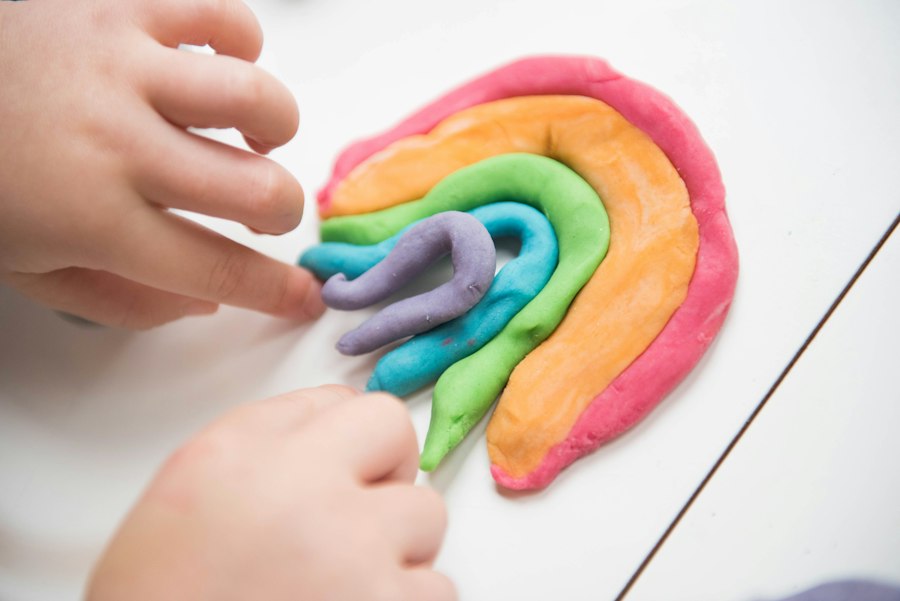
Play dough sausages
Roll a dough snake, then "cut" it into coins with a plastic knife. The dough holds still, so the knife hand gets to focus.
Cutting repsStrawberry slice-off
Ripe strawberries and bananas slice easily with a table knife. It's snack time and practice time in the same five minutes, which I like. More ideas like this live in my fine motor snack activities.
Real foodSpread it thick
Toast, crackers, apple slices. Let them frost their own with a butter knife. Messy is fine.
SpreadingFork pick-up game
Race to stab marshmallows or cooked pasta and drop them in a bowl. Tiny finger muscles get a workout and nobody realizes it's practice.
Fork controlPretend restaurant
You order, they "cook" and serve. Kids who never want to practice will happily run a diner.
Pretend playIf lunchtime itself is the hard part, my post on why kids won't eat lunch at school covers the other side, and teaching kids independence at school has the bigger picture.
Want printable fine motor practice?
Cutting food takes strong, coordinated little fingers. The fine motor activities in the Tiny Hands library are quick print-and-go pages for pinching, cutting, tracing and building that hand control.
See the Fine Motor LibraryWhen Should I Check In With an OT?
A messy plate on its own is just a messy plate. Most kids get there with a few weeks of low-stakes practice.
It's worth mentioning to your child's teacher or an OT if your kid is 7 or older and still can't use a fork or spoon without a fist grip, if the fork hand and knife hand refuse to work as a pair, or if mealtime is one piece of a bigger pattern where buttons, scissors and pencils feel hard too. An OT can figure out which piece is getting in the way, and it's usually very fixable.
Until then, the squished banana counts. Eat it anyway.
Grab the free Fine Motor Starter Pack 🎁
Join the list and I'll email you the free Fine Motor Starter Pack: 40+ pages of pinching, tracing, tearing and snipping activities you can print today.
Send Me the Free PackWant everything I use in sessions, sorted by skill? Peek inside the membership →
This post is for learning and support — it isn't a diagnosis. © Tiny Hands