
How Do I Teach My Child to Open Lunch Containers and Snack Packages? The Thumb-Lift Trick
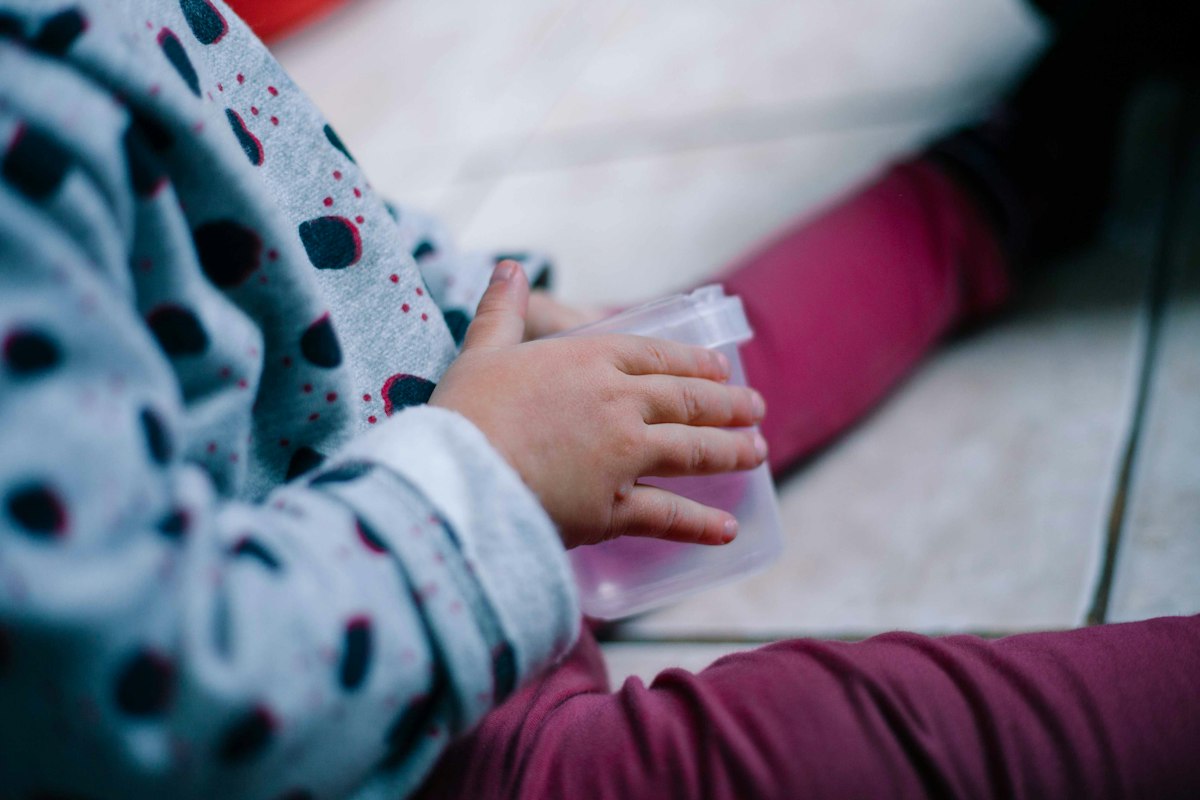
If you're wondering how to teach a child to open lunch containers, start with the lid, not the lunch. Most kids can pop a snap-on lid by about 4 and peel a yogurt or cheese wrapper by 5 or 6, and the tricky stuff (tight lids, sealed bags, pouches, twist-off caps) tends to click around 6 to 7.
The fix that works fastest is what I call the Thumb-Lift. One hand holds the container flat against the table like a helper. The other thumb slides under the lip of the lid and lifts up, while the fingers stay on top for balance. That's it. Practice it at home for a week or two and the cafeteria stops being a mystery.
Kindergarten lunch periods are short and loud, and a lot of kids go home with a full lunchbox because they couldn't get into it and were too shy to ask. Let's fix that before the first bell.
What Age Can Kids Open Their Own Lunch?
Here's the order I see in sessions. Your kid might skip a step or do two at once, and that's fine.
Around 3: big, loose lids
Pulling off a wide snack cup lid with two hands. Success is measured in cracker crumbs.
Two-hand pullAround 4 to 5: snap lids and string cheese
Flip-up latches, snap-on lids, and the famous string cheese wrapper. Expect a little sighing. Expect a hand held out to you, too.
Thumb and fingerAround 5 to 6: bags, wrappers, and thermos lids
Zip-top bags need a pinch and a slide at the same time, which is hard. Screw lids come a bit later, since they need one hand to hold and one to twist.
Pinch and slideAround 6 to 7: pouches, foil lids, and tight seals
Tearing along a notch, peeling a foil top, sliding a straw in without squeezing the whole pouch onto the table. This is the boss level.
Tear and peelYour kid is not behind if they're 5 and a yogurt tube still beats them. Those foil tops beat plenty of adults.
⭐ The Thumb-Lift, step by step
Helper hand goes flat. The container sits on the table and one whole hand presses down on it. Wobbly containers are half the problem.
Find the lip. Feel for the little edge or tab where the lid meets the base. Say "find the lip" out loud so it becomes a real thing they can do on their own.
Slide, lift, done. The lifting thumb slides under the lip and pushes up while the fingers rest on top like a lid guard. If it's stuck, wiggle a little left and right before pulling harder.
Why Can't My Child Open Their Lunch Box by Themselves?
Watch one attempt and it's usually one of these.
The container slides all over. Nothing is holding it still, so the hand that should pull is busy chasing. A damp paper towel or a silicone mat under it works wonders. If your kid's helper hand tends to drift off during two-handed jobs, my bilateral coordination activities are worth a look.
The fingers are too weak to pinch. Tabs and foil edges need a strong little pinch, and that's a hand-strength thing, not a laziness thing.
They give up before they try. Some kids would rather skip lunch than ask for help in front of friends. If that sounds like yours, why kids won't eat lunch at school has more on the emotional side.

What Are Easy Ways to Practice Opening Containers at Home?
Skip the panic at 12:05 and practice at snack time when nothing is on the line. Most of this uses things you already own.
The lid drawer
Dump every container and lid you own in a bin. Match, snap, pop, repeat. Bonus points for the one that has been missing its partner since 2022.
Matching + snappingTreasure inside
Hide a small toy or a raisin in a container and let them get to it. They open it because they want what's inside, not because you asked.
MotivationZip-bag pinch race
Seal it, slide the zipper open, and count how fast. Then do it with one hand holding the bag flat.
Pinch and slideSnack-packet Fridays
Let them open their own cracker pack, cheese wrapper, and fruit cup. Yes, some crumbs will happen. This is the practice, and it's yummy. Even more snack-time ideas in my fine motor snack activities.
Real foodReal lunches also need a fork, a spoon, or a very confident thumb. Once the lid is off, my fork and knife post picks up where this one stops, and teaching kids independence at school zooms out to the whole day.
Heads up: this post has an Amazon affiliate link — if you grab something through it, Tiny Hands earns a small commission at no extra cost to you. Thanks for keeping the free worksheets free!
The lunch box that builds independence (they open it themselves)
Before you buy any lunch box, have your kid open it in the store or at home. I like a bento-style lunch box with compartments a child can see into and pop open on their own.
Want printable pinch-and-grip practice?
Opening lids takes strong, coordinated little fingers. The fine motor activities in the Tiny Hands library are quick print-and-go pages that build exactly that.
See the Fine Motor LibraryWhen Should I Check In With an OT?
A stubborn yogurt lid isn't a red flag. Most kids get there with a couple of weeks of low-stakes practice and a teacher who's happy to help.
It's worth asking your child's teacher or an OT if your kid is 7 or older and still can't pop a snap lid, if both hands seem to work against each other, or if fine motor jobs like buttons, scissors and pencils feel hard too. It's also worth a mention if they're coming home with a full lunchbox day after day. An OT can pin down which piece is getting in the way, and it's usually very fixable.
Until then, send the lunch in something they can open, and pack a spare wet wipe. You'll need it.
Grab the free Fine Motor Starter Pack 🎁
Join the list and I'll email you the free Fine Motor Starter Pack: 40+ pages of pinching, tracing, tearing and snipping activities you can print today.
Send Me the Free PackWant everything I use in sessions, sorted by skill? Peek inside the membership →
This post is for learning and support — it isn't a diagnosis. © Tiny Hands