
Playground Skills for Kids (Why Recess Can Feel Like the Hard Part of the Day)

Your kid gets back from the first week of school looking wrecked — not from spelling tests, but from recess. They freeze at the bottom of the ladder, watch the monkey bars from the sidelines, and beg to sit out four-square. Cue the 9pm spiral: is my kid behind?
Take a breath. Playground skills for kids follow a real developmental order, and most "behind" kids are just a few reps away from confident. Let's walk through it.
The Real Playground Skills for Kids Timeline (By Age)
This is the real ladder I use in sessions. Find where your kiddo is, then aim for the very next rung — not the top.
The Cruiser
Climbs low structures with a hand nearby, goes down the slide seated, and gives a big ball a two-handed toss.
2–3 yearsThe Ladder Climber
Climbs playground rungs alternating feet with some help, pumps their legs a little on the swing, and jumps off a low step with both feet.
3–4 yearsThe Independent Swinger
Pumps the swing solo, hops on one foot, and gives the first rung of the monkey bars a real try — usually with a spot.
4–5 yearsThe Monkey-Bar Rookie
Crosses a few monkey bar rungs in a row, balances on one foot for five-plus seconds, and catches a bounced ball more often than not.
5–6 years (K)The All-Rounder
Traverses the whole monkey bar set, pumps the swing high, jumps rope solo, and keeps up in coordinated games like four-square.
6–8 years
The Lava Floor Countdown
Here's the trick I use over and over, in the clinic and at home: turn the couch cushions (or, outside, a line of stepping stones) into "the only safe spots," announce the floor is lava, and count backward from ten while they cross without touching it. The countdown adds just enough time pressure to sneak in real balance, core, and planning work — and it's basically just a game, so nobody's "practicing" anything.
Once they've got the crossing down, race the clock: can they beat their last time? That's the same skill the monkey bars ask for, minus the height.
Backyard (or Living Room) Games That Sneak In Practice
You don't need playground equipment to build playground skills — most of this works with stuff you already have.
Couch Cushion Lava Crossing
The living-room version of the trick above — line up cushions, pillows, or towels and cross without touching the floor.
BalanceAnimal Walk Relay
Bear crawl to the wall, crab walk back, frog jump to the finish. Silly, and a serious core-and-shoulder workout.
StrengthPainter's-Tape Balance Beam
A strip of tape on the floor is a free balance beam. Walk it forward, backward, then sideways like a crab.
BalanceLaundry Basket Boat Pull
Load a sibling or stuffed animals into a laundry basket and pull it across the room — heavy work that calms and builds shoulder strength at once.
Heavy WorkFreeze Dance, Body-Position Edition
Play music, freeze, and call out a position — one foot up, arms out, superhero pose. Sneaky balance and body-awareness practice.
Body AwarenessBackyard Obstacle Relay
String together a hop, a crawl, a balance stretch, and a throw. Time it, then let them beat their own record.
Coordination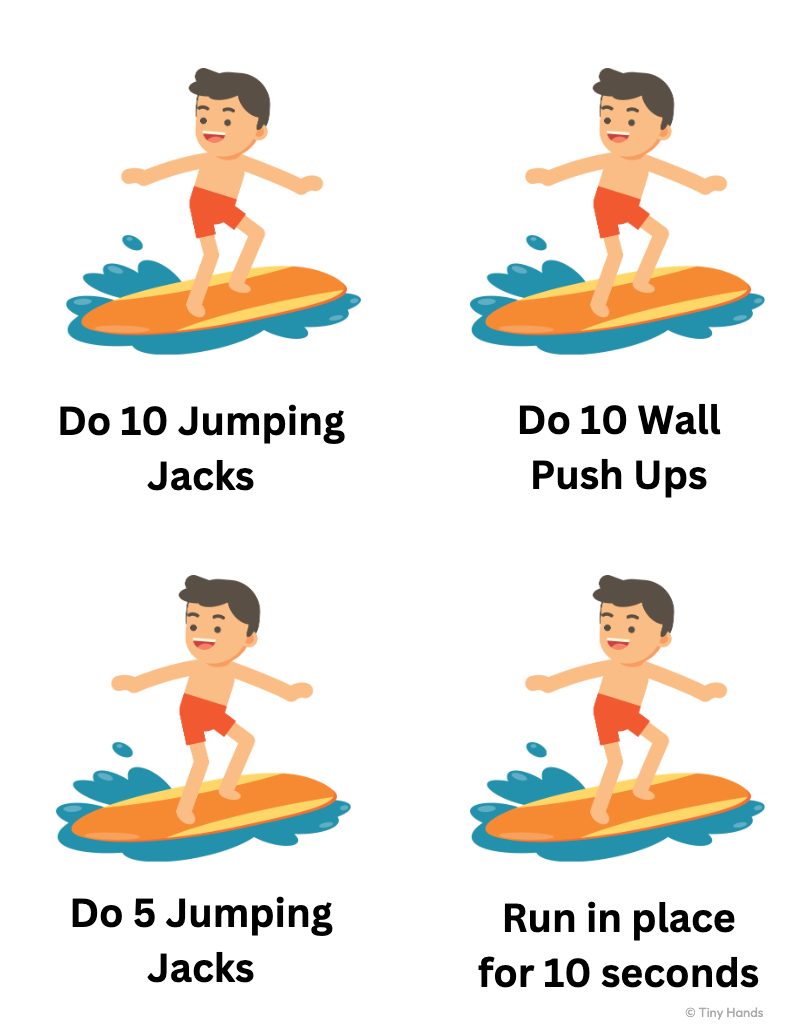
Want the Printable Version?
It's ready to print, right in the membership.
See Gross Motor ActivitiesHeads up: this post has an Amazon affiliate link. If you grab something through it, Tiny Hands earns a small commission at no extra cost to you — it's what keeps the free worksheets free. Thank you!
The Stepping Stones I Reach For
For the Lava Floor Countdown above, I love a set of turtle balance stepping stones — big enough for little feet, textured so they don't slip, and easy to rearrange for a brand-new "course" every time.
When to Check In With an OT
Most kids who seem "behind" at recess just need more reps, not a referral. It's worth looping in your pediatrician or a pediatric OT if your kiddo avoids climbing and swinging altogether, seems noticeably behind classmates by kindergarten, or looks fearful of movement in a way that doesn't ease up with practice.
Since climbing and swinging build a lot of the same core strength your kid needs for handwriting and sitting still in class, a wobbly playground kid is sometimes a wobbly desk kid too — and our heavy work activities post is a great next stop either way.
New here? Grab the free pack first 🎁
Join the list and I'll send you the Fine Motor Starter Pack — 40+ print-ready pages to build strong little hands (and steady little bodies) at home.
Send My Free PackWant the whole library, sorted and ready? Peek at the membership →
This post is for learning and support — it isn't a diagnosis. © Tiny Hands