Heavy Work Activities for Home (and Why They Calm Kids Down)
Ever notice how your kiddo seems calmer and more focused after they've been hauling something heavy around the house — dragging the couch cushions into a fort, lugging the laundry basket, "helping" carry the groceries? That's not a coincidence. That's heavy work doing its quiet magic.
Heavy work is one of my favorite tools as an OT because it's free, it's everywhere, and it actually settles a busy or dysregulated body. Let me explain what it is, then give you ten easy ways to use it at home.
Heads up: this post has Amazon affiliate links — if you grab something through them, Tiny Hands earns a small commission at no extra cost to you. Thanks for keeping the free worksheets free!
So what is heavy work?
Heavy work is any activity that pushes, pulls, lifts, carries, or squeezes — anything that makes the muscles and joints work against resistance. The fancy word is "proprioception": the body's sense of where it is and how much effort it's using, fed by receptors in your muscles and joints. When those receptors get a good workout, the nervous system gets a wave of organizing, grounding input.
In plain terms: heavy work is like a reset button. It can wake up a sluggish kid, calm down a wound-up one, and help an overwhelmed body feel settled and "in control" again — which is exactly why it works for the after-school crash, the pre-homework wiggles, and the meltdown that's brewing. It's regulating either direction, which is what makes it so handy.
10 heavy work ideas for home
1. Animal walks
Bear crawls, crab walks, frog jumps, and inchworms send the body's weight straight through the arms and legs. Race down the hallway as different animals — it's a full-body heavy-work hit disguised as a silly game.
Whole body · joints2. Push the loaded laundry basket
Fill a laundry basket with books or toys and let your kiddo push it across the room — carpet adds resistance. "Delivering" it from room to room turns a chore into the best part of the morning.
Pushing · resistance3. Wheelbarrow walks
You hold their legs, they walk on their hands. All that weight through the shoulders and arms is intense, organizing input — and great for the hands and core behind handwriting later. Keep it short and giggly.
Upper body · core4. "Push the wall down"
Have them press their palms flat on a wall and push as hard as they can for ten seconds, like they're holding the house up. Chair push-ups (lifting their own weight off the seat) work too — a quiet, instant reset for a fidgety body.
Pushing · quick reset5. Couch-cushion fort & crash
Dragging, stacking, and hauling the cushions is the heavy work; flopping into the pile is the deep-pressure reward. One of the all-time great rainy-day resets — messy living room, regulated kid.
Pulling · crashing6. Be the household helper
Carrying the (lighter) grocery bags, hauling a full watering can to the plants, stacking firewood, bringing in shoes — real jobs with real weight. Kids love being genuinely useful, and the body loves the load.
Carrying · purpose7. Real chores: vacuum, sweep, wipe
Pushing a vacuum, sweeping, mopping, and scrubbing the table all push against steady resistance. Hand them a spray bottle and a cloth — the squeeze and the scrub are heavy work for the arms and hands both.
Pushing · hand work8. Towel tug-of-war
Grab opposite ends of a beach towel and pull. Big, satisfying resistance through the whole body — just let them win sometimes, and keep it playful rather than competitive.
Pulling · whole body9. Pull a wagon or a "sled"
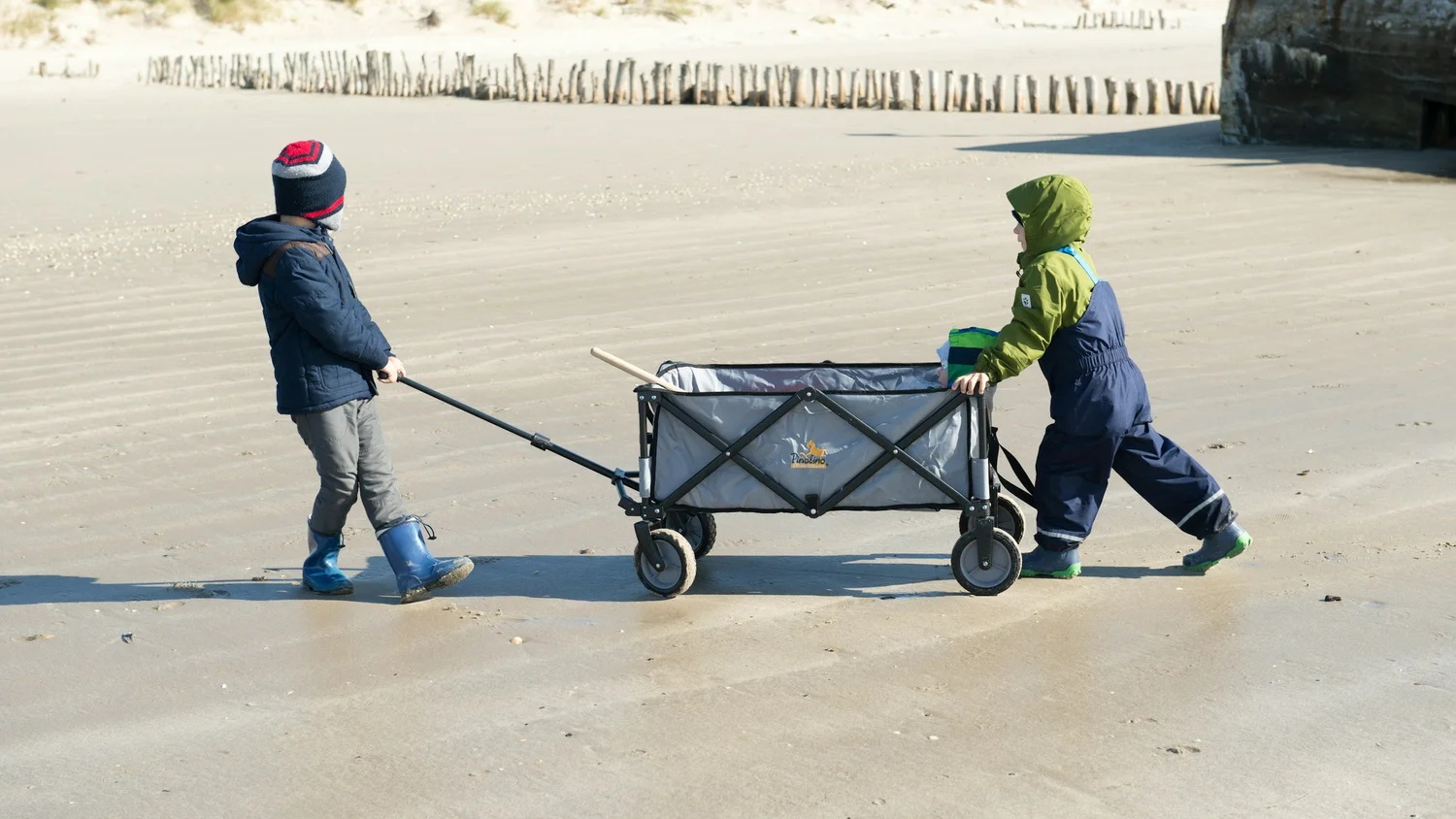
Load up a wagon and pull it around the yard, or sit a sibling or stuffed animals on a blanket and tow them across the floor. Pulling a load is heavy work gold — and endlessly repeatable because kids think it's a ride.
Pulling · sustained10. Knead, stir, and scrub in the kitchen
Stirring thick batter, kneading bread or stiff dough, and scrubbing pots are heavy work for little hands. Resistive hand work builds the strength behind a good pencil grip — and you get a helper at dinner.
Hand strength · resistiveFor the kid who needs a little more
Heavy work is the activity; sometimes a tool helps it stick. A weighted lap blanket gives that calming, grounded "hug" at the table or during homework, and a wobble cushion lets a busy body move in place so they can actually stay seated and focus.
OT tip: do it before, not just during
Heavy work tends to keep a body organized for a little while afterward — so the real trick is timing it before the hard moments. A few minutes of animal walks or cushion-hauling before homework, the dinner table, or a big transition often heads off the meltdown instead of chasing it.
Build it into the day
You don't need a sensory gym — your house already has everything. Sprinkle a little pushing, pulling, and carrying into the moments that tend to fall apart, keep it playful, and follow your kiddo's lead. A calmer, more focused body is usually just a little heavy work away.
Want More Ready-to-Print Practice Like This?
Grab my free 40-page Fine Motor Starter Pack — print-and-play pages sent straight to your inbox, no membership required.
Grab the Free Starter Pack →This post is for learning and support — it isn't a diagnosis. © Tiny Hands