


How Do I Teach My Child to Turn Pages in a Book? The Corner Peel Trick

If your child swats at the pages, flips five at once, or hands you the book to turn every single one, here's the quick answer on how to teach a child to turn pages in a book. Most kids turn chunky board-book pages one at a time somewhere between 18 months and 2 years, and manage thinner paper pages around 3 to 4. A page turn is two tiny jobs back to back: a pinch to grab the edge, then a slide to carry the page across. Both are hand skills that are still under construction, so a messy flip is practice, not a problem.
The method I use in sessions is the Corner Peel Trick. Pretend the top corner of the page is a sticker you're peeling off. Pinch the corner with thumb and pointer, peel it up, slide it across, and pat it down flat. Start with one thick board book and let your child do the peeling while you read. That's it.
From the Tiny Hands shop
Give Them a Book Worth Turning
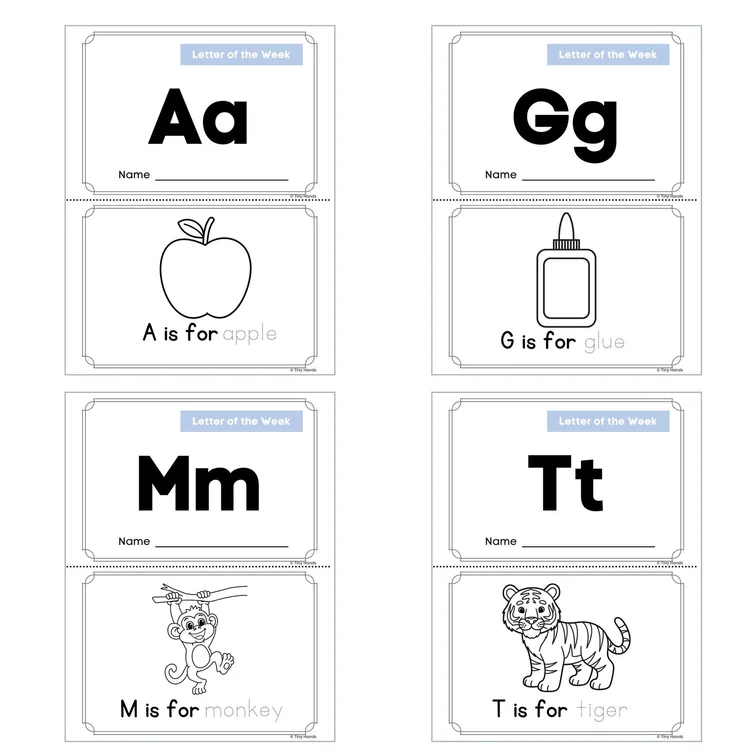
Page-turning gets easy when there is a reason to get to the next page. The Letter Books A–Z Bundle is twenty-six little print-and-fold books — small enough for small hands, and the pages are theirs to turn as often as they like.
Shop the Letter Books BundleAt What Age Do Kids Learn to Turn Pages?
Here's the order I usually see. Every kid has their own clock, so use it as a loose map.
About 12 to 18 months: swatting and flapping
The whole hand whacks at the book and sometimes the page moves. Toddlers this age mostly love the sound.
Whole-hand swipesAround 18 months to 2: one board page at a time
They scoop a thick page with a fist or a few fingers. Backwards flips happen constantly, and nobody minds.
Board booksAround 2 to 3: fingers join in
Pointer and thumb start working together, so single board pages get easier. Thin pages still come out bunched, bent, or occasionally ripped, and that's about normal.
Pinch beginsAround 3 to 4: paper pages with a corner pinch
A real pinch at the corner shows up, though pages still stick together now and then.
Picture booksAround 4 to 5 and up: thin pages and finding a spot
Flipping to a specific page, turning with one hand while the other holds the book, and picking up chapter books.
Kindergarten-readyA 3-year-old who crumples every third page is right on schedule. Honestly, so is the one who still wants you to do the turning.
⭐ The Corner Peel Trick, step by step
Peek at the corner. Point to the top outside corner of the page and say "here's the sticker corner." Kids love having a target.
Pinch and peel. Thumb on top, pointer underneath, and lift just the corner like you're peeling a sticker off the sheet.
Slide and pat. Carry the page across and give it a pat. The pat matters because it makes them finish the move instead of letting go midway.
Grow it. Move from one thick board book to a thinner one, then a paper picture book. Take turns: you read a page, they peel a page.
Why Does My Child Flip Through Pages So Fast (or Tear Them)?
Usually it's the pinch. Grabbing a thin edge takes a steady little squeeze, and some kids don't have enough finger control for it yet, so they grab a whole handful of pages instead. If that sounds like your kid, the games in my in-hand manipulation activities post are an easy place to build it.
Then there's the other hand. Turning a page works best when one hand holds the book still while the other does the flipping, and that teamwork is called bilateral coordination. If the book keeps sliding around, my post on bilateral coordination activities will help.
Sometimes it's just excitement. A kid who wants to see what happens next will plow forward, and that's a good problem to have.

How Can I Practice Page Turning at Home?
No drills needed. Fold it into reading you're already doing, with books you already own.
Trade-off reading
You read the words, they peel the page. They get a job, and you get a built-in pause to point at the pictures.
Daily habitTeddy storytime
Your kid "reads" to a stuffed animal and turns every page for the audience. They'll happily practice for ten minutes if a bear is watching.
Pretend playSticky-note flags
Fold a tiny tab onto a few page corners so there's something easy to grab. Take the tabs away as it gets easier.
Heads up: this post has Amazon affiliate links. If you grab something through them, Tiny Hands earns a small commission at no extra cost to you. Thanks for keeping the free worksheets free!
A touch-and-feel book that begs to be turned
Squishy, bumpy, fuzzy patches make every page worth reaching for. I like the Ocean Friends touch-and-feel board book for early page-turners, since sturdy pages are forgiving while the pinch is still forming.
Want more ideas for little fingers? My paper-folding post uses the same pinch-and-slide moves.
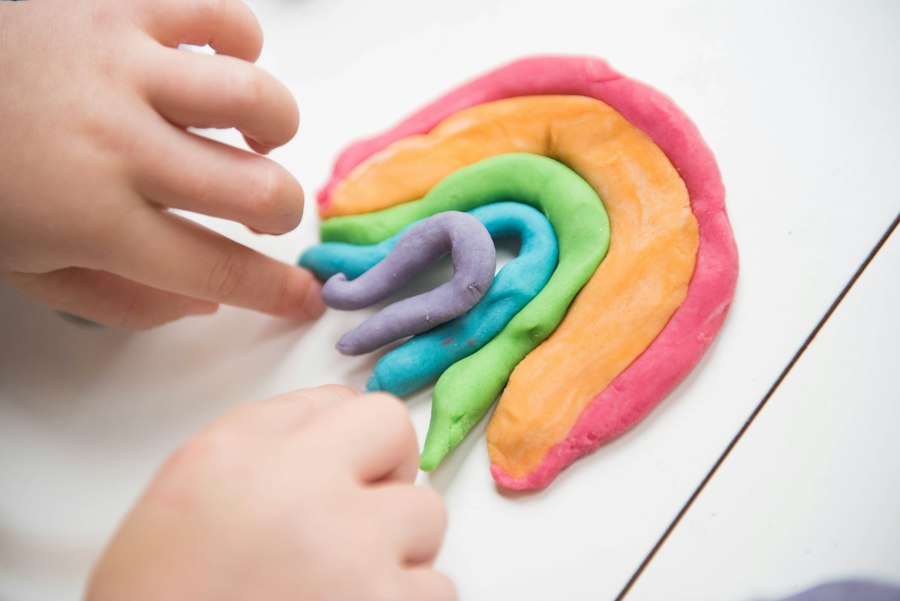
Want printable activities for strong little fingers?
A few minutes of pinching and sliding before story time builds the exact skill a page turn needs. The fine motor activities in the Tiny Hands library are print-and-go pages for exactly that.
See the Fine Motor LibraryWhen Should I Check In With an OT?
Give it a few weeks of relaxed practice before you worry about it. Page turning is one of those skills that clicks quietly.
It's worth a chat with your pediatrician or an OT if your child is 4 or older and still can't separate a single board page, if one hand seems much weaker than the other, or if they avoid books, crayons, and small toys altogether. Same if buttons, cutting, and stacking blocks are all tough at once. An OT can see which piece is tripping them up, and it's usually very workable.
Until then, a favorite book and a peeled corner or two is plenty.
Grab the free Fine Motor Starter Pack 🎁
Join the list and I'll email you the free Fine Motor Starter Pack: 40+ pages of pinching, tracing, tearing and snipping activities you can print today.
Send Me the Free PackWant everything I use in sessions, sorted by skill? Peek inside the membership →
This post is for learning and support — it isn't a diagnosis. © Tiny Hands