
How Do I Teach My Child to Fold Paper? The Kiss, Hold & Iron Trick
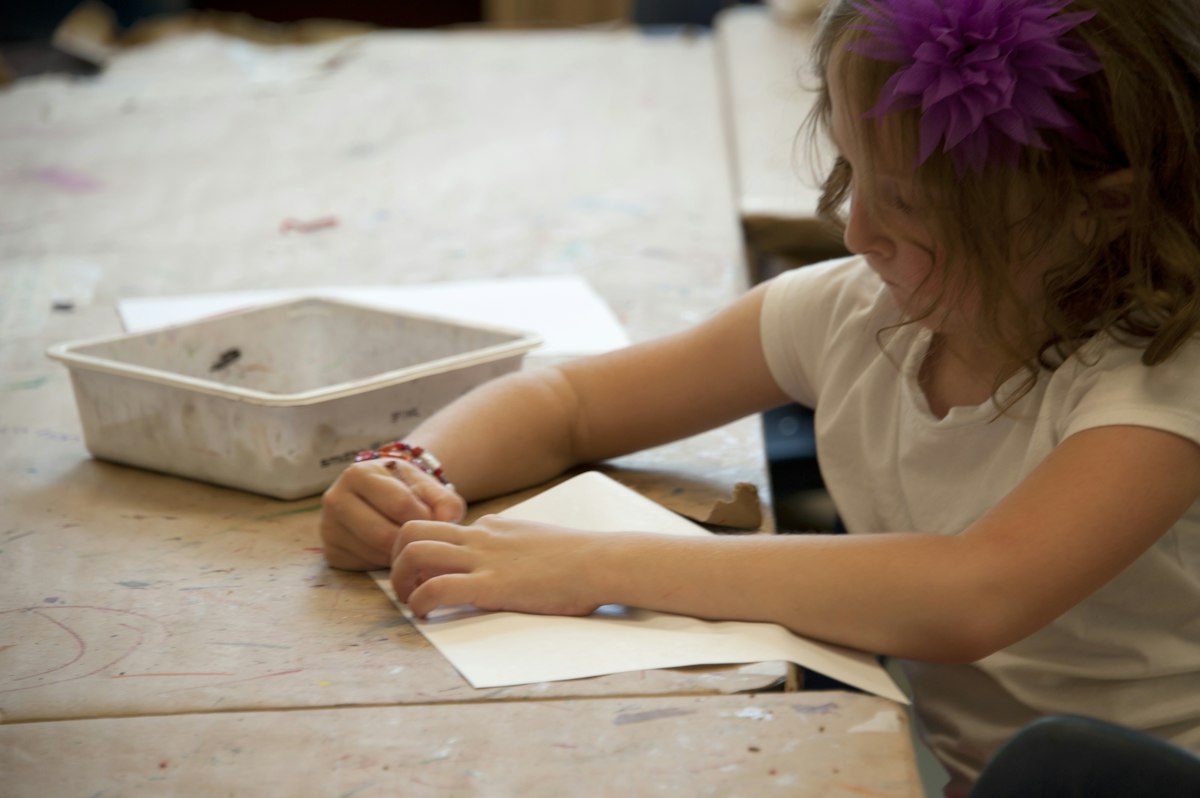
The teacher says "fold your paper hot-dog style," and your kid hands back something that looks like a crumpled taco. If you're wondering how to teach a child to fold paper, good news: this one is very teachable, and it usually clicks faster than you'd expect.
Folding is a two-hand, three-step job. Line the edges or corners up. Hold them still. Then press the crease flat. Most three-year-olds can copy a rough fold in half, most five-year-olds can fold a paper in half with the edges pretty close, and a neat diagonal fold or a letter folded in thirds tends to show up around 6 or 7. When a fold goes crooked, the usual culprit is that the corners slid apart while your kid was pressing the crease, because nobody was holding them.
That's why I teach it as Kiss, Hold & Iron. The corners kiss. One hand holds the kiss. The other hand irons the fold flat. Three words, and suddenly the taco turns into a card.
What Age Can Kids Fold Paper on Their Own?
Folding shows up in stages. Some kids race through them and some camp out on one stage for a whole year, and both are fine.
Around 2–3: the scrunch-and-press
Toddlers will bend paper over and pat it if they watch you do it first. The edges won't match. They don't care. Neither should you.
Copying youAround 4–5: the fold in half
Preschoolers start folding a sheet in half and can get the edges close when you remind them to line them up. Smaller paper helps a lot here. A half sheet or an index card is much easier than a full page.
Hamburger foldAround 5–6: triangles and hot dogs
Kindergartners can usually match corners for a triangle fold, and they're learning the long "hot dog" fold teachers use for worksheets. Expect the crease to still be a little puffy.
Corner to cornerAround 6–8: letter folds and simple origami
First and second graders start folding a page in thirds to fit an envelope and can follow two or three steps of a simple paper airplane or fortune teller. This is where folding turns into a really fun hobby for some kids.
Multi-stepKindergarten isn't a folding test. If your five-year-old's hamburger fold is lopsided, they're right where lots of kids are this fall.
⭐ Kiss, Hold & Iron, step by step
Kiss. Lay the paper flat on the table (never in the air, that's a recipe for a taco). Pick up the bottom corners and carry them up to meet the top corners. Say it out loud: "corners kiss!" Your kid should be able to look and see the edges lined up before moving on.
Hold. Now the helper hand presses down right on top of those kissing corners and doesn't let go. This is the step almost every kid skips. If the corners are held, the fold can't wander.
Iron. With the other hand, press a fingertip in the middle of the bottom edge and slide it out to one side, then back to the middle and out to the other side. Then go over the whole crease again with a thumbnail or the side of a fist. I call that the "second ironing." Kids love getting to smash something on purpose.
Why Are My Child's Folds Always Crooked?
Sit next to your kid for one fold and watch their hands, not the paper. You'll probably spot it right away.
They crease before they line up. Eager folders slam the paper down and press right away. Slow down the Kiss step until they can see both corners touching.
The helper hand wanders off. Holding one thing still while the other hand works is the whole game here, same as with scissors or a ruler. If that helper hand tends to check out during everything, my post on bilateral coordination activities has lots of easy ways to wake it up. And if you've already tried the Starfish Hand trick for rulers, it's the same helper-hand idea.
Little fingers aren't ready to pinch and slide yet. Grabbing a corner and walking it into place takes finger control. Those tiny finger moves are called in-hand manipulation, and they keep getting better with practice across the early school years.
The paper fights back. Thick construction paper and big sheets are hard for anyone. Start with printer paper, sticky notes or index cards.

What Are Easy Paper Folding Activities for Kids at Home?
Raid the recycling bin. Junk mail, old worksheets and the backs of envelopes all count as folding paper.
Napkin helper
Paper napkins at dinner, folded in half and then in half again. Bonus: a set table.
Two foldsMail carrier
Folding a drawing into a "letter" for grandma, a stuffed animal or the dog is a huge motivator. Start with one fold, then try thirds for an envelope once halves feel easy.
Real purposeAccordion fans
Fold, flip, fold, flip. Accordion folds are forgiving because each crease doesn't have to be perfect, and kids end up with a fan, a spring for a paper snake, or legs for a paper spider.
Lots of repsPaper airplane contests
For the 6-and-up crowd, the classic dart plane is five or six folds and a ton of practice lining up points. Fly them down the hallway, then refold the ones that nosedive. Crooked planes fly crooked, which is feedback kids actually listen to.
Follow stepsFold, then snip
Fold paper in half and cut half a heart along the fold. Open it up and there's a whole heart, which feels like a magic trick. If your kid is still working on cutting, my guide to cutting skills for kindergarten will help you pick the right level.
Fold + cutHeads up: this post has an Amazon affiliate link. If you grab something through it, Tiny Hands earns a small commission at no extra cost to you, and that helps keep the free printables free. Thank you!
📚 When you run out of paper ideas
Once folding and snipping start to feel easy, I like a scissor-skills paper crafts book with 25 cutting-and-gluing projects that get a little harder as they go. It keeps paper play fresh without you having to invent a new craft every weekend.
See the Craft Book on Amazon
Want printable fine motor practice?
Folding leans on strong, coordinated little fingers. The fine motor activities in the Tiny Hands library are quick print-and-go pages for pinching, cutting, tracing and building exactly that kind of control.
See the Fine Motor LibraryWhen Should I Check In With an OT?
A crooked fold on its own is just a crooked fold. Most kids get there with a few weeks of napkins and airplanes.
It's worth bringing up with your child's teacher or an OT if your kid is 6 or older and still can't fold paper roughly in half even with you holding the corners, if the helper hand sits out of most two-hand jobs (holding paper while cutting or coloring, steadying a cup while pouring), or if folding is one piece of a bigger pattern where buttons, scissors and pencils all feel really hard. That kind of pattern is worth a closer look, and an OT can figure out which piece is getting in the way.
Until then, the lumpy paper airplane counts. Fly it anyway.
Grab the free Fine Motor Starter Pack 🎁
Good folders have busy, strong fingers. Hop on the list and I'll email you the free Fine Motor Starter Pack: 40+ pages of pinching, tearing, tracing and snipping activities you can print today.
Send Me the Free PackLooking for everything I use in sessions, sorted by skill? Peek inside the membership →
This post is for learning and support — it isn't a diagnosis. © Tiny Hands