


How Do I Teach My Child to Draw a Person? The Potato Head Trick

Wondering how to teach a child to draw a person? Here's the short answer. Most kids draw a "tadpole person" (a big head with legs sticking out) around age 3 to 4, add a body and arms by 4 to 5, and draw a recognizable person with a head, body, arms, legs and a face by about 5 to 6. You help by drawing alongside them, adding one body part at a time, and talking about the person as you go.
My go-to is the Potato Head Trick. Before they draw, build a person out of anything with parts (a Mr. Potato Head, playdough, even a pile of snack pieces) and then draw it one part at a time. Kids see where everything goes before they ask a crayon to do it.
From the Tiny Hands shop
A Person Is Just Shapes, Stacked
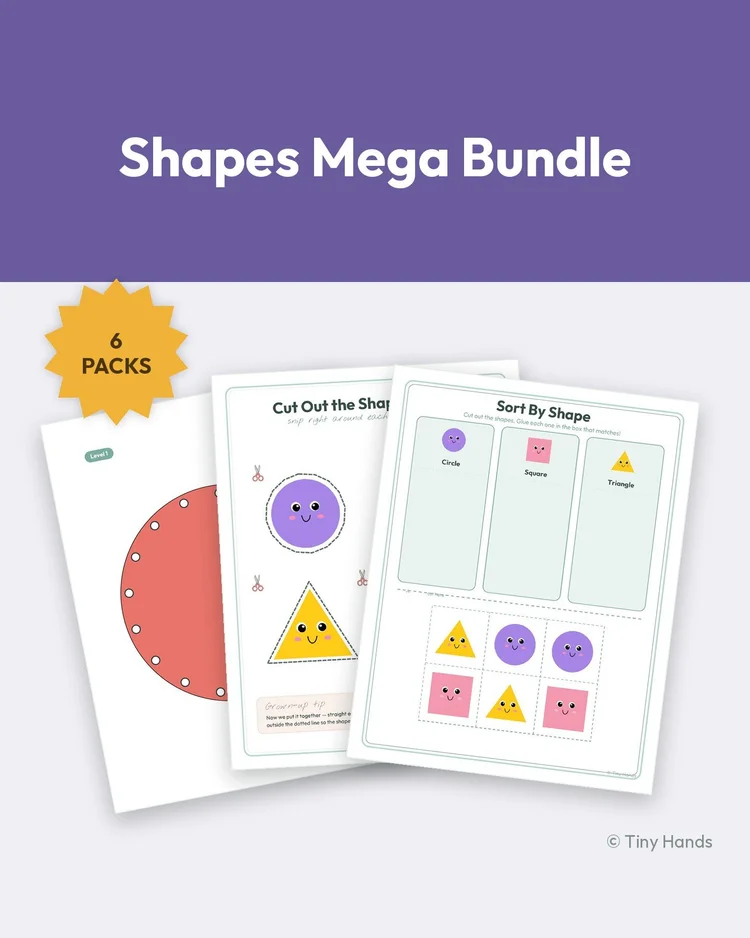
Before a child can draw a body they need the parts — a circle, a line, a square that closes. The Shapes Mega Bundle builds those one at a time through dabbing, sorting, cutting and dough, so the hand knows each shape before the drawing does.
Shop the Shapes BundleAt What Age Do Kids Start Drawing a Person?
Here's the order I see in sessions. It's a loose map, not a test.
Around 2 to 3: scribbles with a story
"That's Mommy!" about a swirl. The drawing isn't the point yet, the idea is.
Scribble + storyAround 3 to 4: the tadpole person
One big circle for a head, a couple of dots for eyes, and legs coming straight off the bottom. Totally on track.
Head + legsAround 4 to 5: a body shows up
A belly, arms, maybe fingers like little sticks. Faces get a nose or a smile.
Head + body + armsAround 5 to 6: a whole person
Hair, clothes, hands, feet, and often a very detailed opinion about who it is.
6+ body partsIf your 4-year-old still draws tadpole people, you're fine. Honestly, plenty of kindergartners are still working on that body.
⭐ The Potato Head Trick, step by step
Build it first. Make a person with a toy, playdough, or even a face made of snack pieces. Say the parts out loud as you go.
Draw one part, then point. Draw a circle for the head, then ask, "What does our person need next?"
Check the toy. If they forget the neck or the arms, look back at your build together. No fixing, just noticing.
Add one new part each time. Next round, add a body. Then arms. Slow and steady beats a whole person in one go.
Why Does My Child's Person Look So Simple?
Drawing a person asks a lot at once. Your child has to picture the person, remember the parts, hold the crayon, and make their hand follow the plan. That mix of seeing and doing is called visual-motor skill, and it grows with practice and age.
Shapes come first. If circles and lines still feel wobbly, my post on copying shapes by age shows the order kids learn them, and pre-writing skills for preschoolers covers the strokes underneath it all.

How Can I Practice Drawing People at Home?
Keep it playful. Ten minutes at the kitchen table beats a formal lesson.
Draw each other
You draw your child, they draw you. Point out one feature each: "You have curly hair!"
Mirror gamePlaydough people
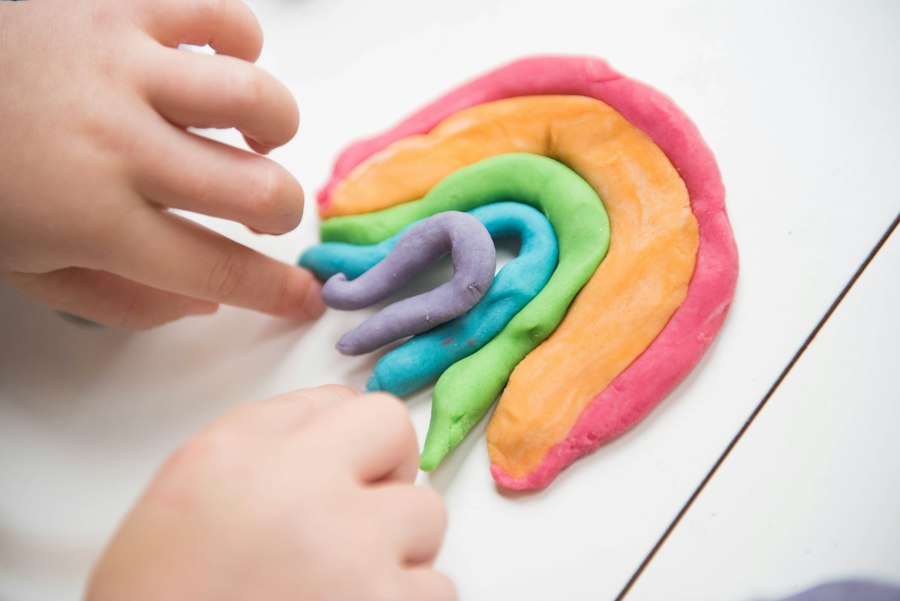
Roll, squish and stick. Building a body in 3D makes the flat drawing easier.
Simon Says, drawing edition
"Simon says touch your elbow." Then draw an elbow. Body awareness becomes drawing awareness.
Move firstIt also helps to have a comfortable hold on the crayon, and my toddler crayon grip post walks through that.
Want the printable version?
The pre-writing worksheets in the Tiny Hands library build the circles, lines and shapes a person is made of. Print, grab a crayon, go.
See the Pre-Writing LibraryWhen Should I Check In With an OT?
Give it some relaxed practice first. Drawing a person tends to bloom in a rush.
It's worth a conversation with your pediatrician or an OT if your child is 5 or older and doesn't draw any recognizable person yet, if drawing makes them very frustrated or tired, or if they avoid crayons and pencils altogether. It can also help to ask if one hand seems much weaker than the other. An OT can see which piece is tricky, and the fix is usually small.
Until then, hang the tadpole on the fridge. It's their masterpiece.
Grab the free Fine Motor Starter Pack 🎁
Join the list and I'll email you the free Fine Motor Starter Pack: 40+ pages of pinching, tracing, tearing and snipping activities you can print today.
Send Me the Free PackWant everything I use in sessions, sorted by skill? Peek inside the membership →
This post is for learning and support — it isn't a diagnosis. © Tiny Hands