Why Toddlers Hold Crayons in a Fist (and How to Help)
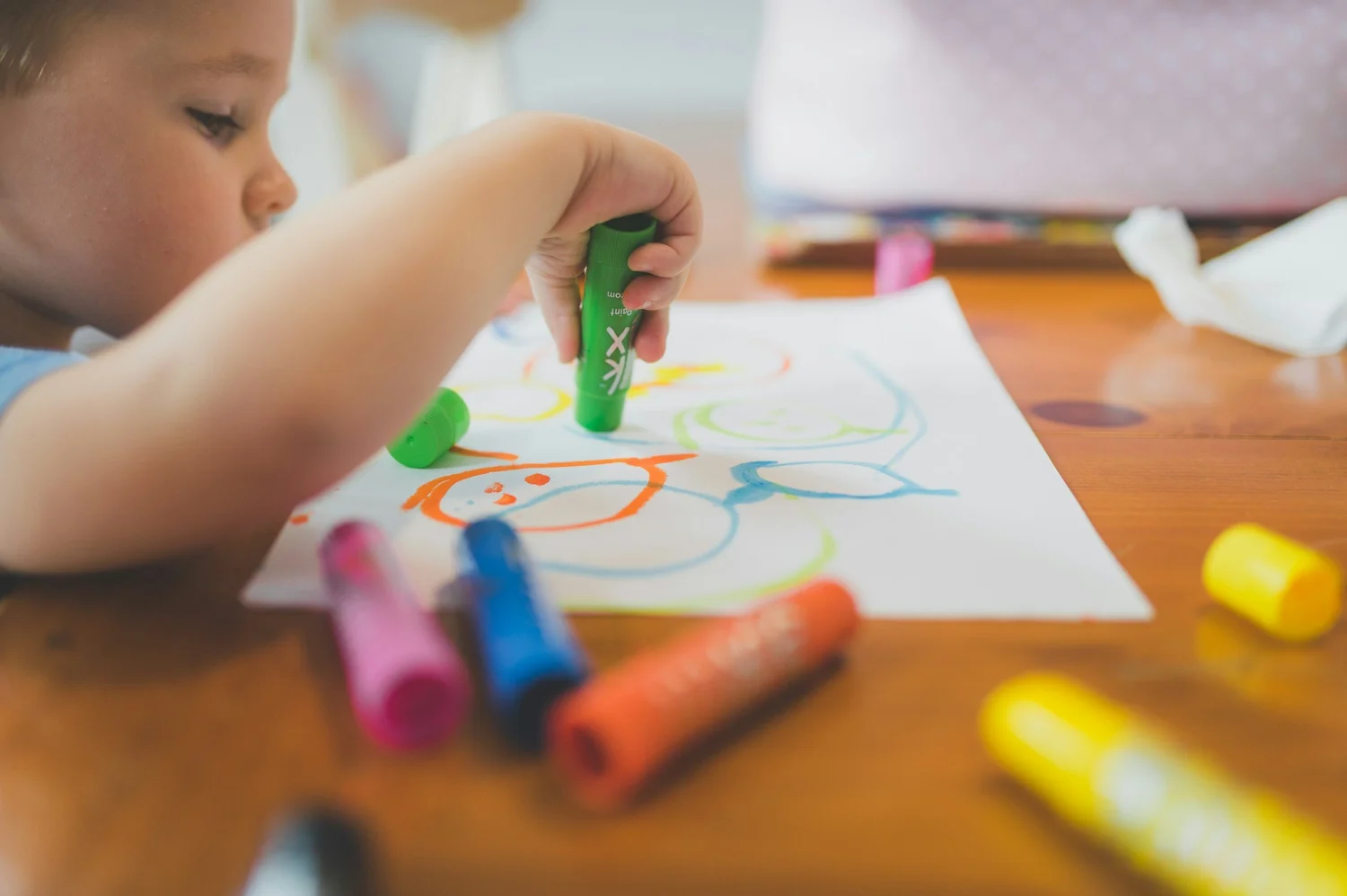
You hand your two-year-old a crayon, and they grab it like a tiny caveman with a club — whole fist, knuckles down, scribble-scribble, done. And somewhere in the back of your mind a little voice goes: "...are they supposed to hold it like that?"
Short answer: yep, for now. The fist grip is a totally normal stage, not a problem to fix. But there are some easy, no-pressure things you can do to help a comfier grip show up on its own — here's what I actually reach for.
Heads up: this post has Amazon affiliate links — if you grab something through them, Tiny Hands earns a small commission at no extra cost to you. Thanks for keeping the free worksheets free!
First, the good news: a fist is right on time
Little hands grow into a grip in stages, and you can't really rush it — the muscles and the brain wiring have to catch up first. Roughly, here's the path: around 1 to 2, kids hold crayons in a full fist (the "palmar" grip). Around 2 to 3, the hand turns so the fingers point down at the paper. Somewhere around 3 to 4, the fingers start to gather near the tip, and a true tripod grip (thumb, pointer, middle finger) usually settles in around 4 to 6.
So if your toddler is fisting the crayon, they're not behind — they're exactly where they should be. Our job isn't to force the "right" grip; it's to build the strength and give the little setups that let the next stage show up naturally.
What actually helps
1. Break the crayons in half
This is the oldest OT trick there is. A short, stubby crayon is too little to wrap a whole fist around, so fingers have to pinch it near the tip. Snap your crayons in half (or use golf-sized ones) and watch the grip tidy itself up.
Pincer grasp2. Color on a wall, not a table
Tape the paper to the wall, the fridge, or use an easel. Coloring on a vertical surface gently cocks the wrist back into the position a mature grip needs — and it's a sneaky shoulder and arm workout, too.
Wrist + shoulder3. Give a tool they can't fist
Some crayons are built so a fist just doesn't work. The egg-shaped rock crayons I use and recommend are my go-to — there's nothing to wrap a whole hand around, so little fingers have to pinch, which is the exact grip we're building toward.
Tripod prep4. Strengthen the hand away from the table
A weak hand grabs hard and tires fast. Squishing and pinching playdough, popping bubble wrap, and using tongs all build the little muscles behind a relaxed grip — long before a crayon ever comes out.
Hand strength5. Don't force the tripod
Physically bending a toddler's fingers into "the right way" usually backfires — it feels weird, and they tense up. Model it with your own hand, offer the short crayon, and then let it be. The grip matures on its own timeline, not on a worksheet's.
No pressure6. Give them a reason to make marks
Grip improves with mileage, and mileage comes from fun. Peeling and placing stickers, dot-marker art, "signing" their name on cards — anything that gets that hand moving with a purpose beats drilling lines they don't care about.
MotivationTwo cheap things that do a lot of work
The crayons that force a pinch instead of a fist, plus the playdough that builds the hand strength underneath it all — between these two, you've got most of what a toddler's grip needs to grow.
OT tip: when it's worth asking
A fist grip at two or three is nothing to worry about. But if your kiddo is well past four and still fisting, switches hands constantly on the same task, avoids coloring altogether, or tires after a minute or two, it's reasonable to mention it to your pediatrician or a pediatric OT — not as alarm, just to take a closer look.
Let it grow up
The crayon grip you're worried about today is almost certainly going to sort itself out — especially with short crayons, a vertical surface, strong little hands, and zero pressure. Keep it playful, follow their lead, and trust the timeline. Those fingers know where they're headed.
From Scribbles to First Strokes
My Dinosaur Prewriting Strokes pages turn all that scribbling into the lines and shapes that come right before letters — short, playful pages built for little grips.
Grab It in the LibraryThis post is for learning and support — it isn't a diagnosis. © Tiny Hands