


How Do I Help My Child Sit Criss-Cross on the Carpet? The Pretzel Legs Trick
If your child flops, wiggles, or slides away during circle time, here's the quick answer on how to help a child sit criss-cross. Most kids can hold it for a minute or two around age 3 or 4, and for a full story by 5 or 6. Sitting criss-cross is a core-strength and hip-flexibility job, not a listening job. Tired trunk muscles and tight hips make the floor feel like a lot of work.
The fix I use in sessions is the Pretzel Legs Trick. Have your child "tie" their legs like a pretzel, then put their hands on their knees and push down gently, like they're squishing the pretzel flat. That little press gives their body some feedback and their hands a job. Practice it for 30 seconds before story time, then stretch it a little longer each day.
Teachers say "criss-cross applesauce" fifty times a day, so it's worth giving your kid the tools to actually do it.
From the Tiny Hands shop
Strong Middles Make Still Sitting
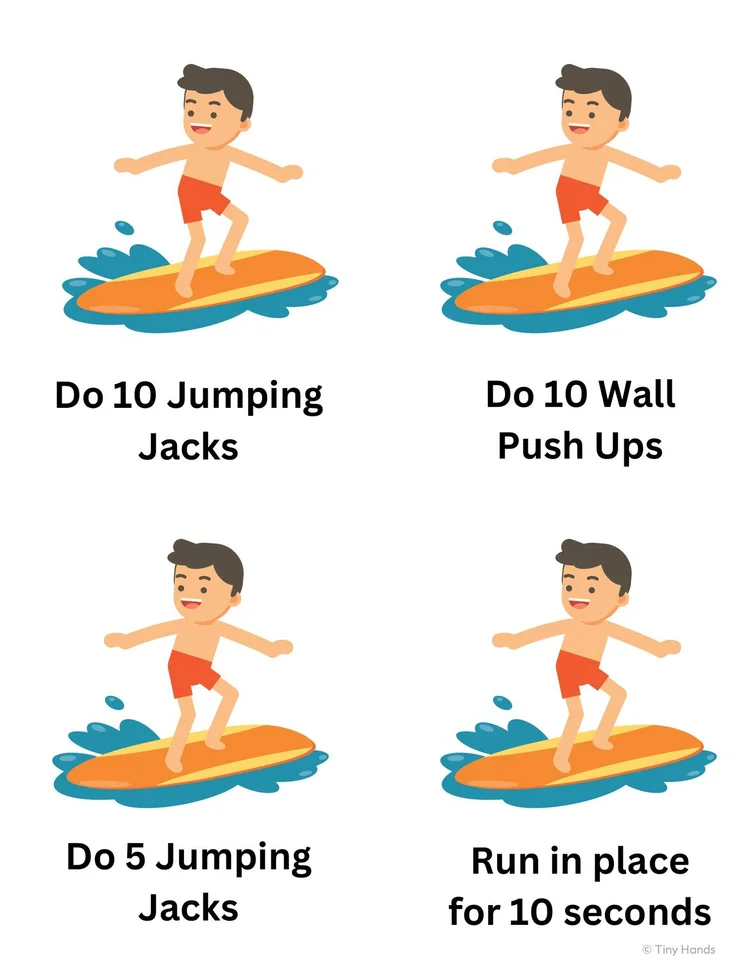
Criss-cross sitting is a core-strength job — a wobbly middle can’t hold the pose, however many reminders it gets. The Gross Motor Cards turn that strengthening into quick movement games you can run in the living room or the back garden.
Shop the Gross Motor CardsHow Long Should a Child Be Able to Sit Criss-Cross?
Here's the real order I see. Every kid runs on their own timeline, so treat this as a rough map.
Around 2 to 3: sitting for seconds
Wiggly and brief. Most toddlers pop up after a verse of a song, and that's normal.
Seconds, not minutesAround 3 to 4: a minute or two
Legs often drift into a W or one knee pops up. Reminders still do most of the work.
Short songsAround 4 to 5: a short story
Five or so minutes with a movement break after. Fidgeting is expected and fine.
One picture bookAround 5 to 6: a full circle time
Ten minutes or so, usually with a couple of position changes. Even kindergartners lean on a hand.
Kindergarten-readyIf your 4-year-old tips over after thirty seconds, they're right on track.
⭐ The Pretzel Legs Trick, step by step
Tie the pretzel. Cross the ankles and let the knees fall out to the sides. Ask them to "make the pretzel twist."
Squish it. Both hands go on the knees and press down gently, just enough to feel it. That deep pressure helps many kids settle.
Grow it. Count slowly to 10 together, then 20, then sing a whole song. Switch which ankle is on top each time so both hips get a turn.
Why Does My Child Slide Away or Slump on the Carpet?
When a kid keeps collapsing, I look at a few things.
The first is core strength. Sitting upright with no back support is real work, and a tired trunk gives up first. My post on core strength for handwriting has easy ways to build it, and the same muscles help at a desk.
The second is tight hips. Criss-cross asks the hips to open wide, and some kids just aren't there yet. Those are the kids who slide into a W. If that sounds like yours, I wrote about it in W-sitting: should you actually worry?
The third is the carpet itself. Scratchy or busy carpets can be uncomfortable for kids who are touch-sensitive, and a flat floor spot is just as hard on a body that wants to move.

How Can I Practice Criss-Cross Sitting at Home?
Skip drills. Tuck it into things your kid already likes, using stuff you probably own.
Bedtime story spot
Read one short book on the floor in pretzel legs before you move to the bed. Keep it to one book so it stays fun.
Daily habitTeddy tea party
Everyone at the party sits criss-cross, stuffed animals included. Kids love correcting the bear.
Pretend playFloor puzzle or blocks
Building on the floor naturally keeps them sitting upright for a few extra minutes without them noticing.
Hands busyTurtle and crab walks
Crawling and crab walks warm up the trunk and hips right before sitting. Heavy work first, quiet sitting second.
Move firstNot every kid needs to sit on the floor at all. A small cushion or a taped "spot" can be a big help, and my circle time listening skills post has more ways to make carpet time friendlier.
Want printable activities for strong little hands and bodies?
A quick floor activity before circle time can make sitting easier. The fine motor activities in the Tiny Hands library are print-and-go pages for hands-on seat work.
See the Fine Motor LibraryWhen Should I Check In With an OT?
A wiggly sitter is not a problem to fix overnight. Give it a few weeks of easy practice before you worry.
It's worth talking with your child's teacher or an OT if your kid is 6 or older and still can't sit for a short circle, if they tip over constantly, or if they seem to be in pain or very stiff when they sit this way. It's also worth a chat if sitting is hard and so are writing, cutting, and getting dressed. An OT can tell which piece is tripping them up, and it's usually very workable.
Until then, pretzel legs, a favorite book, and a little patience go a long way.
Grab the free Fine Motor Starter Pack 🎁
Join the list and I'll email you the free Fine Motor Starter Pack: 40+ pages of pinching, tracing, tearing and snipping activities you can print today.
Send Me the Free PackWant everything I use in sessions, sorted by skill? Peek inside the membership →
This post is for learning and support — it isn't a diagnosis. © Tiny Hands