
W-Sitting: Should You Actually Worry?
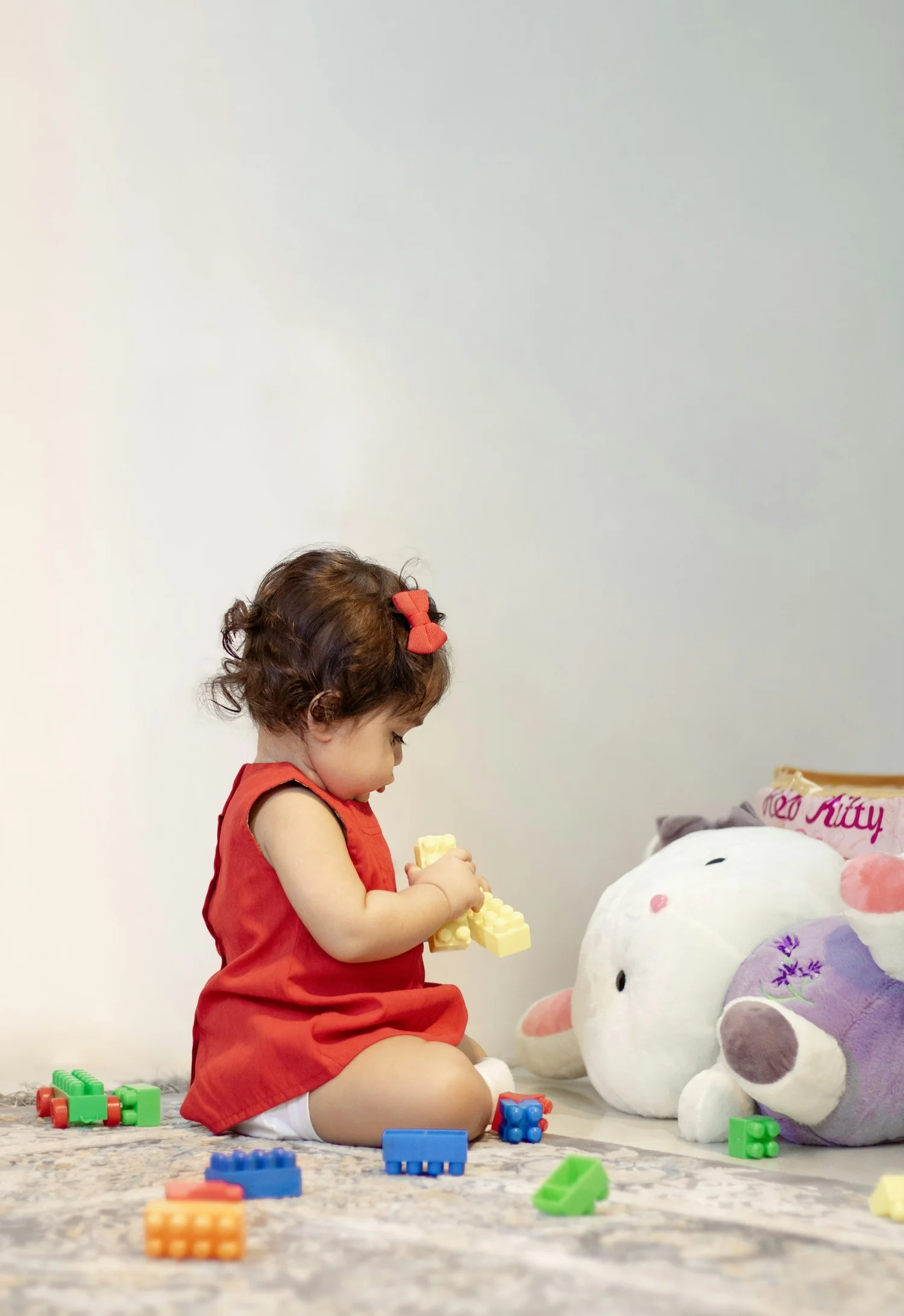
You know the pose: your kiddo plops down to play with their bottom on the floor and both legs bent out to the sides, knees forward, feet behind — a perfect "W." Then you Google it and the internet tells you their hips are doomed. Let me give you the calmer, OT version.
Here's the short answer: occasional W-sitting is normal and not worth losing sleep over. Lots of typically-developing kids drift in and out of it. What we actually watch for is whether it's the only way a child sits — because of what that one position quietly skips.
Why kids love the W
It's a fantastic base. The wide legs make a super-stable tripod, so a child can sit bolt upright and play with both hands without their trunk doing any work. For a kid with bendy hips or a little extra flexibility, it's also just comfy. None of that is "bad" — it's efficient. The catch is the part where the trunk does no work.
What the W quietly skips
Because the W holds them up for free, a child doesn't have to fire up their core, shift their weight, or rotate their trunk to reach. Those are exactly the skills that power crossing the midline, two-handed play, and later balance and handwriting. If a kiddo only ever W-sits, they get a lot less practice with them. (And that scary "it'll wreck their hips" claim? For typically-developing kids it's largely overblown — the real reason we redirect is the skipped core and rotation, not doom.)
So… should you worry?
Mostly, no. It's worth a closer look if W-sitting is their default and only position, and it comes alongside other things — floppy or low muscle tone, clumsiness, avoiding using two hands together, delays in sitting or walking, or a known hip concern. One of those on its own usually isn't alarming; it's the pattern that matters. When in doubt, a quick check with an OT or PT settles it fast.
Better positions to offer
You don't have to police it — just make the alternatives easy and normal. A cheerful "feet in front!" beats a lecture every time.
Criss-cross applesauce
The classic. Legs folded in front makes the trunk hold itself up — the exact opposite of the free ride the W gives.
Long-sit
Legs straight out in front like a capital L. Great for building back and tummy strength, and it makes reaching to the side a real (good) workout.
Side-sit
Both legs tucked to one side, then switch. This one gently forces the trunk rotation the W avoids — bonus points for alternating sides.
A little stool or bench
Feet flat on the floor, hips and knees at right angles. Perfect for tabletop play and puzzles, and it sets up the posture writing will lean on later.
Tummy-on-the-floor play
Propped on forearms to read or build. It's secretly some of the best back, neck, and shoulder strengthening there is — and zero kids think of it as exercise.
Build the core, and the W fades on its own
Most W-sitting is a child finding the easiest way to stay upright — so the real fix is a stronger middle, not nagging. Pile on the heavy, climbing, crawling play: animal walks, wheelbarrow walking, tunnels, climbing at the park, and ball games. For tabletop time, a slightly unstable seat like a wobble cushion on a chair keeps those little core muscles switched on while they color. Strong middle, no more W.
Heads up: this post has Amazon affiliate links — if you grab something through them, Tiny Hands earns a small commission at no extra cost to you. Thanks for keeping the free worksheets free!
When it's worth a chat with an OT or PT
Reach out if your kiddo truly can't sit any other way, if you're already noticing low tone, frequent tripping, or trouble using both hands together, or if sitting and gross-motor milestones have felt behind. A therapist can check the hips and core, rule out anything that needs attention, and hand you a couple of playful exercises — usually it's quick reassurance, not a big deal.
W-Sitting: What to Know
My W-sitting guide gives the honest, non-alarmist rundown — why kids do it, when to look closer, and the better positions to offer.
See the GuidesThis post is for learning and support — it isn't a diagnosis. If you're worried about your child's hips, tone, or development, a licensed OT, PT, or your pediatrician can help. © Tiny Hands