

 Image 1 of 3
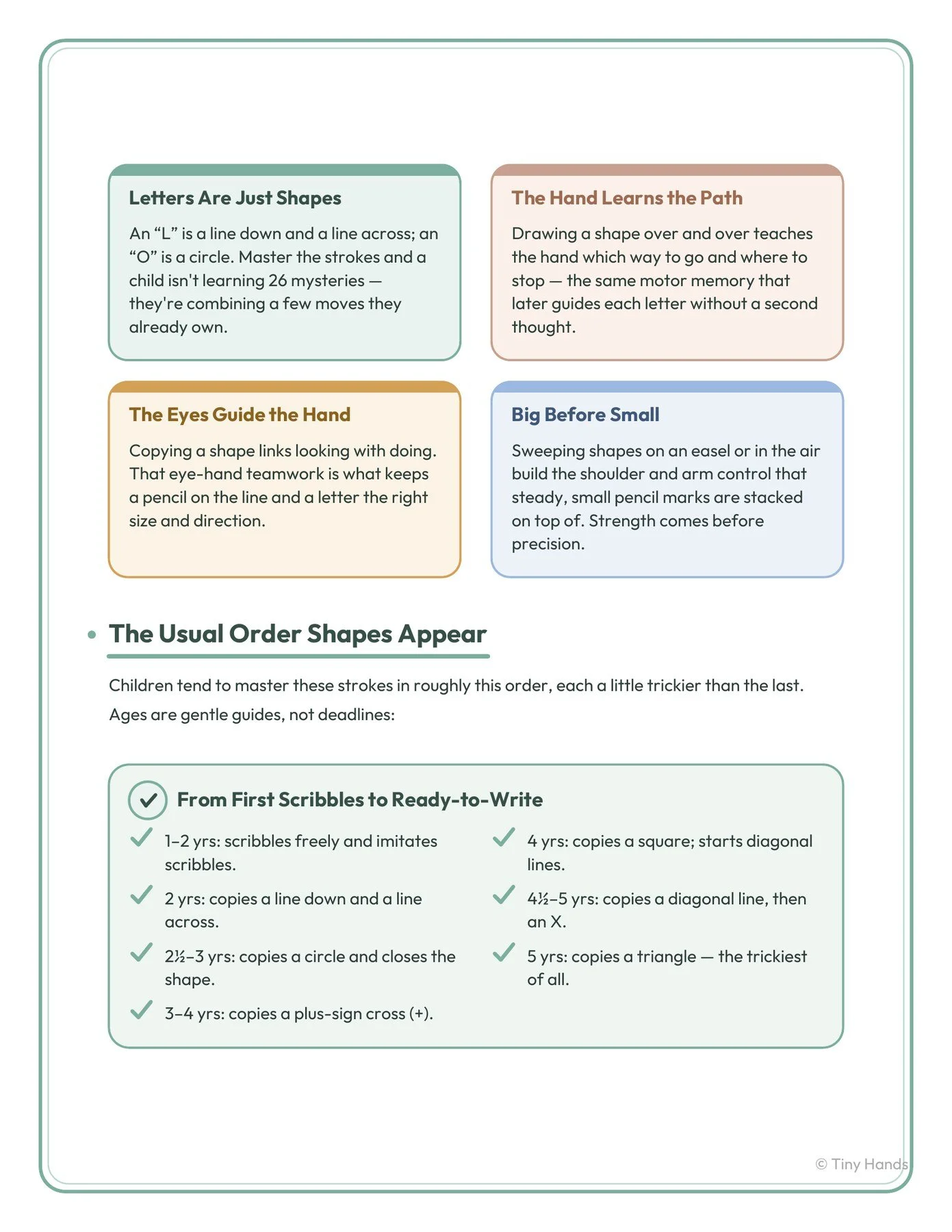 Image 2 of 3
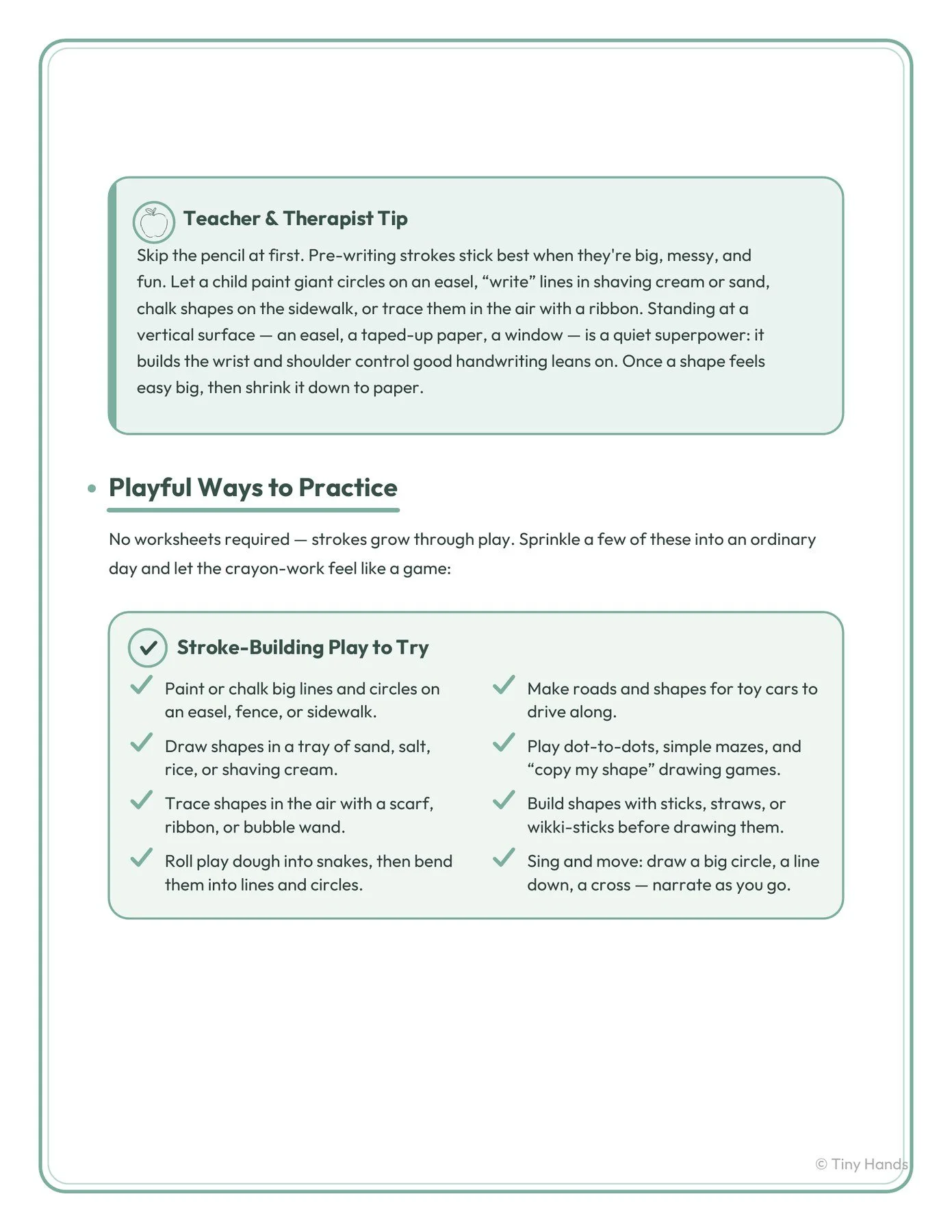 Image 3 of 3
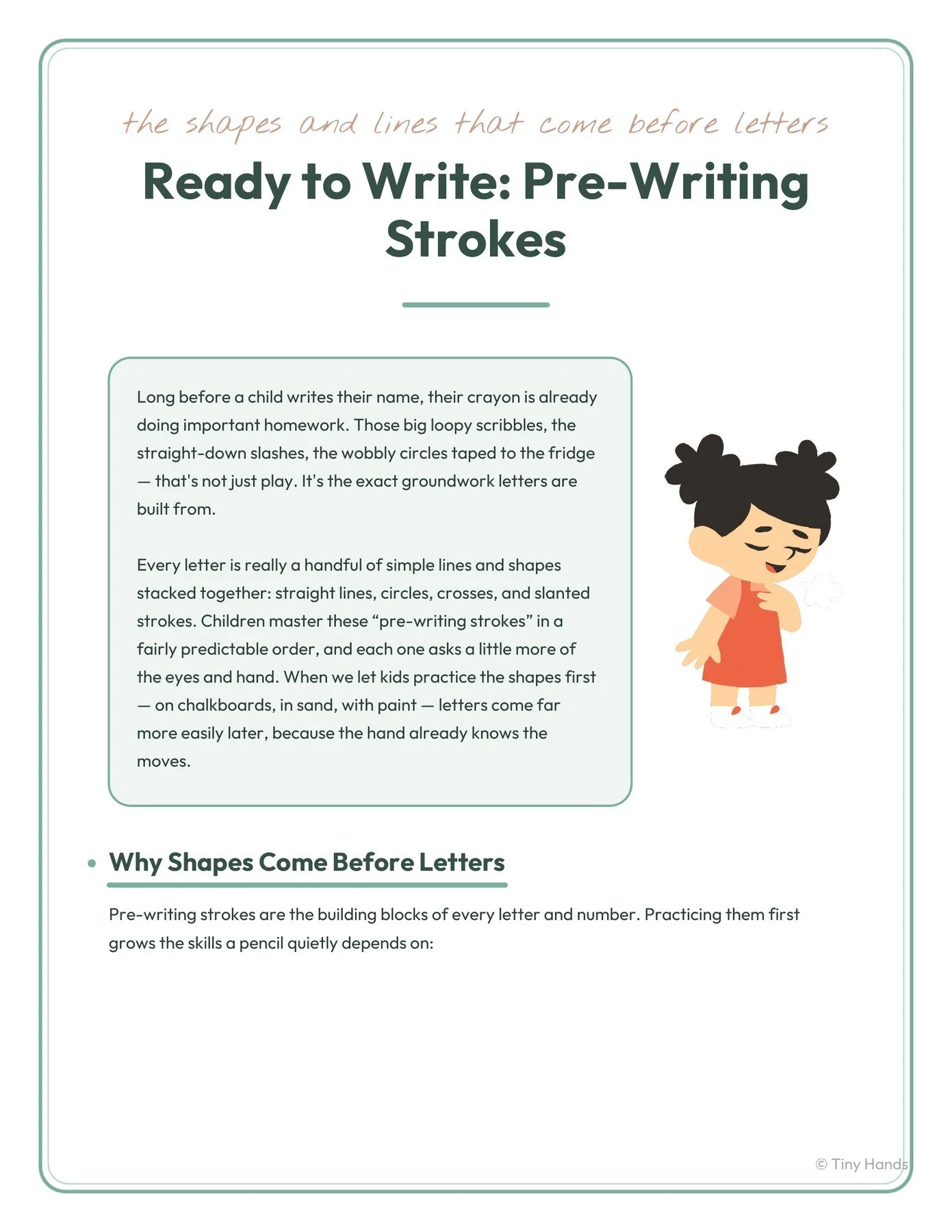
The shapes that come before letters, and playful ways to practice them.
Read it through, then sprinkle one or two play ideas into an ordinary day. Go big first on an easel, in sand, or with chalk. Shrink to paper once a shape feels easy.
Crayons, chalk, or paint. Sand, salt, or shaving cream make fun draw-in trays.
This handout is for learning and support. It isn’t a diagnosis.
Made by Ms. Aviv, a licensed pediatric occupational therapist, and used with real kids before it reaches you. Print-ready PDF on US Letter (prints on A4 with “fit to page”).