
Interoception & Body Signals

$3.00

What does my body feel like? Six activities that help kids notice body signals, a fast heartbeat, a tight tummy, heavy eyes, and connect them to a feeling.

What’s inside

  • 10 pages: a cover, a how-to page for grown-ups, 6 activities and a “My Body Talks to Me” reference poster
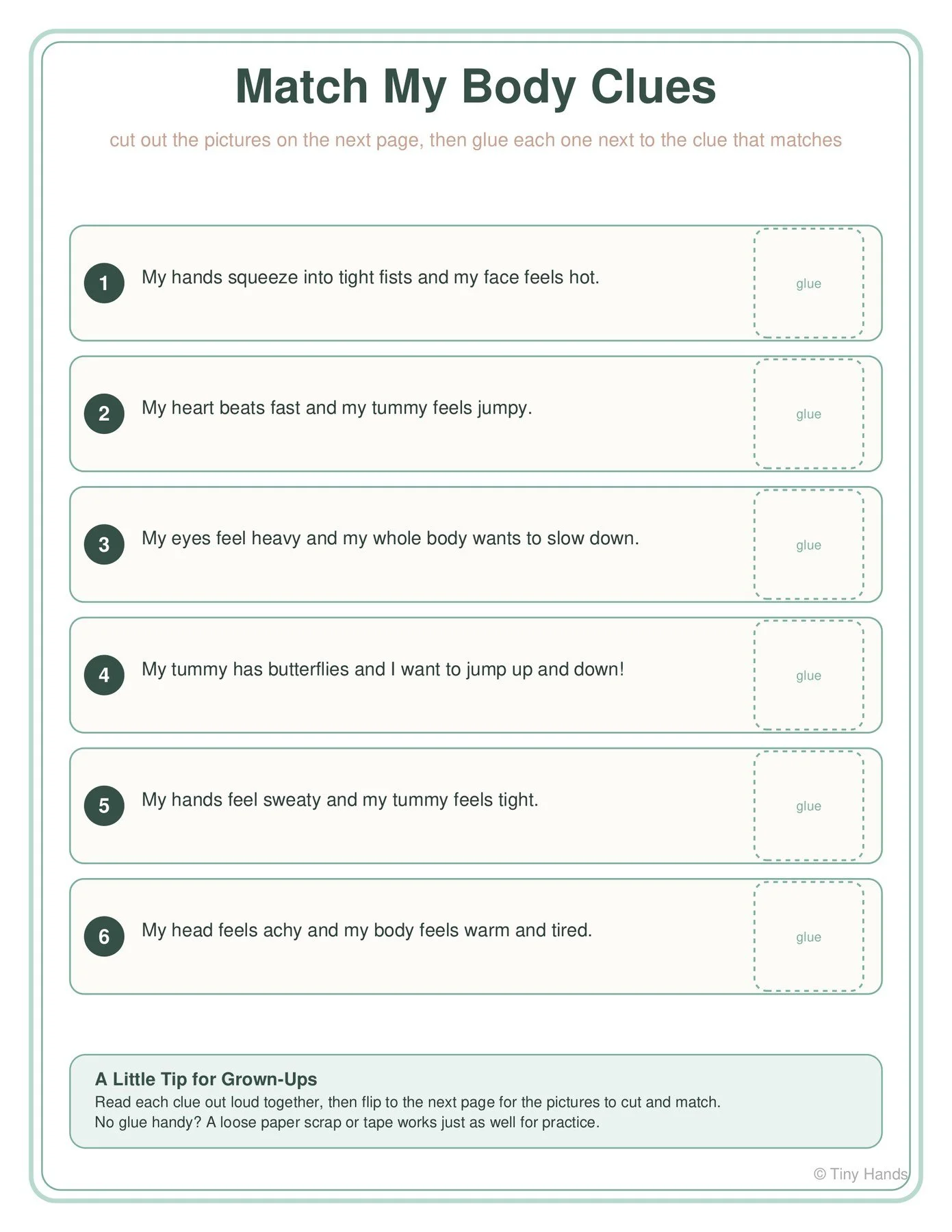
  • Match My Body Clues: read each clue, cut out the matching picture and glue it next to the clue (ages 4–7)
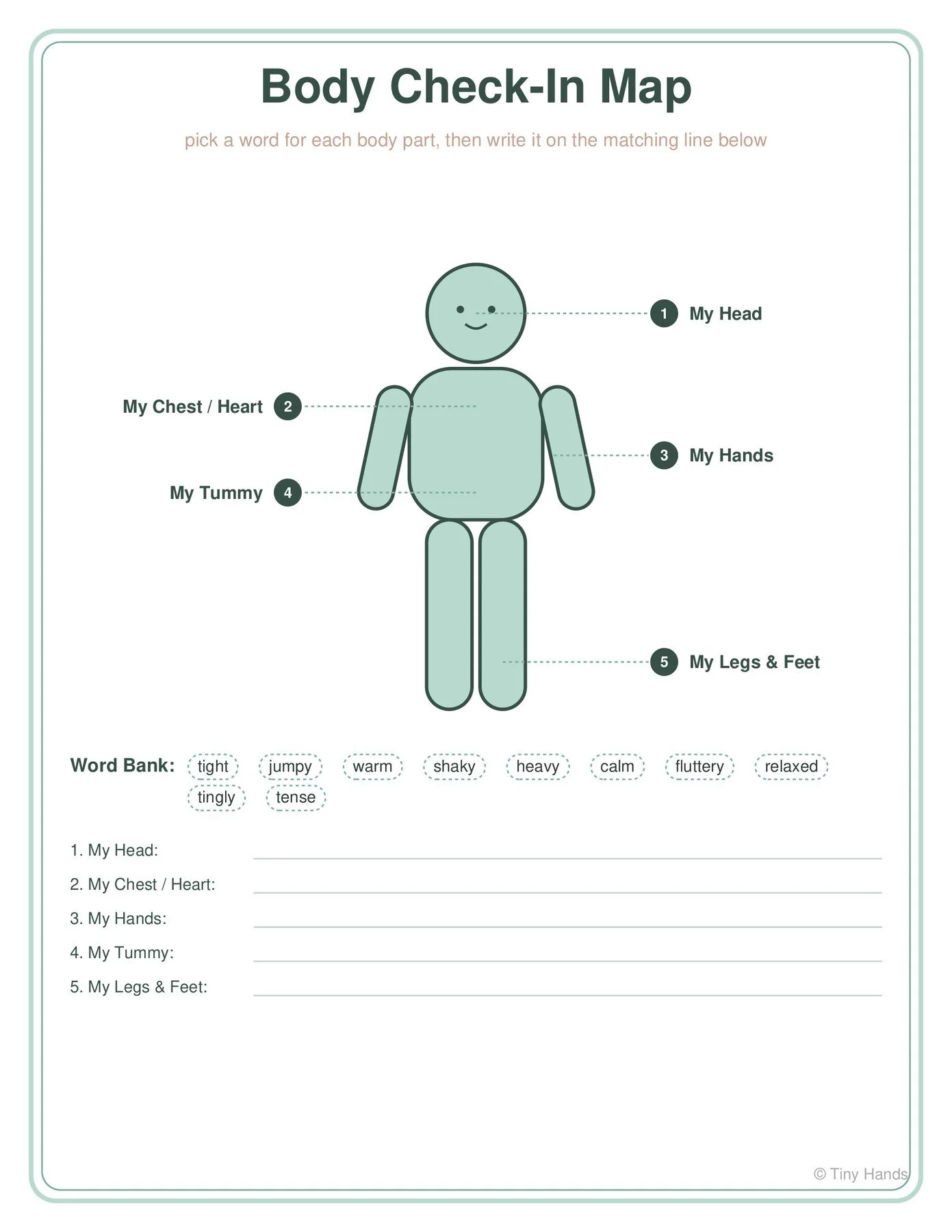
  • Body Check-In Map: choose a word for each body part and write it on the line (ages 5–8)
  • Circle What’s True for You: a personal check-in for each feeling (ages 5–8)
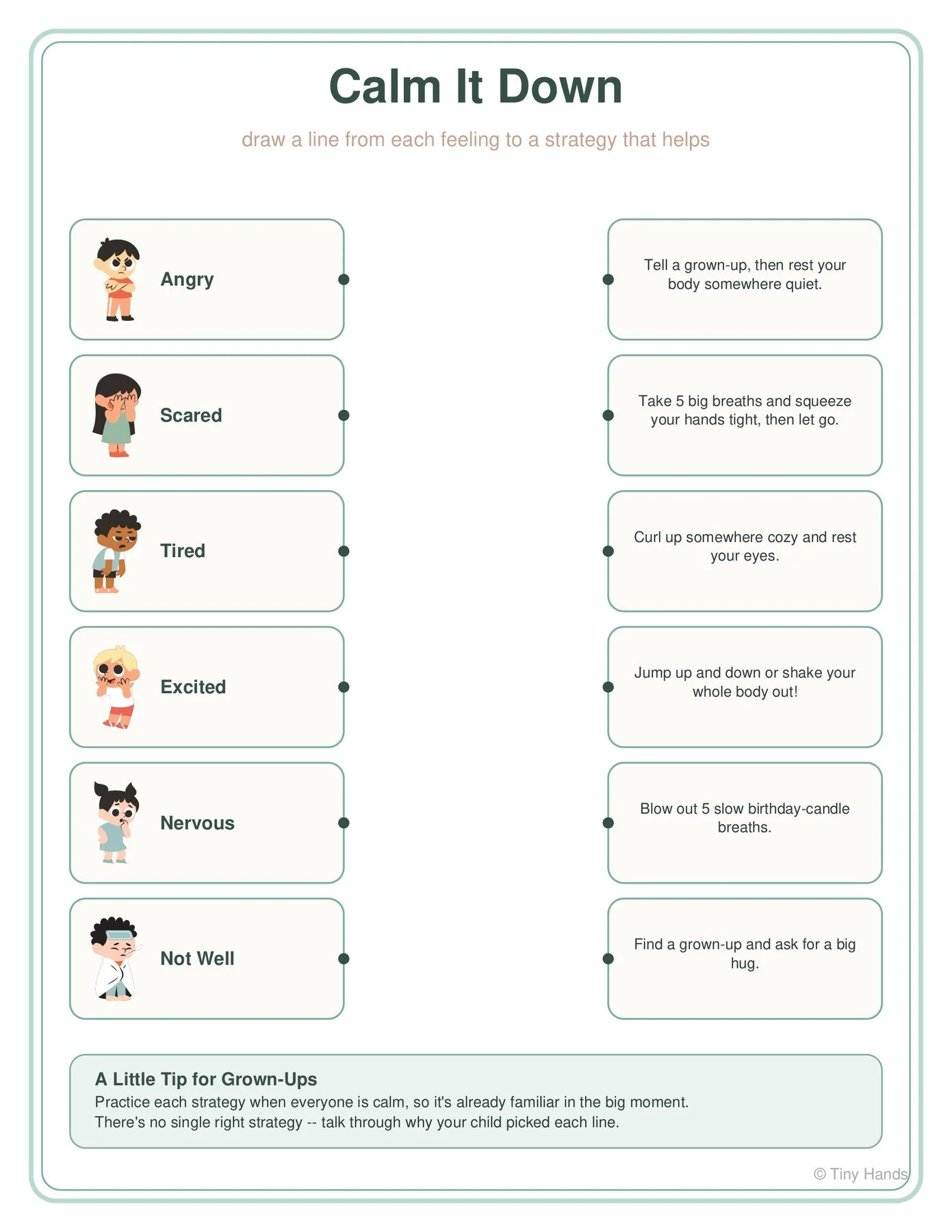
  • Calm It Down: draw a line from each feeling to a strategy that helps (ages 4–7)
  • My Own Body Clues: a blank template to write or draw your own signals (ages 5–9)
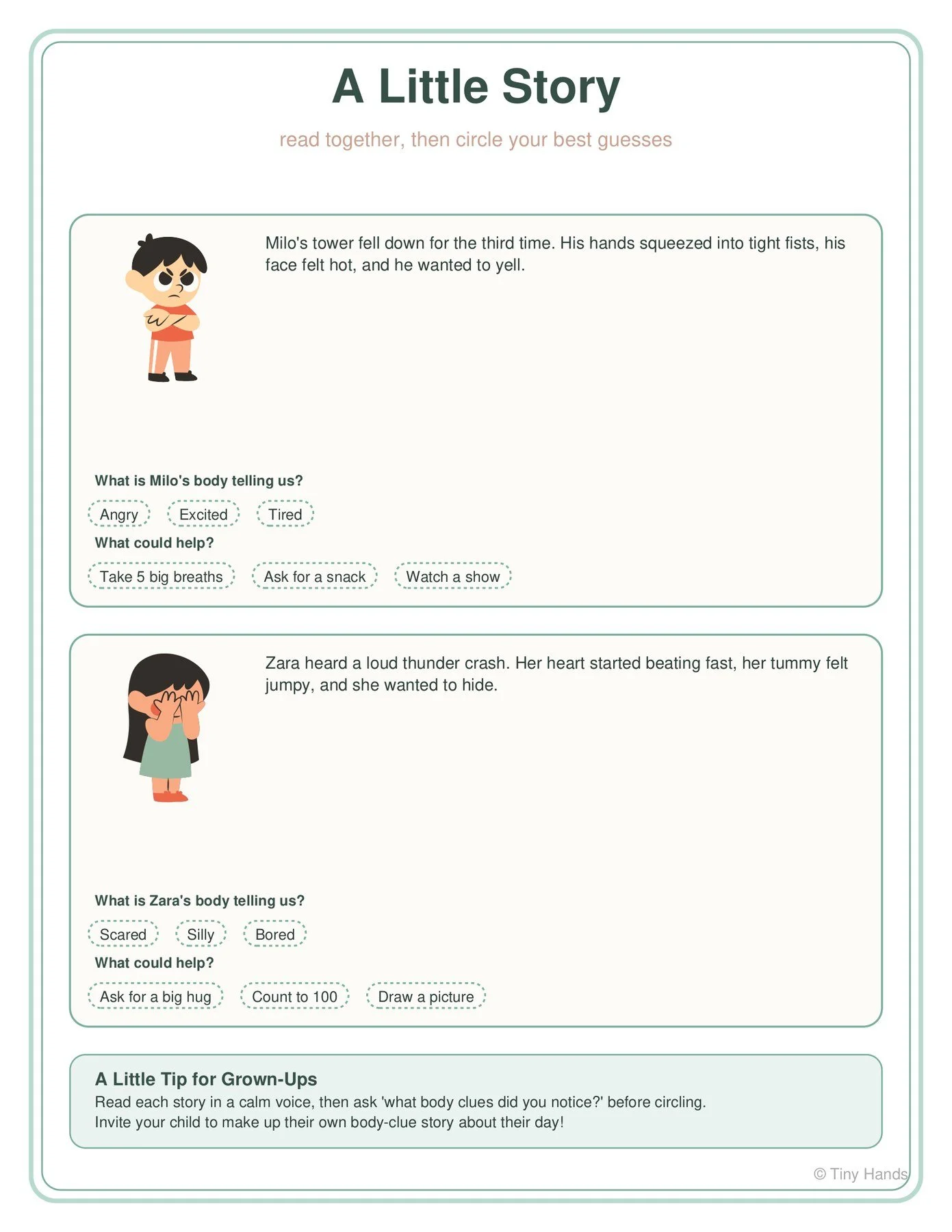
  • A Little Story: two read-together scenarios with circle-your-guess prompts (ages 5–8)

Skills it builds

  • Interoceptive awareness (noticing body signals)
  • Emotional vocabulary and labeling
  • Self-regulation and coping-strategy readiness
  • Reading comprehension, matching and cutting

How to use

Start with the matching page, then move to the check-ins. Kids who struggle to name feelings often can describe body sensations first, so start there and build the feeling word on top. There are no wrong answers. Laminate the Body Check-In Map, Circle What’s True and the poster so your child can revisit them with a dry-erase marker whenever a big feeling shows up. Prep time: 2 minutes.

You’ll need

A pencil, scissors and glue. A laminator or sheet protectors and a dry-erase marker are optional.

From a pediatric OT

Made by Ms. Aviv, a licensed pediatric occupational therapist, and used with real kids before it reaches you. Print-ready PDF on US Letter (prints on A4 with “fit to page”).