


How Do I Teach My Child to Put On Their Socks? The Heel Dot Trick

If your child's socks end up with the heel on top of the foot and the toe flopping off the end, here's the quick answer on how to teach a child to put on socks. Most kids can pull socks on with a little help around age 3 and do it on their own, heel in the right place, somewhere between 4 and 5. Start sitting down, use a roomy sock, and teach one step at a time: scrunch the sock, point the toes, pull it over the heel.
The trick I use in sessions is the Heel Dot Trick. Put a small sticker dot on the heel of the sock, and the rule is simple: the dot goes on the bottom, at the back. Now your child has something to look for, and "which way is up?" stops being a guessing game.
From the Tiny Hands shop
Where That Thumb Strength Comes From
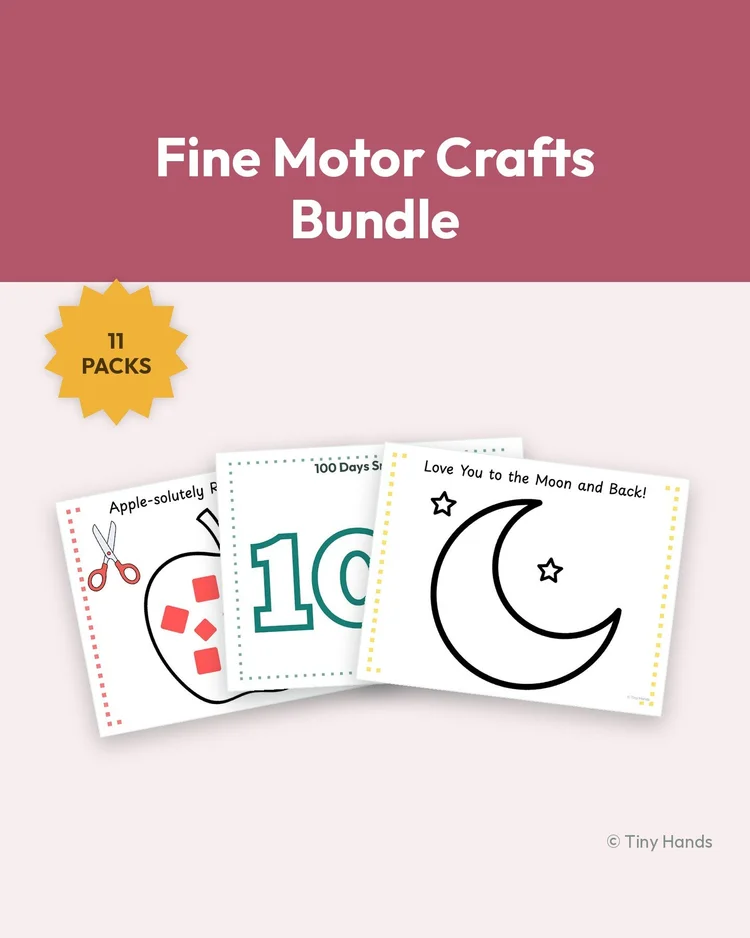
Pulling a sock over a heel takes a stubborn two-handed grip — the kind built by pinching, tearing and holding small things steady. The Fine Motor Crafts Bundle packs that work into crafts kids actually want to finish.
Shop the Fine Motor Crafts BundleAt What Age Can Kids Put On Their Own Socks?
Here's the order I usually see. Treat it as a loose map, because every kid runs on their own clock.
Around 2: pulling them off
Socks come off first, usually mid-car-ride. Annoying, and also real practice.
Off before onAround 3: a helped sock
You start it over the toes, they pull it up the rest of the way. The heel still lands somewhere surprising.
Pull-up helpAround 4: most of the job
They find the opening and get the toes in. Heel placement and twisted socks are the usual leftover bits.
Nearly independentAround 5: all on their own
Heel where it belongs, seam smooth, and often a proud announcement about it.
IndependentA 4-year-old who wants help with socks is right on schedule. A lot of kindergarten teachers will tell you they spend the first cold week fixing sideways socks for a whole room.
⭐ The Heel Dot Trick, step by step
Add the dot. Stick a small dot on the heel of each sock. A marker dot works too. Tell your child, "the dot is the heel's name tag."
Sit and scrunch. Sitting down, they gather the sock into a little ring, like a doughnut, with the dot facing the floor side.
Toes in. Point the toes and slide them into the doughnut.
Pull over the dot. Pull the sock up over the heel until the dot sits right at the back of the heel. Ta-da.
Why Does My Child Get the Heel in the Wrong Place?
Usually it comes down to feel and sight. A sock is floppy, kids can't see the heel from above, and they're working on feel alone. The dot gives their eyes a job, which makes it much easier.
It also takes two hands doing different jobs. One side holds the sock open while the other pulls. That teamwork is called bilateral coordination, and my post on bilateral coordination activities has games that build it.
And sometimes it's balance. Standing on one leg to put on a sock is a lot, so sitting down is a great first step. When socks are mastered, the same moves help with the next big skill, and my when should a child tie their shoes guide picks up from there.

How Can I Practice Putting On Socks at Home?
You don't need a rushed morning to practice. Try these when nobody's late for anything.
Sock the teddy
Hand your child a teddy and a pair of baby socks. Dressing someone else is a sneaky way to learn the order.
Role playGiant sock, big motions
Try a grown-up sock first. It's roomier, so the pull is easier and wins come fast.
Easier startSock hunt at bedtime
Hide a few pairs around the room, find them, and put them on. Hunting makes it a game.
Want more ideas for little fingers? My buttons, zippers and snaps post uses a lot of the same moves, and teaching kids independence at school has more getting-ready ideas.
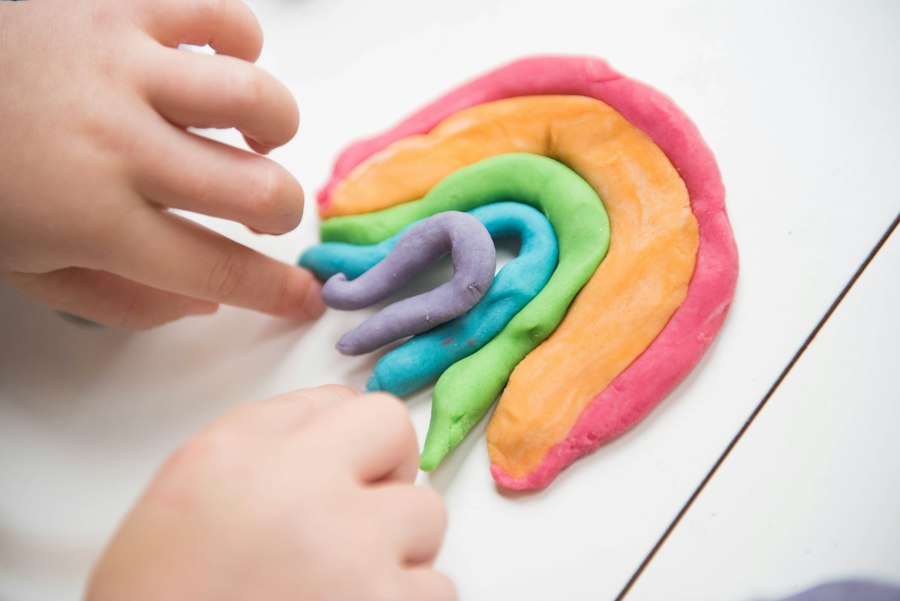
Want printable activities for strong little fingers?
A few minutes of pinching and finger games before getting dressed builds exactly what a sock needs. The fine motor activities in the Tiny Hands library are print-and-go pages for that.
See the Fine Motor LibraryWhen Should I Check In With an OT?
Give it a few weeks of relaxed practice first. Socks usually click right around the time you've stopped counting.
It's worth a chat with your pediatrician or an OT if your child is 5 or older and still can't get a sock on at all, if one hand seems much weaker than the other, or if they avoid other small tasks like buttons and crayons. Also if the feel of socks seems to truly upset them, like seams or tightness. An OT can see which piece is tripping them up, and it's usually very workable.
Until then, a sticker dot and a "ta-da" is plenty.
Grab the free Fine Motor Starter Pack 🎁
Join the list and I'll email you the free Fine Motor Starter Pack: 40+ pages of pinching, tracing, tearing and snipping activities you can print today.
Send Me the Free PackWant everything I use in sessions, sorted by skill? Peek inside the membership →
This post is for learning and support — it isn't a diagnosis. © Tiny Hands