


How Do I Teach My Child to Put On Gloves and Mittens? The Thumb Garage Trick

If your kid's mittens end up on backwards, with the thumb jammed in the wrong spot or a fist stuck in the middle, here's the quick answer on how to teach a child to put on gloves and mittens. Most kids can pull on their own mittens somewhere around age 3, and finger gloves usually come closer to 5 or 6. Mittens are easier because the four fingers share one room and only the thumb needs its own spot. Start there, teach the thumb first, and save finger gloves for later.
The method I use in sessions is the Thumb Garage Trick. The thumb is a little car and the mitten has a garage just for it. Park the thumb in its garage first, then slide the other four fingers into the big room, and tug the cuff up. That order is the whole trick.
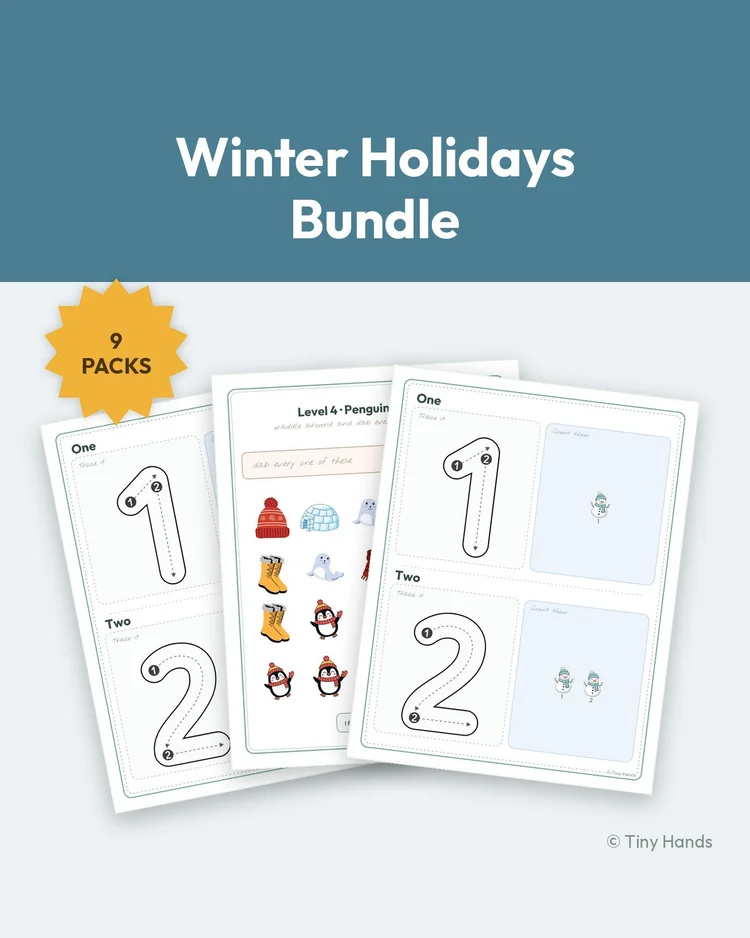
From the Tiny Hands shop
While You Are Waiting Out the Cold
Mitten season is also indoor season. The Winter Holidays Bundle keeps the same little hands busy on snowy afternoons — cutting, dabbing and tracing through every winter theme, so thumbs stay strong for next time.
Shop the Winter BundleAt What Age Can Kids Put On Their Own Mittens and Gloves?
Here's the order I usually see. Every kid has their own clock, so treat it as a loose map.
Around 2: pulling them off
Taking mittens off comes first, usually with a lot of dramatic flinging. Totally normal, and it's real practice.
Off before onAround 3: a helped mitten
You hold the cuff open, they push the hand in. The thumb still lands in the wrong place about half the time.
Mitten with helpAround 3 to 4: mittens on their own
Thumb in the garage, fingers in the big room, and a tug. Expect a twisted cuff or two.
Independent mittensAround 5 to 6: finger gloves
Each finger has to find its own tunnel, and that takes finger control a lot of kids are still building. A bunched-up glove finger is the usual hiccup.
GlovesA 4-year-old who still wants help with gloves is right on schedule. A lot of kindergarten teachers will tell you the same, since they spend the first cold week helping a whole room of glove-strugglers.
⭐ The Thumb Garage Trick, step by step
Find the garage. Point to the thumb spot on the mitten and say "this is the thumb's garage." Giving it a name makes the thumb easier to find.
Park the thumb first. Hold the mitten with the thumb side facing up, and have your child tuck their thumb in before anything else.
Fingers in the big room. The other four fingers slide into the main part together. Easy.
Tug the cuff. One pinch of the cuff and a pull over the wrist, and they're done. A little high five at the end makes it stick.
Why Does My Child Get the Thumb Stuck in the Wrong Place?
Usually the problem is the thumb itself. Pointing the thumb away from the other fingers while the rest of the hand stays curled takes some finger separation, and that's a skill still being built. Kids also can't see inside the mitten, so they're working on feel alone. My in-hand manipulation activities are a nice way to build that finger control.
Then there's the other hand. One hand has to hold the mitten open while the other pushes in, and that teamwork is called bilateral coordination. If your kid drops the mitten halfway, my post on bilateral coordination activities will help.
Sometimes it's just that gloves are scratchy or tight and your child would rather skip them. If that sounds familiar, you might like why kids refuse to wear a coat.

How Can I Practice Putting On Mittens at Home?
You don't need a cold day to practice. Try it indoors with whatever mittens you've got.
Sock mitten races
Big old socks work as pretend mittens. Everybody puts one on a hand, thumb out, and sees who can do it first. It's silly and low pressure.
Pretend playDress the teddy
Your child gets a teddy bear and a pair of mittens and takes charge. Teaching someone else is a great way to learn the order.
Role playMark the garage
Sew or stick a small bright tag on the thumb spot of the mitten so it's easy to spot.
Want more ideas for little fingers? My buttons, zippers and snaps post uses a lot of the same moves.
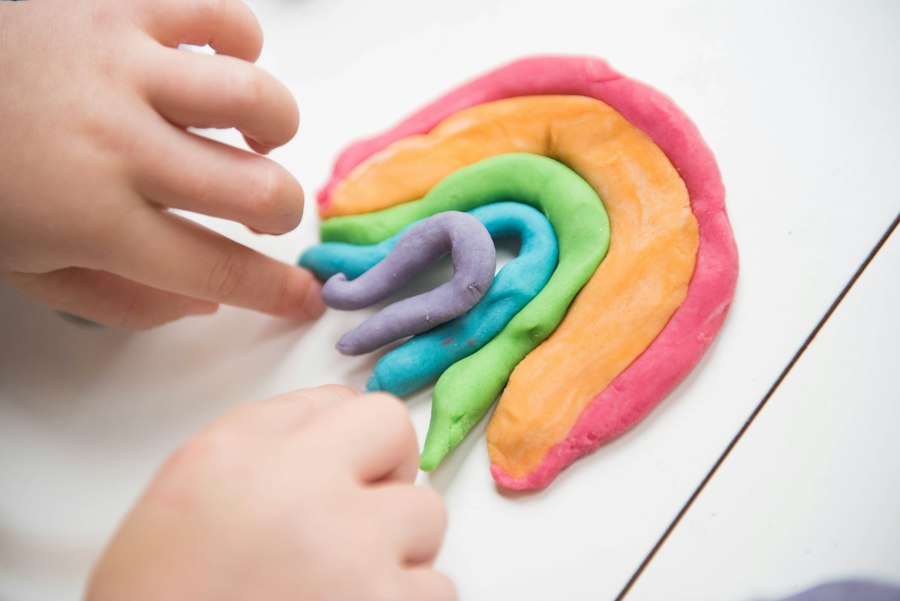
Want printable activities for strong little fingers?
A few minutes of pinching and finger games before getting dressed builds the exact skill a mitten needs. The fine motor activities in the Tiny Hands library are print-and-go pages for exactly that.
See the Fine Motor LibraryWhen Should I Check In With an OT?
Give it a season of relaxed practice before you worry. Mittens are one of those skills that clicks right around the time you've stopped counting.
It's worth a chat with your pediatrician or an OT if your child is 5 or older and still can't get a mitten on at all, if one hand seems much weaker than the other, or if they avoid small tasks like buttons, snaps, and crayons. Also if the feel of gloves seems to truly upset them. An OT can see which piece is tripping them up, and it's usually very workable.
Until then, a mitten with a thumb garage and a quick high five is plenty.
Grab the free Fine Motor Starter Pack 🎁
Join the list and I'll email you the free Fine Motor Starter Pack: 40+ pages of pinching, tracing, tearing and snipping activities you can print today.
Send Me the Free PackWant everything I use in sessions, sorted by skill? Peek inside the membership →
This post is for learning and support — it isn't a diagnosis. © Tiny Hands