
Homework Without Tears An OT's Focus-and-Seating Setup
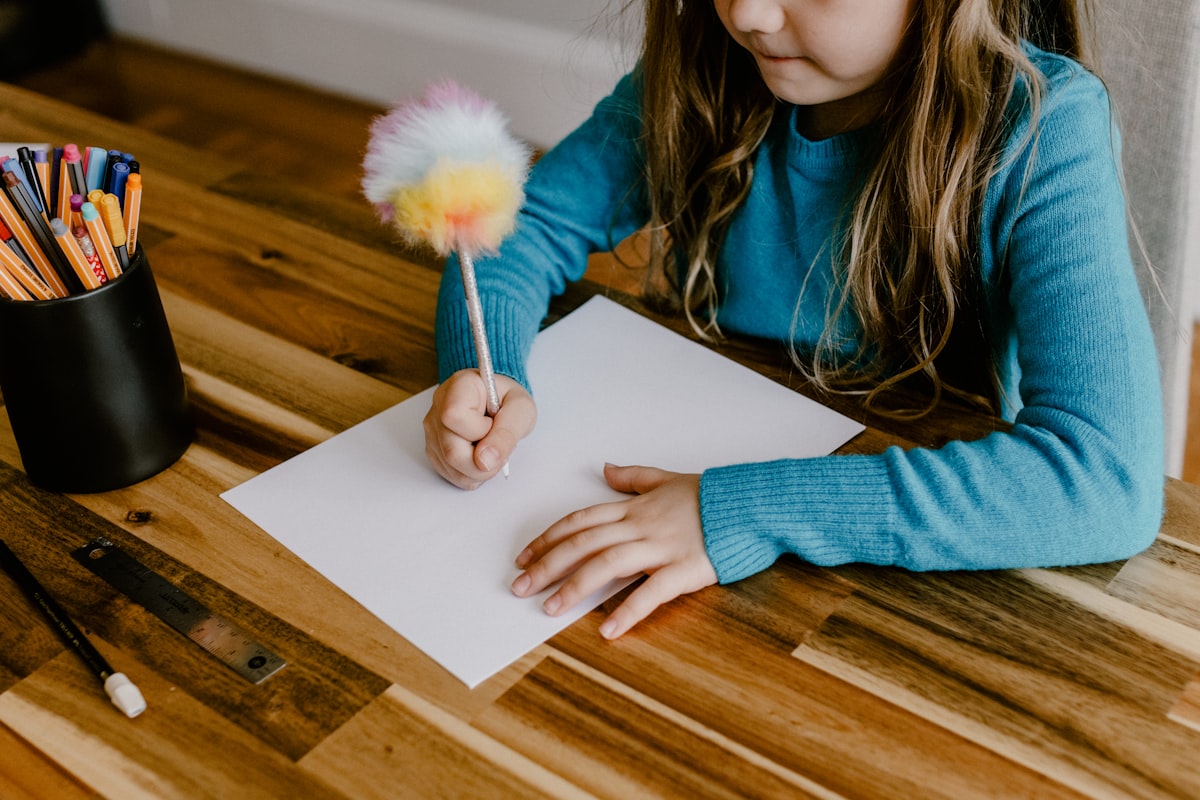
It's 4:30. The backpack is on the floor, the folder is crumpled somewhere inside it, and the one worksheet that was due tomorrow has become a full-body event — your kid is upside down on the chair, chewing a pencil, sighing like they've been asked to file taxes. You ask them to "just focus," they melt, you feel your own patience thinning. If you've been quietly googling how to help kids focus on homework after another teary session, you are in extremely good company.
Take a breath first, because here's the thing I tell every parent in my office: a kid who can't sit and focus is almost never being lazy or defiant. More often their body isn't ready to sit — the wiggles, the flopping, the "I can't" — that's a nervous system that needs to move before it can settle. Homework meltdowns are usually a setup problem, not a character problem. And setups are fixable. Let me walk you through exactly how I'd build one.
How Long Kids Can Actually Focus By Age
Before you brace for a 45-minute homework marathon with a six-year-old, a reality check: little kids have little attention spans, and that's biology, not attitude. A handy rule teachers use is the "10 minutes per grade" guideline — roughly ten minutes of homework per grade level. Here's how that shakes out, plus what focus really looks like at each stage.
4–5 years (Pre-K / K): 5–10 minutes, tops
At this age, sitting still is the work. Expect short bursts — a few minutes of a tracing page, then a wiggle. Keep it playful and body-based, and don't expect a quiet desk. If your kindergartner can focus for one small task, that's a win, not a warm-up.
5–10 min6–7 years (1st–2nd): about 10–20 minutes
Now they can handle a short worksheet, but almost always in two rounds with a movement break in the middle. This is the age where a good seat and a "brain break" make or break the whole session — push past their limit and you'll both pay for it.
10–20 min8–9 years (3rd–4th): 20–30 minutes
Stamina is climbing, and they can chip through a couple of subjects — but they still need to get up, stretch, and refuel between them. A fidget or a wobble seat can help the busy body stay put without stealing focus.
20–30 min10+ years (5th and up): 30–45 minutes
Bigger kids can settle into a real work block — but "settle" still assumes a comfy, distraction-light spot and a body that got to move first. Even tweens do better with a five-minute reset partway through.
30–45 minSee the pattern? Focus isn't a switch a kid flips because you asked nicely — it's a muscle that grows with age, and it tires out. Match the length of homework time to where your kiddo actually is, and half the tears disappear on their own.
🧠 My go-to trick: "Heavy Work, Then Homework"
Here's the single move I'd give every homework-dreading family: before a pencil ever touches paper, get five minutes of "heavy work" into that little body. Heavy work is any push-pull-carry effort — wall push-ups, carrying a stack of books to the table, ten wheelbarrow-walks down the hall, dragging the laundry basket. It sounds too simple, but that deep muscle-and-joint input is like a reset button for the nervous system: it burns off the fidgets, wakes up the focusing part of the brain, and tells an over-revved body it's safe to slow down. I've watched a kid who "couldn't possibly" sit down go from bouncing off the walls to calmly doing a worksheet — all because we did wall push-ups first instead of nagging. Do it every day, right before homework, and it becomes the cue: heavy work means it's time to work. My favorite ways to build that kind of full-body strength live in my core strength for handwriting post if you want the menu.

Building the Homework Launchpad With Stuff You Already Have
The other half of how to help kids focus on homework is the seat itself. A wiggly kid at the wrong-sized table is fighting their own chair before they've even read the first question. You don't need to buy a special desk — you just need to check a few things you already have. Here are the five I set up for every family.
1. Feet flat, not dangling
Dangling feet make a body feel unstable, and an unstable body wiggles to find its balance. If their feet don't reach the floor, pop a step stool, a stack of books, or a firm box under them. Flat, supported feet are the quietest focus upgrade there is — and it's free.
Posture2. The 90-90-90 seat
Aim for hips, knees, and ankles all bent at roughly right angles, with the table around belly-button height. When a kid is folded up or reaching up to write, all their energy goes into holding themselves together instead of thinking. This is the same core-and-posture link I dig into in core strength for handwriting — a supported body writes and focuses better.
Setup3. Shrink the distractions
Little brains can't filter background noise the way ours can. Face them toward a blank wall instead of the TV or window, clear everything off the table except the one worksheet, and put the tablet in another room. A boring, quiet spot isn't punishment — it's a runway.
Environment4. Build in a brain break
Don't wait for the meltdown to offer a break — schedule it. Set a visual timer, and when it dings, everybody gets up: jumping jacks, a snack, a lap around the kitchen. Coming back to the table on purpose is a hundred times calmer than being dragged back after a collapse.
Movement5. Give the hands a job
Some kids focus better with a little something to fidget — a stress ball squeezed under the table, a piece of putty, a textured strip taped to the chair. If wiggling helps them think, a quiet fidget channels it instead of fighting it. The classroom version of this is all in my help for the wiggly classroom sitter post.
FidgetPick a spot, set it up the same way every day, and let it get boringly predictable. A kid who knows exactly where and how homework happens spends zero energy resisting the setup — and all of it on the actual work. If you want the full blueprint — supplies, seating, the whole layout — my homework station setup post walks through it step by step.

Want the print-and-go version?
My Focus & Movement-Break Cards live in the membership — pull-a-card heavy-work and brain-break ideas plus a simple homework-launchpad checklist, ready to laminate and stick by the table. No hunting for ideas mid-meltdown — just flip a card and go.
Get the Focus CardsHeads up: this post has an Amazon affiliate link. If you grab something through it, Tiny Hands earns a small commission at no extra cost to you — it's what keeps the free worksheets free. Thank you!
The one tool I reach for with a can't-sit-still kid
If your kiddo is up and down like a jack-in-the-box the second they sit, this is the thing I point parents to: a weighted lap pad laid across their legs during homework. It's two pounds of gentle deep pressure — the same calming input as a firm hug — and for a lot of busy bodies it's the difference between bouncing off the chair and actually settling in to think. It's quiet, it doesn't plug in, and it tucks away when homework's done. Not magic for every kid, but when it clicks, it really clicks.
When to Check In With an OT
Squirmy, foot-dragging, "I can't focus" homework sessions are a completely normal part of being a kid whose focusing brain is still under construction. Most kids stretch their stamina slowly, over months and years, with a good setup and a grown-up who stays calm — not because they suddenly grew up overnight.
That said, a quick, no-pressure chat with a pediatric OT or your child's teacher can be reassuring if, as your child grows, you're consistently seeing things like a kiddo who genuinely can't sit and attend to anything — not even a favorite show or a fun game — for the length other kids their age can, homework that melts down into big feelings every single day no matter how you set it up, a child who seems physically driven to move and truly can't settle even after heavy work and breaks, or focus struggles that are bleeding into how they feel about school and themselves.
None of that is an emergency — they're just gentle "let's take a closer look" flags, and there's almost always a simple, playful tweak that helps a kid feel more capable at the table. If you want more of the focus-and-body toolkit, my posts on helping a wiggly classroom sitter and building the full homework station are the perfect next reads. You've got this — and so do they.
New here? Grab the free pack first 🎁
Join the list and I'll send you the Fine Motor Starter Pack — 40+ print-ready pages to build those little hands at home, from first scoops to strong little grips.
Send My Free PackWant the whole library — including the focus & movement-break cards — sorted and ready? Peek at the membership →
This post is for learning and support — it isn't a diagnosis. © Tiny Hands