
Games Every Pediatric OT Needs: The Cabinet Staples I Hack for Big Skills
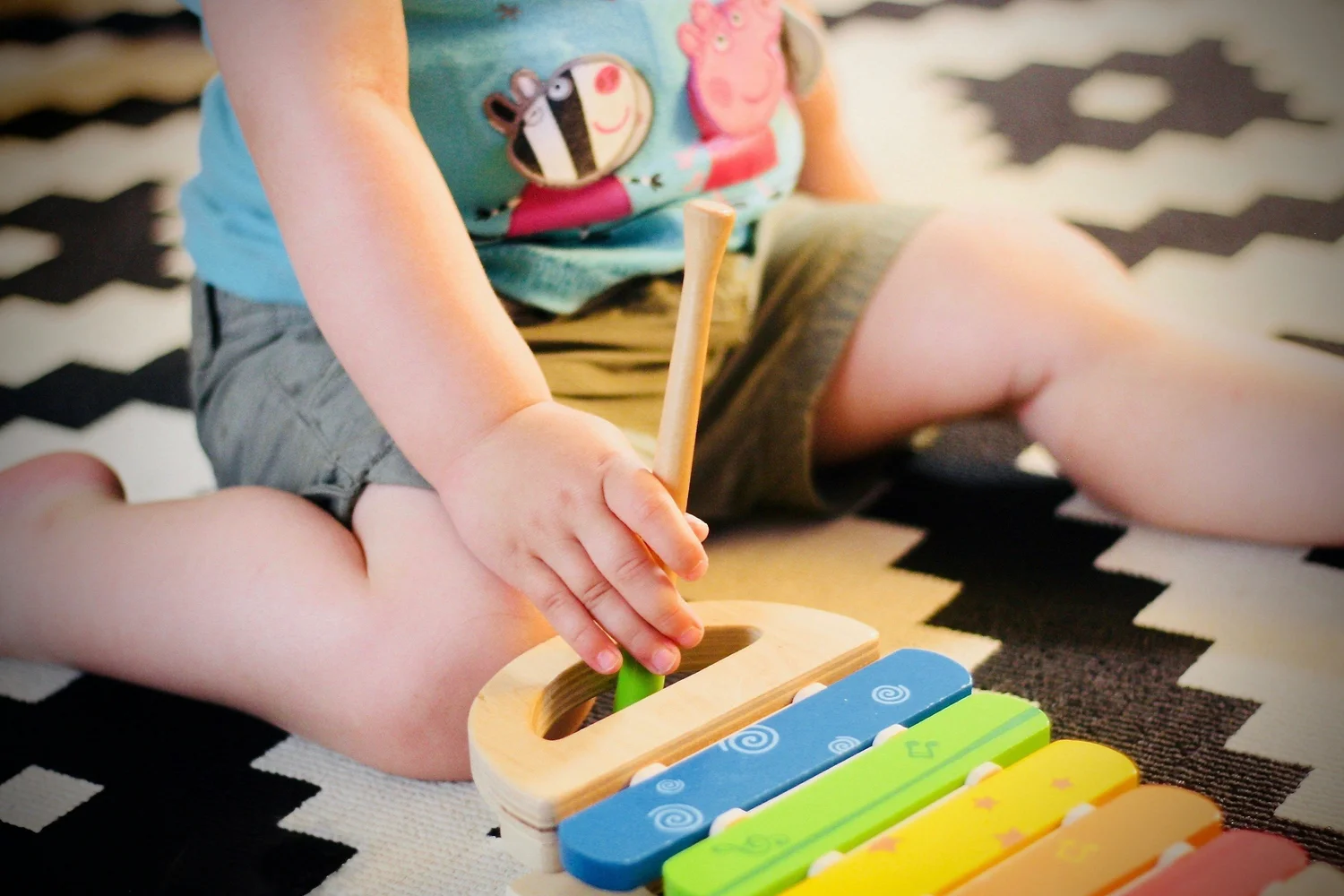
Here's a little secret from inside the therapy room: most of my favorite tools aren't fancy clinical equipment. They're the same occupational therapy games for kids you'd find at any toy store — I just play them a little differently. A $15 game can build grip strength, a pincer grasp, graded force, turn-taking, and letter recognition all at once, if you know which knobs to turn.
So whether you're an OT stocking a cart, a teacher building a fine motor center, or a parent who wants playtime to do double duty — these are the games I'd buy first, plus the exact tweaks I use to make each one work harder. (Want a quick warm-up routine instead? That's my fine motor warm-up activities post.)
The Games Every OT Should Own
Heads up: this post has Amazon affiliate links. If you grab something through them, Tiny Hands earns a small commission at no extra cost to you — it's what keeps the free worksheets free. Thank you!
Don't Break the Ice
Tapping a block out without dropping the bear is a master class in graded force — tap gently, don't smash — plus tool use with that little mallet and losing gracefully. My twist: write a letter, number, or sight word on each ice block with a dry-erase marker — and whatever block they tap out, they have to write it down before their next turn.
Graded force · tool useYeti in My Spaghetti
Pulling each noodle out without the yeti tumbling is the gentlest pincer-and-grade challenge there is. My twist: make the grasp work harder — have them pull each noodle out with tweezers or a clothespin instead of their fingers. Or turn it into a language game: name a word in a category (animals, foods, their friends) before every single pull.
Pincer · gradingHoney Bee Tree
Slide the leaves out one at a time without the bees dropping — pincer, eye-hand, patience, and built-in counting. My favorite twist: however many bees fall on your turn is how many letters you write or words you say in a category. Three bees? Three sight words. Sneaky reps, zero worksheet.
Pincer · countingAvalanche Fruit Stand
It comes with a squeezer for a lovely open-web-space grip, plus color sorting. My twist: ditch the squeezer and hand them scoop tongs — my desert-island OT tool (I'm a little obsessed — it's basically training wheels for scissors, more in my scissor skills for preschoolers post). Sort the fruit into a muffin tin by color for in-hand manipulation.
Tool use · sortingThe Fuzzies
Stacking soft fuzzballs into a wobbly tower builds tool use, bilateral coordination, and a careful graded touch — and reaching up high sneaks in shoulder stability. My twist: tongs only, no fingers allowed, and stick a letter sticker on each fuzzball to build a "word tower."
Tool use · bilateralhand2mind Letter Tracing Sensory Pad
If you buy one "letter board," make it this one. Tracing a letter and feeling the squish builds letter formation, prewriting strokes, and motor planning. My twist: write any letter, shape, or their name on it; trace with a finger first, then a stylus, then prop it on a slanted binder for an instant vertical surface.
Prewriting · handwritingMagnetic Alphabet Fishing Game
Steering a magnetic rod to "catch" each fish builds eye-hand coordination, wrist rotation, and a sustained grip. My twist: dump the letters into a rice or water sensory bin and fish them out, then build their name or a word.
Eye-hand · lettersBonus: cheap letter add-ons
A simple wooden alphabet puzzle and a magnetic alphabet train are my go-to add-ons. Pair them with any game above when you want to fold in letters, words, and a pincer grasp — the train cars take a real two-handed effort to connect, too.
Letters · add-on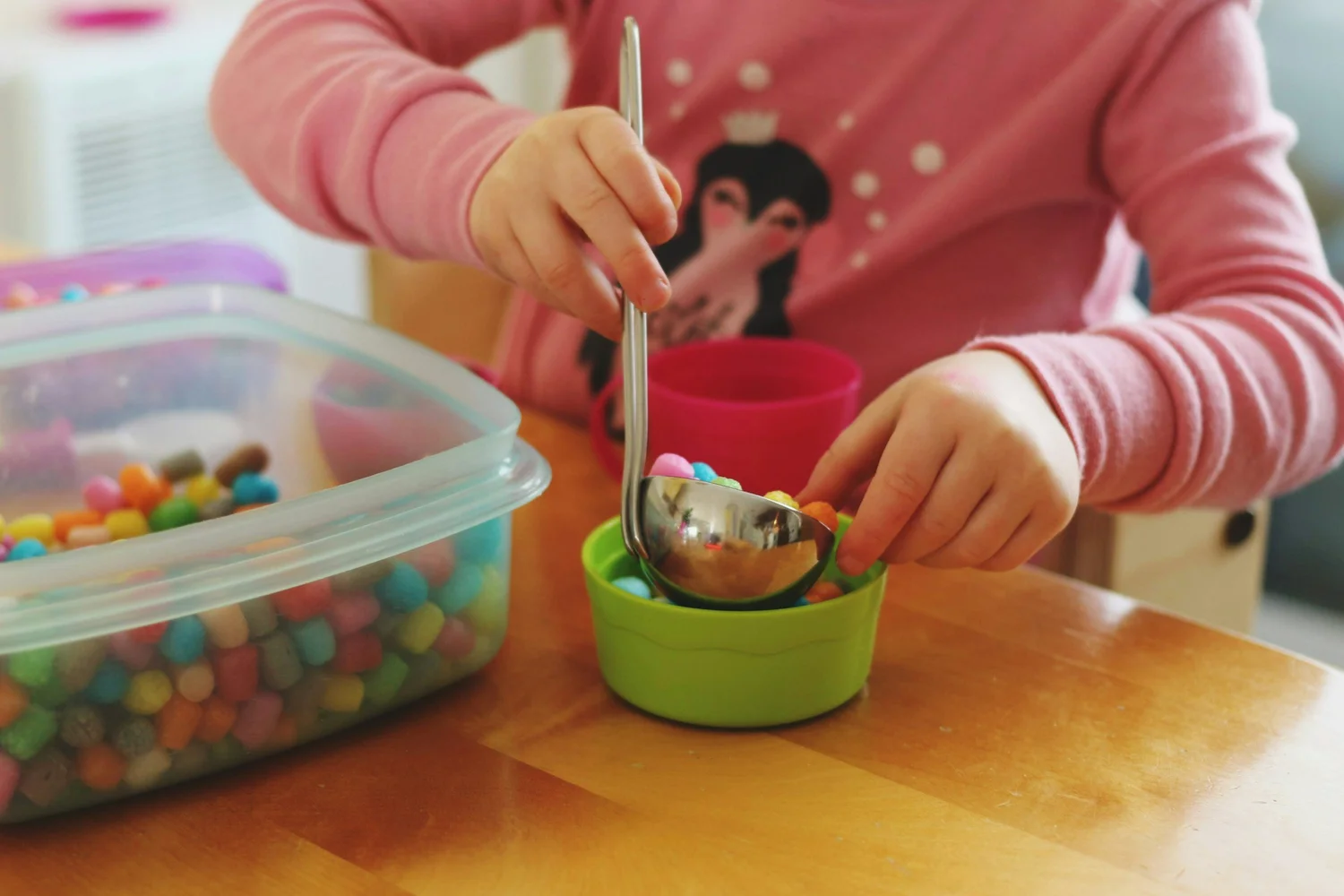
How to Level Any Game Up
Here's the real magic — the same five tweaks turn any game on the shelf into targeted therapy. This is how one game stretches across a dozen goals.
Make it a sensory bin
Bury the pieces — noodles, fuzzballs, fish, ice blocks — in rice, dried beans, or water, and have them dig and scoop each one out before they play. Tactile input plus a search-and-grade workout, all before the game even starts. (Stuck for fillers? My sensory bin ideas have you covered.)
Tactile · gradingTurn it into an obstacle course
Put the game across the room and have them crab-walk, bear-crawl, or wheelbarrow over to fetch one piece at a time. Heavy work, core strength, and crossing midline — and it resets a wiggly, dysregulated kiddo fast.
Gross motor · regulationAdd a tool
Tongs, tweezers, or chopsticks instantly upgrade any pick-it-up game to a pincer-and-tool-use workout. This is my number-one no-prep hack — I keep tongs in every bag.
Pincer · tool useTake it vertical
Tape pieces to a wall, play on an easel, or prop the board upright. Working on a vertical surface builds wrist extension and shoulder stability — the foundation under a good pencil grasp.
Shoulder · wristWrite on it
Letters, sight words, numbers, or math facts on the pieces turns any game into sneaky academics. A dry-erase marker wipes right off most plastic, so one game flexes from letter sounds to multiplication.
Literacy · mathHow I Pick a Game for a Goal
Working on a pincer grasp? Reach for Yeti, Honey Bee Tree, or anything with tongs. Graded force and self-regulation? Don't Break the Ice. Handwriting and letters? The tracing pad and the alphabet add-ons. The trick isn't owning fifty games — it's owning a handful and knowing which knob to turn for the kid in front of you.
When to Check In With an OT
Games are play, not a screening — a kid losing interest or melting down at "you lost" is just being a kid. But if you're a parent and you notice your child, well past the toddler years, still can't isolate a finger to point or pinch, avoids any hand-strengthening play entirely, fatigues almost instantly, or can't tolerate any losing or transition even with lots of practice, a quick check-in with a pediatric OT can be reassuring. We do this for a living — and yes, mostly through games.
Want the Printable Version?
It's ready to print, right in the membership.
See Occupational Therapy Goal BankNew here? Grab the free pack first 🎁
Join the list and I'll send you the Fine Motor Starter Pack — 40+ print-ready pages that pair perfectly with every game on this list.
Send My Free PackWant the whole library — sorted and ready?Peek at the membership →
This post is for learning and support — it isn't a diagnosis. © Tiny Hands