
The Best Fine Motor Toys by Age
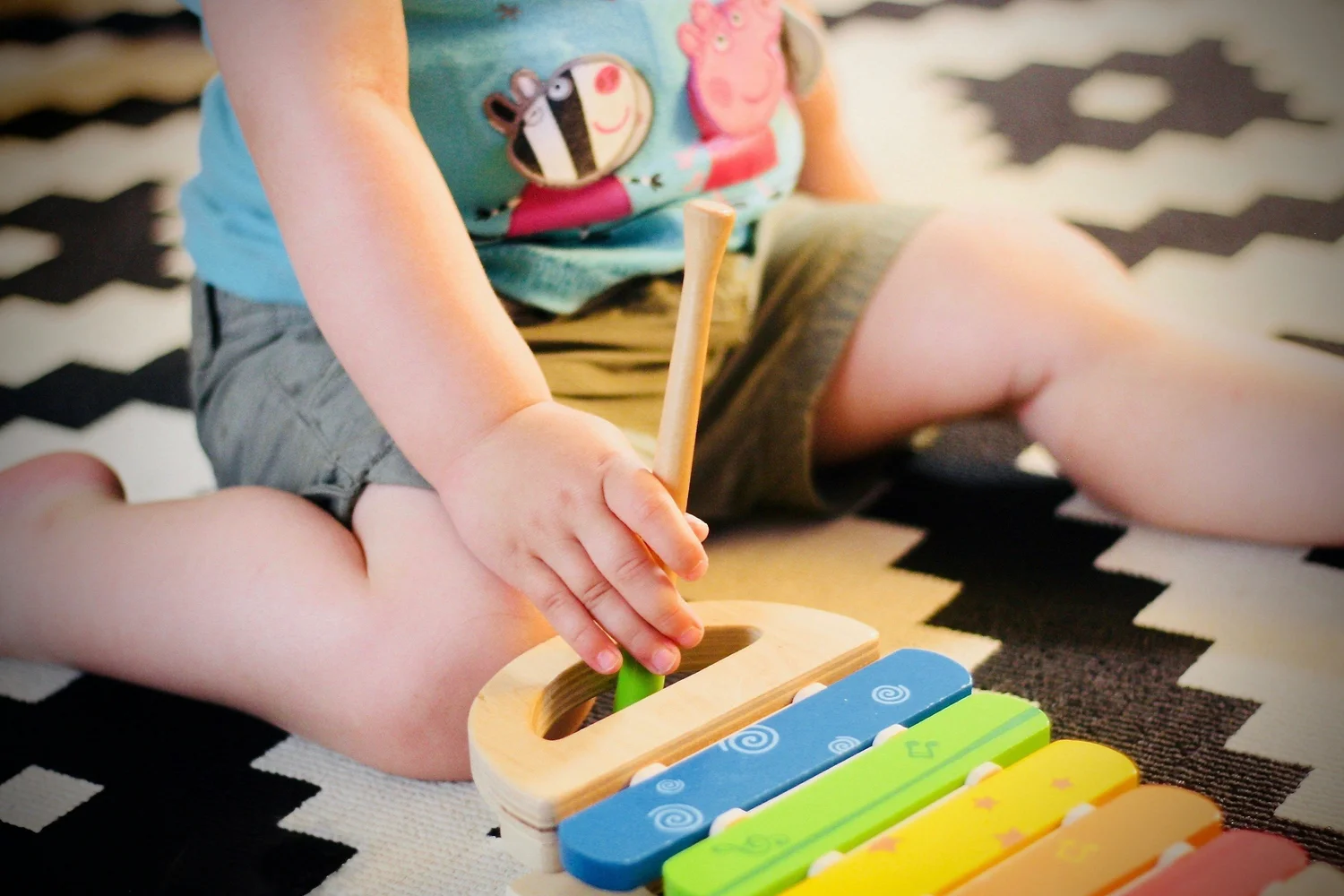
Walk down any toy aisle and you'll see a hundred things promising to boost your kiddo's development. Here's the OT truth: most of the toys that actually build little hands are simple, cheap, and battery-free. The magic isn't the lights and sounds — it's the pinching, stacking, twisting, and threading your child does without even noticing.
Fine motor development follows a pretty predictable order, so the "right" toy really does shift with age. Here's what I'd reach for at each stage, and exactly what it's building.
Best Fine Motor Toys for Toddlers (Ages 1–2)
The best fine motor toys for toddlers are the simple, open-ended ones that reward grabbing, stacking, and squishing — a sensory box, stacking cups, chunky pop beads, a knob puzzle, and playdough. At 1 and 2 you're building grasp-and-release and getting both little hands working together, which is the foundation cutting and writing sit on later.
Around 1 — grab, bang, and let go
It's all about getting things in and out of containers and learning cause-and-effect. A baby sensory box of rattles, crinkle paper, and textures is perfect for this stage, and stacking cups, pop tubes, and a chunky shape sorter reward every grab with a satisfying clink, pop, or drop.
Grasp & releaseAround 2 — stack, post, and squish
Hands are getting stronger and the two of them start working together. Pop beads (the chunky snap-together kind), simple knob puzzles, and a Play-Doh set build the squeeze and the bilateral coordination behind cutting and writing later.
Hand strength · bilateralBest Fine Motor Toys for Preschoolers (Ages 3–4)
For preschoolers, reach for toys that make the fingertips pinch and place — lacing toys, tongs for transferring pom-poms, a peg board, and chunky building bricks. Ages 3 and 4 are prime pincer-grasp and precision time, so this is direct pencil-grip and scissor prep dressed up as play.
Around 3 — pinch and thread
Now the fingertips take over, and this is prime pincer-grasp time. I lean on lacing toys like these, transferring pom-poms with scoop tongs, and pushing pegs into a peg board. All that pinching is direct pencil-grip prep.
Pincer graspAround 4 — build and snip
Fine motor gets precise. LEGO Duplo bricks make kids pinch, line up, and press with real control, and it's the right age for first cuts with safety scissors — or spring-assist ones if reopening is the tricky part.
Precision · cuttingBest Fine Motor Toys for Kindergarten (Age 5 and Up)
By 5, the best fine motor toys shift toward detail and letters — bead-pattern stringing, rock crayons that force a tripod grip, and a magnetic letter board for forming and tracing. This is where all that earlier pinching finally turns into real handwriting readiness.
Around 5 — refine and write
The hand is ready for detail work. Bead-pattern stringing, lots of coloring, and a magnetic letter board for tracing and forming letters get those muscles ready to write. I love rock crayons here too, for the fingertip grip they practically force.
Pre-writingHeads up: this post has Amazon affiliate links — if you grab something through them, Tiny Hands earns a small commission at no extra cost to you. Thanks for keeping the free worksheets free!
What makes a toy actually good for fine motor
Skip the batteries and the flashing lights. The best fine motor toys are open-ended, just a little too hard, and make little hands do the work — pinching, twisting, pulling, threading. If the toy does everything for your kiddo, it's basically a screen with extra steps.
A note on ages
Every kid is on their own timeline, so treat these as rough guides, not deadlines — plenty of three-year-olds love the "age 4" toys and vice versa. Follow your kiddo's interest and what feels like a fun challenge. But if their hands seem to tire fast, they avoid fine-motor play entirely, or they're a good stretch behind same-age friends, a quick check-in with an OT never hurts.
Lacing: Fine Motor, No Toys Needed
When you want a no-toy option, my lacing cards turn pinching and threading into the hand strength behind crayons and scissors — print and play in two minutes.
Grab It in the LibraryThis post is for learning and support — it isn't a diagnosis. © Tiny Hands