
Best Backpack for a Preschooler: An OT's Buying Guide The Two-Finger Fit Test
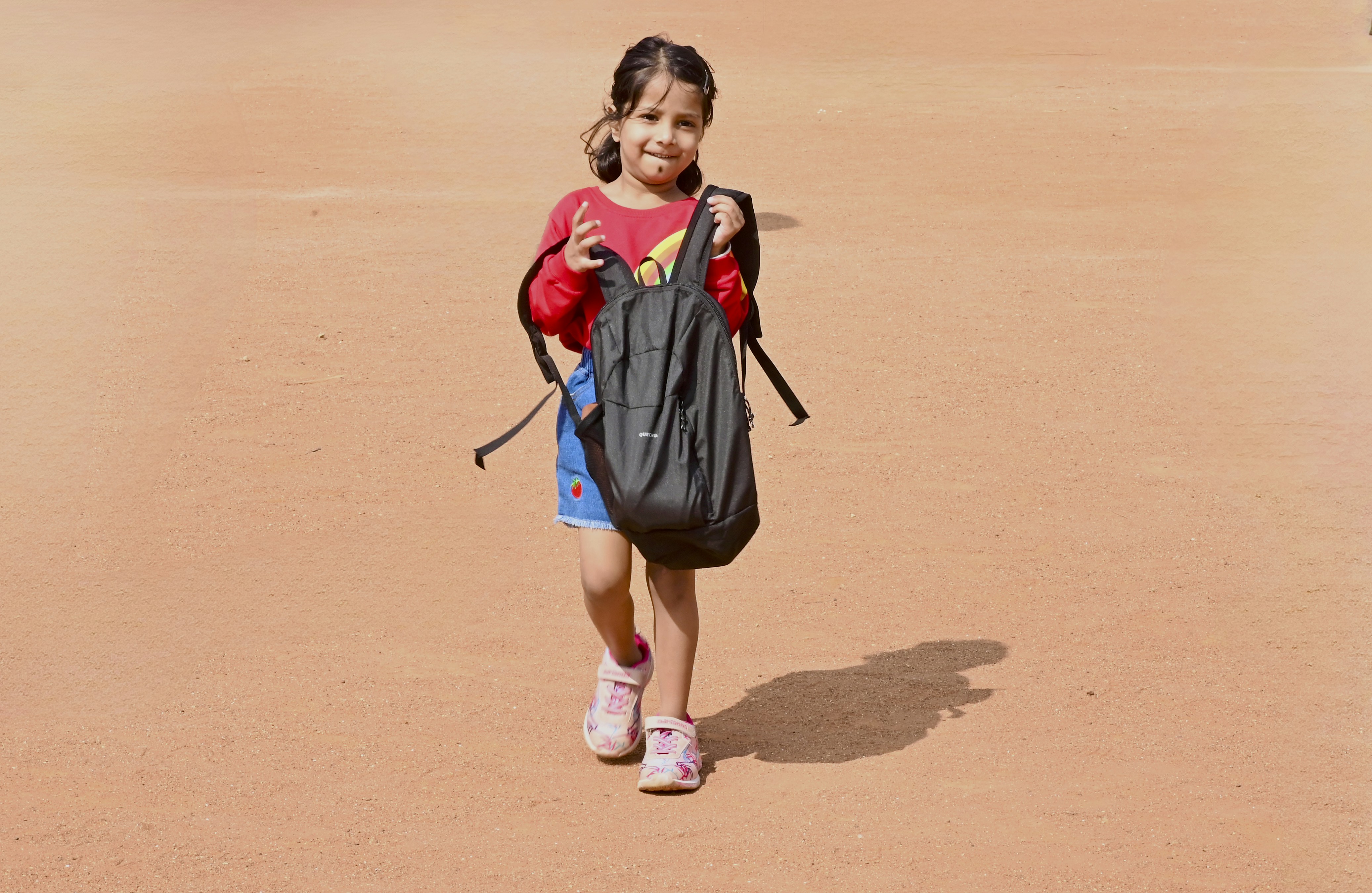
Standing in the school-supply aisle staring down a wall of backpacks? Here's the short version: skip the "they'll grow into it" logic and buy for the body your child has right now.
The best backpack for a preschooler isn't the one with the most pockets or the coolest character on it — it's one sized to their actual torso, with two wide, padded, adjustable straps (never a single strap or a messenger style for daily wear), a fastening system small hands can actually work alone, and a shell that's light before you even add a single book. Get those four things right and almost any bag on the shelf will work. Skip them, and even the "best-reviewed" backpack online will sit wrong, slip off one shoulder, and turn getting-ready-for-school into a daily wrestling match.
What Should I Actually Look For in a Preschool Backpack?
Size, by torso, not age. A backpack's top shouldn't rise above the shoulders, and the bottom shouldn't hang below the waist. Most "toddler" or "preschool" sizes (roughly 11–15 inches) get this right automatically — a full-size kids' backpack usually doesn't, no matter what the box says about age range.
Two real straps. Wide, padded, and adjustable on both sides. One-shoulder bags and drawstring sacks feel fun but load all the weight onto one side of a body that's still building the core and shoulder strength to handle it evenly.
A fastener they can actually manage. Big zipper pulls (a loop or ring a whole fist can grab) beat a tiny metal tab every time. If your child can't open it solo in the store, they won't manage it solo at drop-off either.
Light before it's loaded. Some backpacks weigh a pound or more empty. Every ounce of that is weight your kid carries before a single folder goes in — worth checking if backpack weight has been an issue at home (we cover the full weight-and-fit picture in how heavy a kid's backpack should be).
What Backpack Fit Is Right for My Child, by Age?
2–3 years (early preschool/daycare)
The backpack is mostly a security-object carrier and an "I have my own bag like the big kids" confidence boost. Keep it tiny, light, and mostly decorative — grown-ups are still carrying the real supplies.
just for fun3–4 years (Preschool)
This is most kids' first real "my own bag." One main compartment, one front pocket, and straps that stay put are worth more here than extra storage they won't use.
first real bag4–5 years (Pre-K)
Zipper independence starts clicking here. Look for a pull loop big enough for a whole fist, and let them practice opening and closing it themselves before day one.
zipper stage5–6 years (Kindergarten)
Both straps, every day, is the expectation now — this is the age posture habits actually start forming. It's also when a folder, a lunchbox, and a water bottle all need to fit without the bag ballooning out.
both straps, daily6–8 years (1st–2nd grade)
Packs get bigger for a reason — more folders, more layers, more stuff. Bigger doesn't mean looser straps, though; the same torso-fit and two-strap rules still apply as the bag scales up.
same rules, more stuff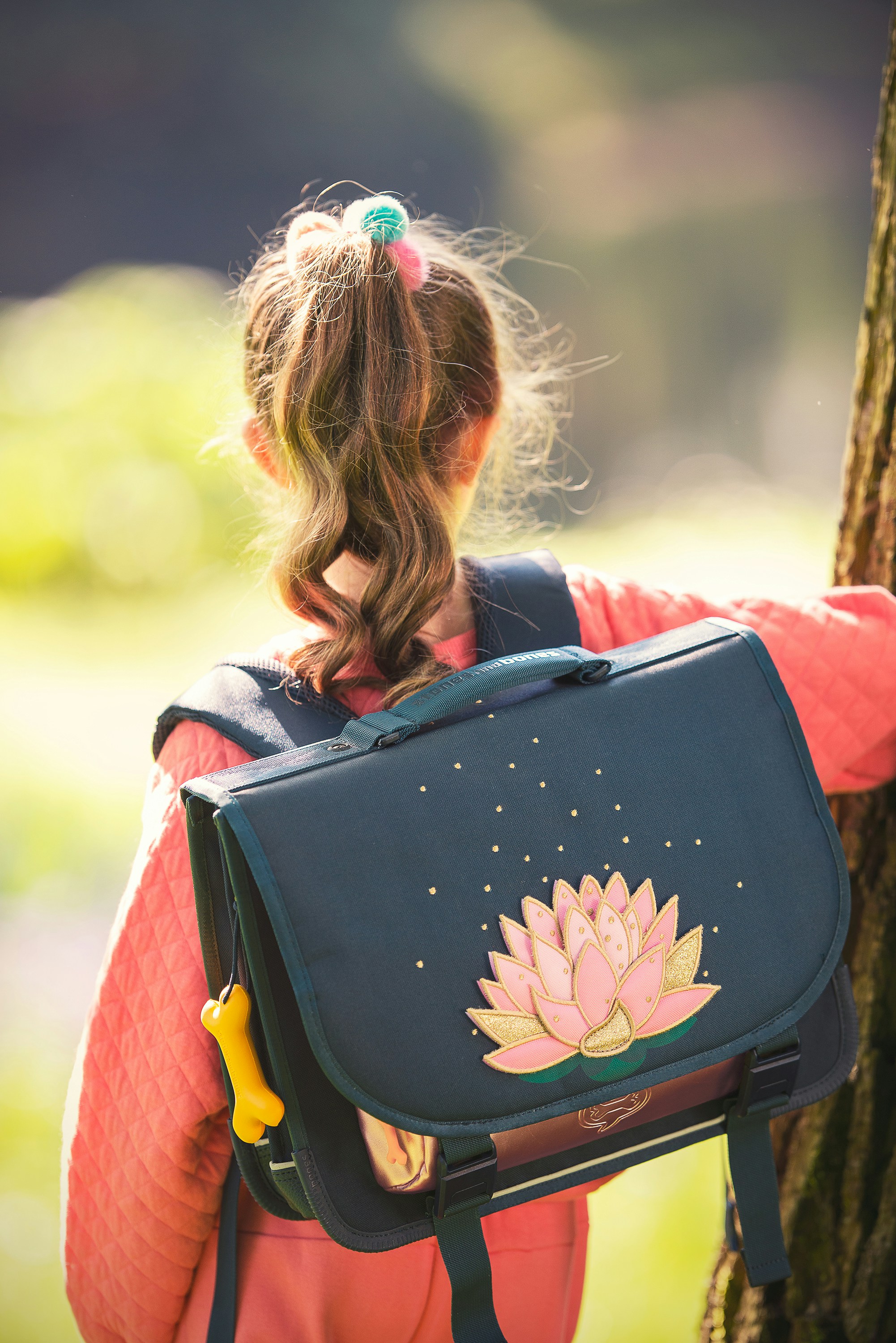
What's the Two-Finger Fit Test?
This is the 30-second check I hand parents in the store (or at home, once the backpack's already bought):
1. The shoulder check. With the pack on and both straps snugged down, slide two fingers flat underneath a strap at the shoulder. Snug, not digging in — if two fingers won't fit, it's too tight; if your whole hand slides in, it's too loose.
2. The bottom check. The base of the backpack shouldn't hang more than about two fingers' width below your child's waistline. If it's swinging around their hips or lower, tighten the straps first — if it still hangs low, the bag itself is sized too big for right now.
Run both checks empty, then again once it's loaded with an average day's stuff — a bag that passes empty can fail once it has weight in it, which is your cue to lighten what's inside rather than size up again.
What Are Easy Ways to Practice Backpack Independence at Home?
The Mirror Check
Let your child put the backpack on themselves in front of a mirror and adjust the straps solo. Self-correcting beats a parent yanking straps tight from behind every single morning.
2 minutesThe Loaded Walk
Fill the pack with the actual weight it'll carry — a couple of books works — and take a lap around the block or up and down the stairs. Watch for leaning, shifting, or a wide stance; any of those means it's too heavy or sitting wrong.
a few days beforeThe Solo Zip Race
Time how fast they can zip and unzip the main compartment by themselves, a few rounds, just for fun. It's sneaky fine motor practice disguised as a game.
no-prepThe Front-Door Hook
A hook or basket at your child's own height turns "put your backpack away" into a one-step habit instead of a nightly reminder — the same independence habit we build in teaching kids independence at school.
one-time setupThe Try-On Trial
A few days before school starts, have them wear the empty pack around the house during normal play. It stops feeling new and stiff by the time it actually matters.
dress rehearsalHeads up: this post has an Amazon affiliate link — if you grab something through it, Tiny Hands earns a small commission at no extra cost to you. Thanks for keeping the free worksheets free!
The backpack I actually recommend for little bodies
A right-sized pack with real straps to spread the load — it's the difference between good posture and a kiddo tipping backward under a bag built for someone twice their size.
When Should I Check In With an OT About Backpack Struggles?
Most backpack battles resolve with a properly sized bag and a week or two of practice. It's worth a conversation with an OT if your child still can't get the pack on or off independently well past kindergarten, if the straps constantly slip down no matter how well the bag is fitted, if you notice their shoulders rounding forward or their head jutting out after wearing it, or if they're coming home with ongoing shoulder or back complaints even with a light, well-fitted pack. None of that means something's wrong — it just means it's worth a closer look from someone who can watch how their whole body handles the load, not just the backpack itself.
Grab the Free Fine Motor Starter Pack
40+ print-ready pages, free, straight to your inbox — a great place to start if you're new here.
Get My Free Pack
Want more tools like this?
There's a whole Self-Care & Independence section inside the membership — printable routines and practice pages built for exactly this kind of everyday skill.
See What's InsideThis post is for learning and support — it isn't a diagnosis. © Tiny Hands