
Parent Anxiety on the First Day of School: You're Allowed to Feel It Too And Here's What Actually Helps

You bought the backpack in July. You labeled every single marker. And now it's 11pm the night before and you're lying there running a slideshow of everything that could go sideways tomorrow — the bathroom, the lunchbox latch, whether anyone will sit with her.
Here's the short version: parent anxiety on the first day of school is extremely common, it isn't a sign you've done something wrong, and it almost always peaks before the day rather than during it. You're handing a person you've supervised for years into a room you can't see, and a nervous system reads "can't see" as "unsafe." Expect the worst of it the night before and in the twenty minutes right after drop-off. What helps: a short, confident goodbye — under ninety seconds — plus one calm sentence you say the same way every morning, a plan for where you're going the second you walk away, and saving your own big feelings for after the handoff. Not because they're shameful, but because your face is the last piece of information your child carries into that room. What makes it worse: lingering, piling on reassurance, and asking "are you nervous?" fourteen times.
So take a breath. Feeling this way doesn't mean anything is wrong — with you, or with your kid.
Is It Normal to Feel This Anxious About My Child Starting School?
Wildly normal. I have this conversation every August with parents who are visibly embarrassed to be having it, usually opening with "I know this is silly, but…" It isn't silly, and you're in enormous company.
Here's the part nobody says out loud: for years you've been the one who knows. You know when she's hungry before she does, you know which noise means trouble, you know what the tired face means at 4pm. School is the first place that runs on information you don't have. That's not a parenting failure — that's a genuinely new experience for your brain, and brains protest new things by generating worst-case scenarios at midnight.
It also tends to hit hardest for the parents who've done the most watching: first-timers, parents of a kid who's had a rough year, parents of a child with a sensory or motor difference who's used to needing an interpreter. If that's you, the anxiety isn't irrational. It's just early.
What Does the First Day Actually Feel Like, Hour by Hour?
This is the real timeline I walk parents through, because knowing the shape of the day takes a surprising amount of the sting out of it. Almost everyone follows the same curve.
The night before: the loudest it gets
This is the peak. Not the morning, not the goodbye — the night before, when there's nothing left to do and nowhere to put the energy. Whatever you're feeling at 11pm is the high-water mark, and it will not feel like this tomorrow.
Peak worryThe morning: busy is your friend
Shoes, breakfast, the missing water bottle. The logistics actually help — there's no room to spiral while you're hunting a left sneaker. Keep the morning boringly identical to the one you've been practicing.
Stay on taskThe goodbye: ninety seconds, tops
Short and warm beats long and reassuring, every time. One hug, one sentence, walk. Stretching it out doesn't soften the landing — it tells your child there's something here worth dreading.
Short and warmThe first twenty minutes after: the ambush
This is the one that blindsides people. You held it together beautifully and then you're crying in a parking lot over a granola bar. Totally standard. Your body finally has permission to feel the thing.
Let it comeMid-morning: the checking urge
The pull to call the office "just to see" is strong around 10am. Almost nobody who resists it regrets it. Give the teacher the whole day before you decide how the day went.
Don't callPickup: brace for an unimpressive report
You've been holding this all day and you will likely get a shrug and "fine." That's not a bad sign — it's an empty tank. The real story usually arrives around dinner, unprompted.
Details come later😌 My go-to trick: The Handoff Face
Before you leave the house, decide two things and don't improvise either one: your one sentence and your face. The sentence is short, warm, and identical every single morning — "I love you, have a great day, I'll be right here at pickup." Not a speech, not a list of reassurances, not "you'll be okay, right?" And the face is calm and a little bit boring, held for the last five seconds before you turn. Here's why I harp on this: in that last moment your child scans you for a weather report, and whatever your face says is what they carry into the room. You're not faking or hiding — you're just deciding the order. Handoff first, feelings second. The parking lot is yours. Cry in the car with my full blessing.

Does My Anxiety Actually Rub Off on My Child?
Some of it, yes — but not in the way that phrase usually gets weaponized at parents, so let me be precise, because this is the question I get asked with the most guilt attached.
Young kids borrow a regulated nervous system from the nearest available adult. It's called co-regulation, and it's the entire reason a scraped knee hurts more when you gasp. So in the sixty seconds around a goodbye, your tone, your speed, and your face genuinely matter. That's it. That's the window.
What does not transfer is the worrying you did at midnight, the group chat spiral, or the fact that you felt sick in the car. Your child didn't see any of that. Feeling anxious isn't the thing that affects them — performing anxiety at the classroom door is. Those are very different, and the gap between them is where all your freedom lives.
The tell that it's leaking through is over-reassurance. "You're going to be fine, it's going to be so fun, there's nothing to be scared of, right?" To a five-year-old, that many words about a thing being fine is proof the thing is not fine. One sentence, said once. If your child is genuinely struggling too, my guide to back-to-school anxiety in kids walks through what that looks like by age.
What Can I Actually Do the Week Before and the Morning Of?
Nothing elaborate, and nothing that requires buying anything. These are the five I hand out most, in the order I'd try them.
Walk the route, see the door
Drive or walk to the school once before day one and physically look at the door your child will walk through. It's astonishing how much unknown that removes — for them and, honestly, mostly for you.
Kills the unknownWrite the worries down the night before
All of them, ugly ones included, on actual paper. Then read the list. Most of it turns out to be one real concern wearing nine different costumes, and that one thing is usually answerable with an email.
Ten minutesPlan where you're going next
Not "home to wait." A coffee with a friend, an errand, the gym, a meeting — anything with a start time. The twenty minutes after drop-off go much better when they already belong to something.
Book it nowBorrow your kid's breathing
The slow-out-breath tricks I teach four-year-olds work exactly as well on grown adults in parking lots. Long exhale, longer than the inhale. Here are the ones I use for deep breathing with kids — steal them.
Works on adultsRehearse the goodbye, not the fear
Practice the actual choreography at home: hug, sentence, wave, walk. Twice, playfully, like a game. You're building muscle memory so neither of you has to think when it counts.
Practice the exitAnd one thing worth protecting: a predictable, low-demand landing at the end of the day. Snack, movement, no interrogation. If the afternoons are where things fall apart in your house, after-school meltdowns covers why the wheels come off at home and not at school.
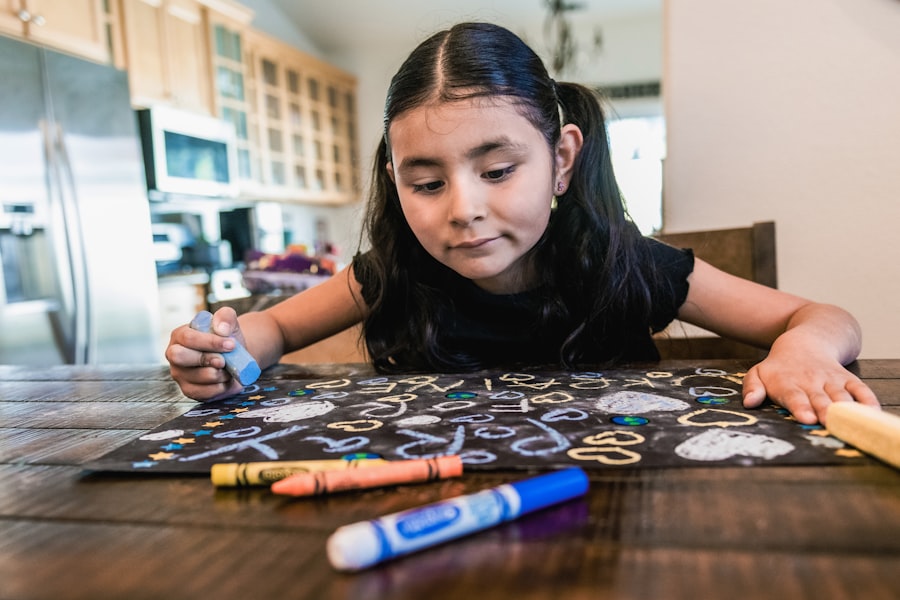
Something for the doorway, printed and ready
My Calm-Down Cards are in the membership — a picture menu of breathing, movement, and quiet options your child can point to when the words are gone, plus a goodbye-routine card you can practice on the fridge all week.
Get the Calm-Down CardsWhen Is It Worth Talking to Someone About How I'm Feeling?
Almost never in the first two weeks — that's the whole point of everything above. A hard night before, a weepy parking lot, and a week of checking your phone too often are all firmly inside normal, and they resolve on their own as the school day becomes ordinary.
It's worth mentioning to your own doctor if it's still at first-week intensity after about six weeks, or if any of this shows up along the way: the worry is costing you real sleep most nights; you're avoiding drop-off entirely or sending someone else because you can't face it; the physical stuff — nausea, a racing heart, that tight-chest feeling — is showing up on ordinary Tuesdays; or you notice you've started keeping your child home on days when they'd probably have been fine. That last one is the one I'd watch most closely, because it's the point where a parent's very reasonable feelings quietly start shrinking a child's world.
And separately: if it's your child who's still struggling at the door well past the first few weeks, that's a different conversation and a very fixable one. Start with separation anxiety at school drop-off, then talk to the teacher — she has the one piece of information you don't, which is what the ten minutes after you leave actually look like. Nine times out of ten, they look like a kid who's completely fine.
New here? Grab the free pack first 🎁
Join the list and I'll send you the Fine Motor Starter Pack — 40+ print-ready pages to build those little hands at home, from first scoops to strong little grips.
Send My Free PackWant the whole library — including the Calm-Down Cards — sorted and ready to print? Peek at the membership →
This post is for learning and support — it isn't a diagnosis. © Tiny Hands