


How Do I Teach My Child to Clean Up After Themselves? The One-Song Sweep Trick
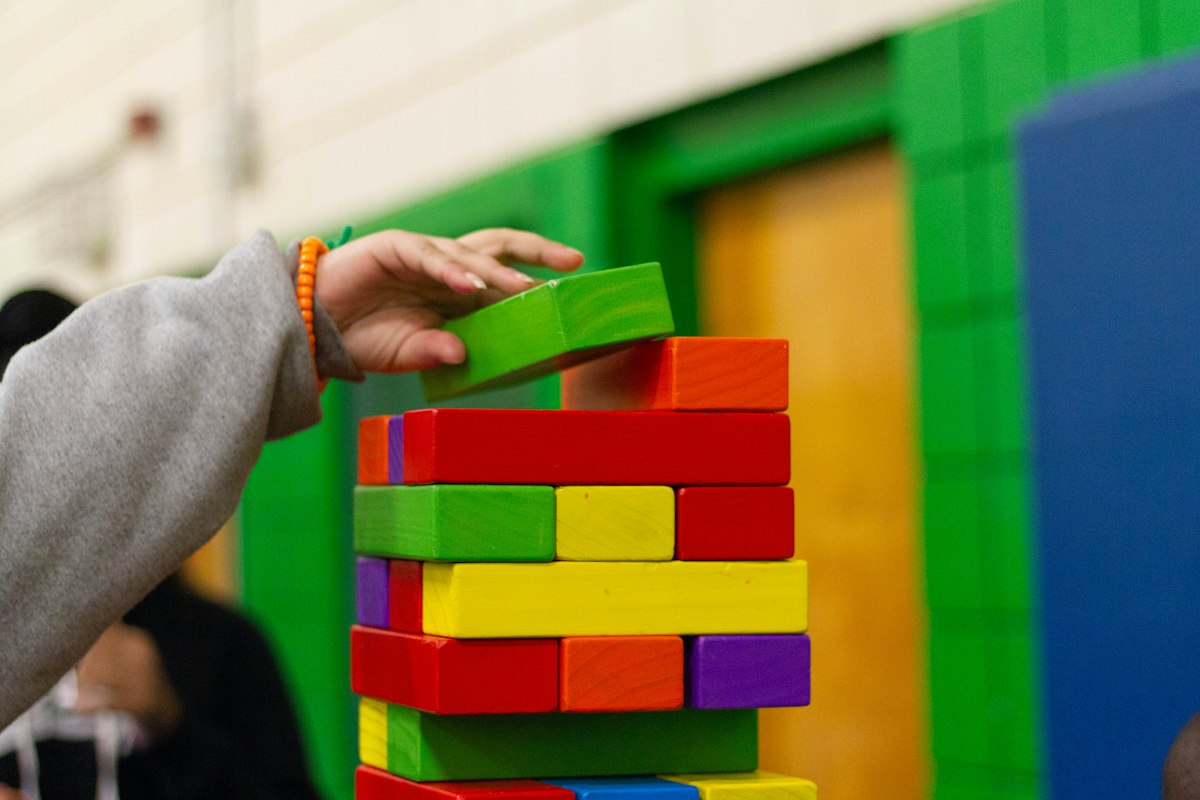
If your kid hears "time to clean up" and suddenly can't find their own hands, here's the short answer on how to teach a child to clean up. Give them one small job at a time, a clear finish line, and a visible place for every toy. Most 2-year-olds can drop things in a bin with help, most 3 and 4-year-olds can tidy a small area, and by 5 or 6 a kid can handle a whole play space with a couple of reminders. A giant messy floor feels impossible to a small person. Cut it into pieces and it feels doable.
My go-to is the One-Song Sweep Trick. Pick one song, tell your child "we're done when the song is done," and name one thing to sweep up first, like "all the blocks." Start with the blocks, then the cars, then the stuffies. When the song ends, clean-up ends. That's it.
Teachers do this fifty times a day at school, so a little practice at home goes a long way.
From the Tiny Hands shop
The Hard Part Is Stopping, Not Tidying
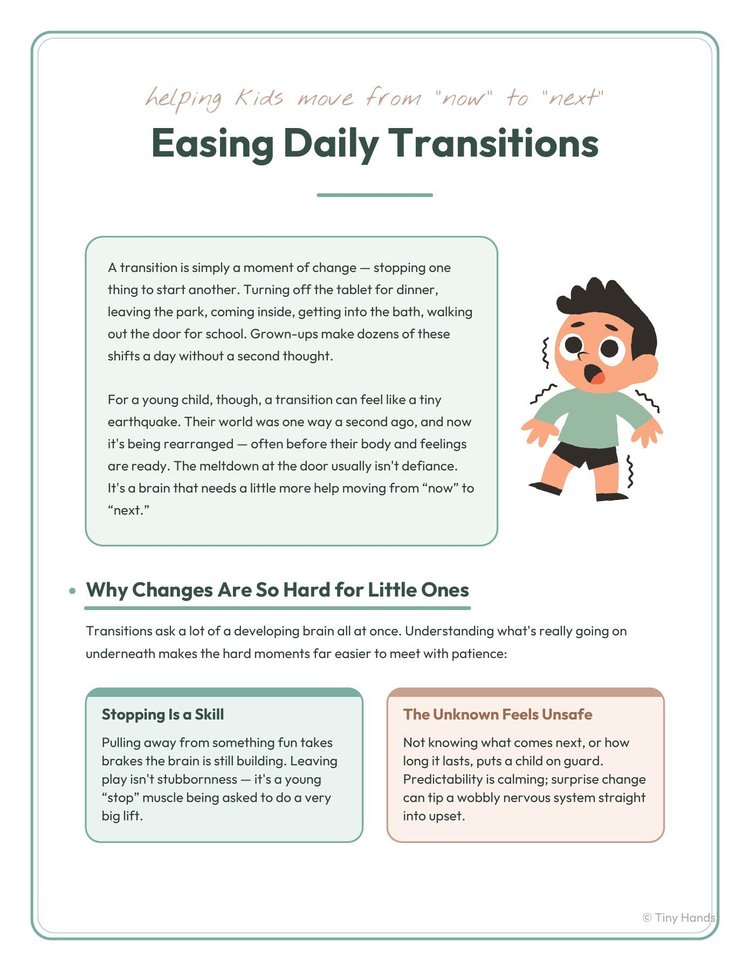
Most clean-up battles are really transition battles — the leaving-the-fun part. Easing Daily Transitions is my free guide to the warnings, cues and small rituals that make stopping feel survivable, so the tidying can actually happen.
Get the Free GuideHow Much Should a Child Be Able to Clean Up by Age?
Here's the rough order I see, and kids bounce around inside it.
Around 18 months to 2: toss it in
They can drop toys into a basket, usually while you do most of the work. They love it and it's mostly a game.
With youAround 3: one category at a time
"Put all the cars in the red bin" works. "Clean your room" does not. Pictures on the bins help a lot, since they can't read the labels yet.
Picture labelsAround 4: a whole small area
The art table or the block corner, with a reminder or two. They can start wiping and stacking, and some will even hang up their own bag.
A few remindersAround 5 to 6: a full routine
Put away materials, push in the chair, check the floor. They can follow a two or three-step clean-up from the teacher, which is exactly what kindergarten asks for.
Kindergarten-readyIf your 4-year-old needs you to point at every single block, they're right where most 4-year-olds are.
⭐ The One-Song Sweep Trick, step by step
Pick the song. One real song, about two or three minutes. Same song every day so their body learns "this means clean-up."
Name the first sweep. "Blocks first." Just one category. When it's done, name the next one.
Stop when it stops. When the music ends, clean-up is over, even if a few things are still out. Hold that line and kids learn to trust the finish line. You can finish the last bit yourself and say thank you.
Why Does My Child Melt Down or Freeze at Clean-Up Time?
It looks like defiance a lot of the time. It usually isn't.
Sometimes the job is just too big. A whole room of toys has no starting point, and a kid who can't see where to begin will go limp or run away. One category fixes that.
Sometimes it's the abrupt switch. Playing is fun and tidying is not, and there's no warning in between. A visual timer gives a "two more minutes" they can actually see, and it makes the song feel less like a surprise.
And sometimes the hands are working harder than they look. Pinching little pieces, stacking, and holding a bin with both hands is real fine motor and bilateral work. If you want the full story, my multi-step directions post covers why "put the books on the shelf and your shoes by the door" can fall apart halfway through.

How Can I Make Clean-Up Easier at Home?
Set the space up so tidying takes fewer steps, and use things you already own.
Low, open bins
No lids, no stacking, no zippers. If a kid can toss it in from standing, they'll actually do it.
Fewer stepsPhoto or picture labels
Tape a picture of the cars on the car bin. Kids feel very smart matching it up, and you stop being the label reader.
Pre-readersBeat-the-timer races
Race the song, not each other. "Can the blocks all be home before the chorus?" Kids love losing to the chorus and starting over.
PlayfulOwn-bag, own-shoes jobs
Their backpack gets hung up and their shoes go in the same spot, every day. It's the same skill school wants, and I go deeper in backpack and desk organization.
Daily habitFor the bigger picture of what school expects, teaching kids independence at school has the whole list.
Heads up: this post has an Amazon affiliate link — if you grab something through it, Tiny Hands earns a small commission at no extra cost to you. Thanks for keeping the free worksheets free!
The see-it-shrink timer that makes "clean up" less of a surprise
If your kid needs to watch time go by, I like a visual countdown timer. A colored wedge disappears as the minutes run out, so clean-up starts with a warning they can see.
Want printable activities for strong little hands?
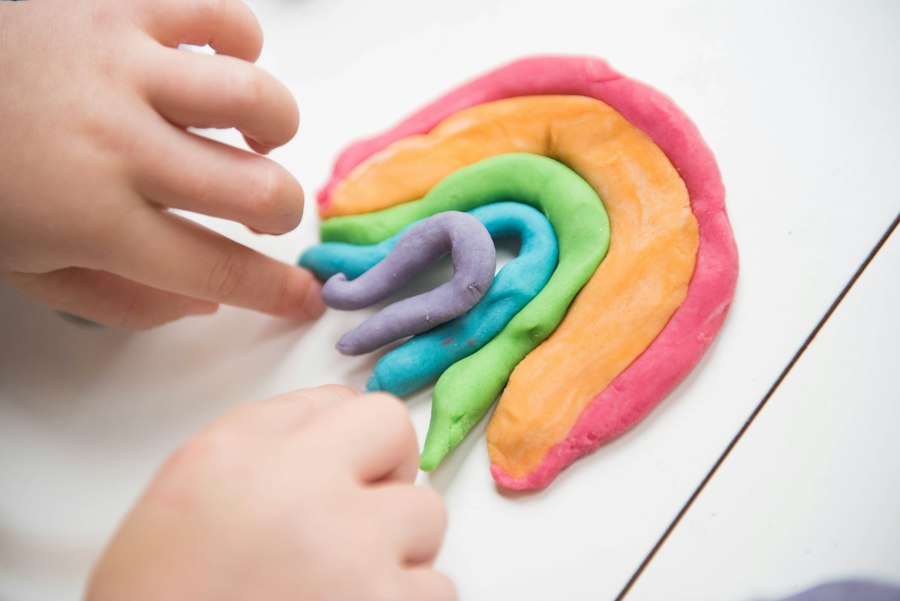
Picking up small pieces, stacking, and carrying a bin all lean on the same hand skills. The fine motor activities in the Tiny Hands library are print-and-go pages that build them.
See the Fine Motor LibraryWhen Should I Check In With an OT?
A kid who drags their feet at clean-up is a normal kid. Give easy, consistent practice a few weeks before you worry.
It's worth a chat with the teacher or an OT if your child is 6 or older and still can't follow a simple clean-up routine, if they get very upset when things are moved or put away, or if they seem to have trouble with the physical parts, like carrying a bin, handling small pieces, or keeping their balance while they bend and reach. If tidying, dressing, and writing are all hard at once, an OT can usually spot the one thing underneath, and it's very workable.
Until then, pick a song, pick a bin, and let the music do the nagging.
Grab the free Fine Motor Starter Pack 🎁
Join the list and I'll email you the free Fine Motor Starter Pack: 40+ pages of pinching, tracing, tearing and snipping activities you can print today.
Send Me the Free PackWant everything I use in sessions, sorted by skill? Peek inside the membership →
This post is for learning and support — it isn't a diagnosis. © Tiny Hands