
🚻 Self-Care
Bathroom Independence for Kindergarten: Getting Little Hands Ready to Go It Alone

Washing up solo is one of the last pieces of the bathroom-independence puzzle to click.
Kindergarten orientation night, and the teacher says it so casually: "They'll need to be able to use the bathroom on their own." Your stomach drops a little, because at home you're still doing up that one tricky snap on their shorts every single time. Take a breath — this is one of the most teachable skills on the whole kindergarten-readiness list, and most of it clicks in just a few weeks of the right kind of practice.
Here's the direct answer: by kindergarten (around age 5–6), most kids can handle bathroom independence on their own — if the clothing cooperates (think elastic waistbands, no belts, no tricky overalls) and they've actually rehearsed the whole sequence, not just at real potty moments. The core skills are pulling pants down and back up without help, wiping thoroughly, flushing, washing hands for a real 20 seconds, and working a stall lock. When kids struggle at school, it's almost always one of two things: a clothing fastener they've never practiced, or a sequence they've never rehearsed outside of an actual urgent bathroom trip. Both fix fast with a little dedicated practice — no pressure, no rush.
🚻 How Do I Know If My Child Is Ready for Kindergarten Bathroom Independence?
Readiness builds in stages, and a little wobble in the first few weeks of school — new bathroom, new lock, new adults — is completely normal. Here's the timeline I use in sessions:
This ladder tracks closely with the same fine motor skills behind buttons, zippers, and snaps — if fasteners are still the sticking point, our by-age dressing guide walks through that piece in more depth.

Fastener practice away from the pressure of an actual bathroom trip — that's the whole trick.
🌀 What's the Trick to Teaching the Bathroom Sequence?
My go-to is a trick I call "The Dry Run." Practice the entire physical sequence at home, fully clothed, when your child doesn't actually need to go. Walk into the bathroom together, "unbutton," sit, "wipe," pull up, flush, wash — like a fire drill for a skill instead of an emergency.
Do this two or three times over a week or two before school starts. The goal is muscle memory. A child who's already walked the sequence ten times with zero urgency handles it far better on day one than a child who's improvising it for the first time in a stall they've never seen, under real pressure.
🧦 What Are Some Easy Ways to Practice Bathroom Independence at Home?
All of this is stuff you already have — no special gear required, just a little repetition with zero stakes attached.
Bathroom skills are just one piece of the bigger back-to-school independence push — see our guide to backpacks, lunchboxes, and lockers for the rest of the list.
That fastener practice is exactly what I mean when I recommend a Montessori dressing board — all the fussy fasteners on one calm board, so a child can master buttons and zippers without the pressure of the morning rush.
This post contains an affiliate link. As an Amazon Associate I earn from qualifying purchases, at no extra cost to you.
🩺 When Should I Check In With an OT About Bathroom Skills?
Some fumbling in the first few weeks of kindergarten is expected — new bathroom, new lock, new adults, a lot to take in at once. It's worth a conversation with an OT if, by age 6–7, your child still needs full physical help with the sequence even in easy clothing, if there's real sensory distress specifically about public or school bathrooms that leads to holding it all day, or if the steps come out in a different order every time even after weeks of practice. None of that means something's wrong — it just means a little extra support could speed things along.

The step-by-step picture cards live right in the membership.
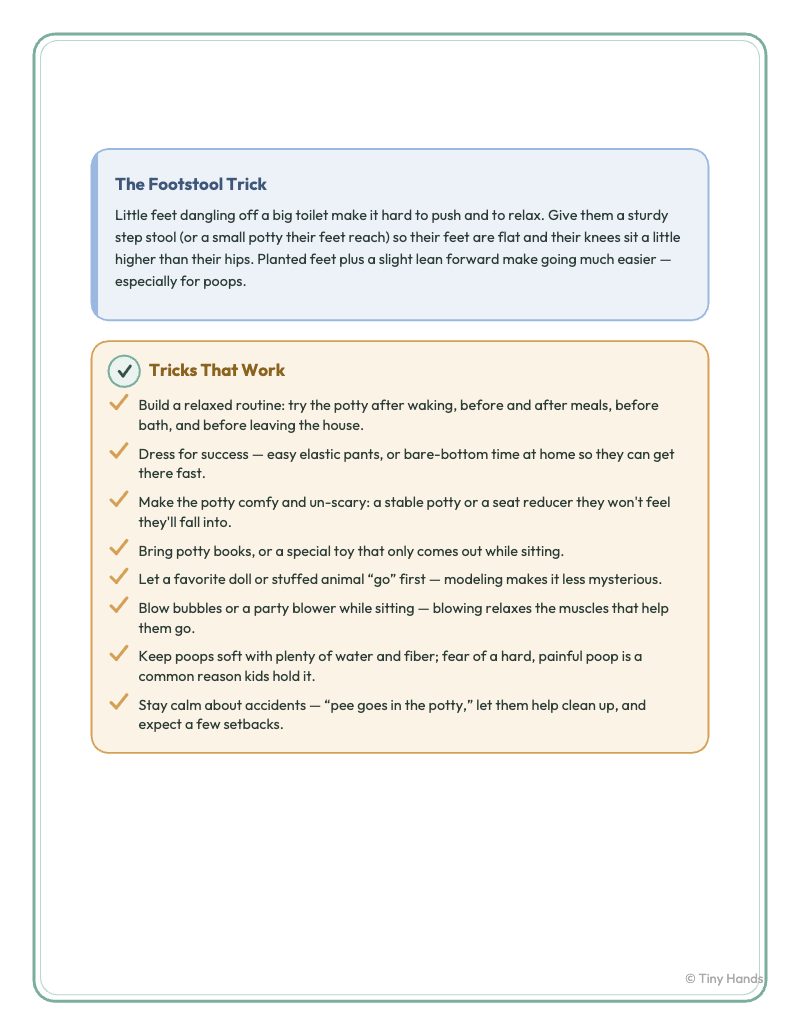
Want the Printable Version?
It's ready to print, right in the membership.
See Potty Training Made EasierAnd if you haven't grabbed it yet, my free 40-page Fine Motor Starter Pack has a few dressing-and-fastener pages that are perfect for this exact kind of practice — you'll find the sign-up right in the footer below. If your family ends up loving the extra support, the full membership has a printable for pretty much every back-to-school moment.
This post is for learning and support — it isn't a diagnosis.
© Tiny Hands