How to Teach Kids to Tie Their Shoes (a Step-by-Step Method That Sticks)
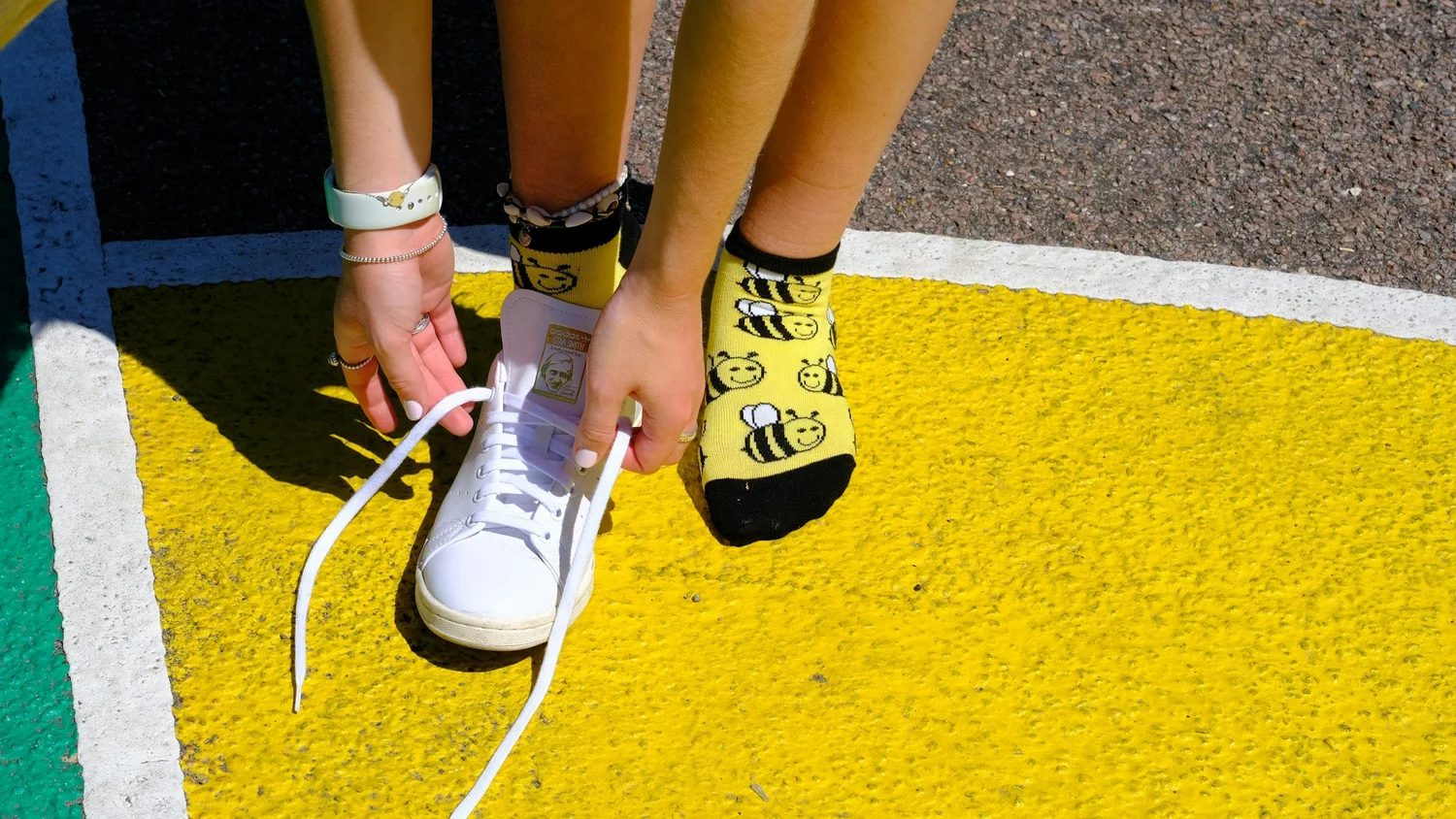
Shoe tying is one of those skills that feels impossible right up until it suddenly clicks. It's actually a lot of little skills stacked together — finger strength, using two hands in a coordinated way, sequencing the steps in order, and the patience to keep going when the loops flop. That's exactly why it usually lands somewhere between ages five and seven, and why some perfectly capable kids take a while to get there.
The good news: you don't have to leave it to chance. Here's how to tell your kiddo is ready, an easy method that works for most kids, and the OT tricks that make it finally stick.
Heads up: this post has Amazon affiliate links — if you grab something through them, Tiny Hands earns a small commission at no extra cost to you. Thanks for keeping the free worksheets free!
First, is your kiddo ready?
Before the laces, check for these. If a couple aren't there yet, spend a few weeks on the warm-ups further down — they build the exact foundation tying needs.
Hand strength
Can they pull a lace tight, squeeze a clothespin, or open a zip-top bag? Tying needs real finger and hand strength to cinch a knot snug.
FoundationTwo hands working together
One hand holds while the other does — like steadying paper while cutting. Tying is two hands doing different jobs at the same time.
Bilateral skillsFollowing a few steps in order
Can they follow a 3- or 4-step routine, like a simple craft? Tying is a sequence, and remembering "what comes next" is half the battle.
SequencingThe "bunny ears" method, step by step
There are two popular ways to tie — the "bunny ears" (two loops) and the "loop, swoop, and pull" (one loop). Bunny ears is the easiest for most kids to learn first because both hands do the same thing. Teach it sitting beside your child, not across from them, so they see it the right way around.
Cross and tuck (the starter knot)
Cross the two laces into an X, tuck one lace under and through, and pull both ends tight. This first knot is the anchor — practice just this part until it's automatic.
Step 1Make two bunny ears
Make a loop ("bunny ear") with each lace and pinch one in each hand. Holding both loops steady at the base is the trickiest bit — go slow here.
Step 2Cross the ears
Cross the two bunny ears into an X, just like the first knot — same motion, new shape. Saying "X again!" out loud helps it connect to step one.
Step 3Tuck and pull
Tuck one ear under and through the hole, then pull both loops tight. Tada — a bow. If it's loose, that's a "pull harder" cue, not a do-over.
Step 4Warm-ups that build the real skill
If tying isn't clicking, back up. These build the strength, coordination, and sequencing underneath it — and they feel like play, not drills.
Lacing and threading
Lacing cards, beads on a string, or a chunky ABC lacing sweets all build the two-handed, pull-it-through motion tying depends on. This is the single best warm-up.
Bilateral · pull-throughPractice on a "lap shoe"
Tie a shoe sitting in their lap, or a lace threaded through a paper plate, before tackling a shoe on a moving foot. Less wobble means more focus on the steps.
Position firstTwo different-colored laces
Swap in one lace of each color (or color half of each lace with marker). "Cross the red over the blue" is so much easier to follow than two identical strings.
Make it visualTwo faves for pre-tying hands
Lacing toys build the exact pull-it-through grip tying needs, and a Montessori busy board sneaks in laces, buckles, and zips all in one — great practice that doesn't feel like practice.
OT tip: teach it backwards
Try "backward chaining" — you do all the steps except the very last pull, and let your child finish. Once they own that, hand off the last two steps, then three, working backward until they do the whole thing. Ending on a win every single time keeps them motivated instead of frustrated.
Go at their pace
Plenty of sharp, capable kids aren't ready to tie until closer to seven, and that's completely normal — velcro and elastic laces are a perfectly good bridge in the meantime. Keep practice short and upbeat, celebrate the messy first bows, and one day they'll just… do it. Big grin guaranteed.
Build the Hands Before the Bow
My shape-and-line tracing mats build the steady, two-handed control behind tying — strong fingers before the laces ever come out.
Grab It in the LibraryThis post is for learning and support — it isn't a diagnosis. © Tiny Hands