Tactile Sensitivity in Kids (and Gentle Ways to Help)
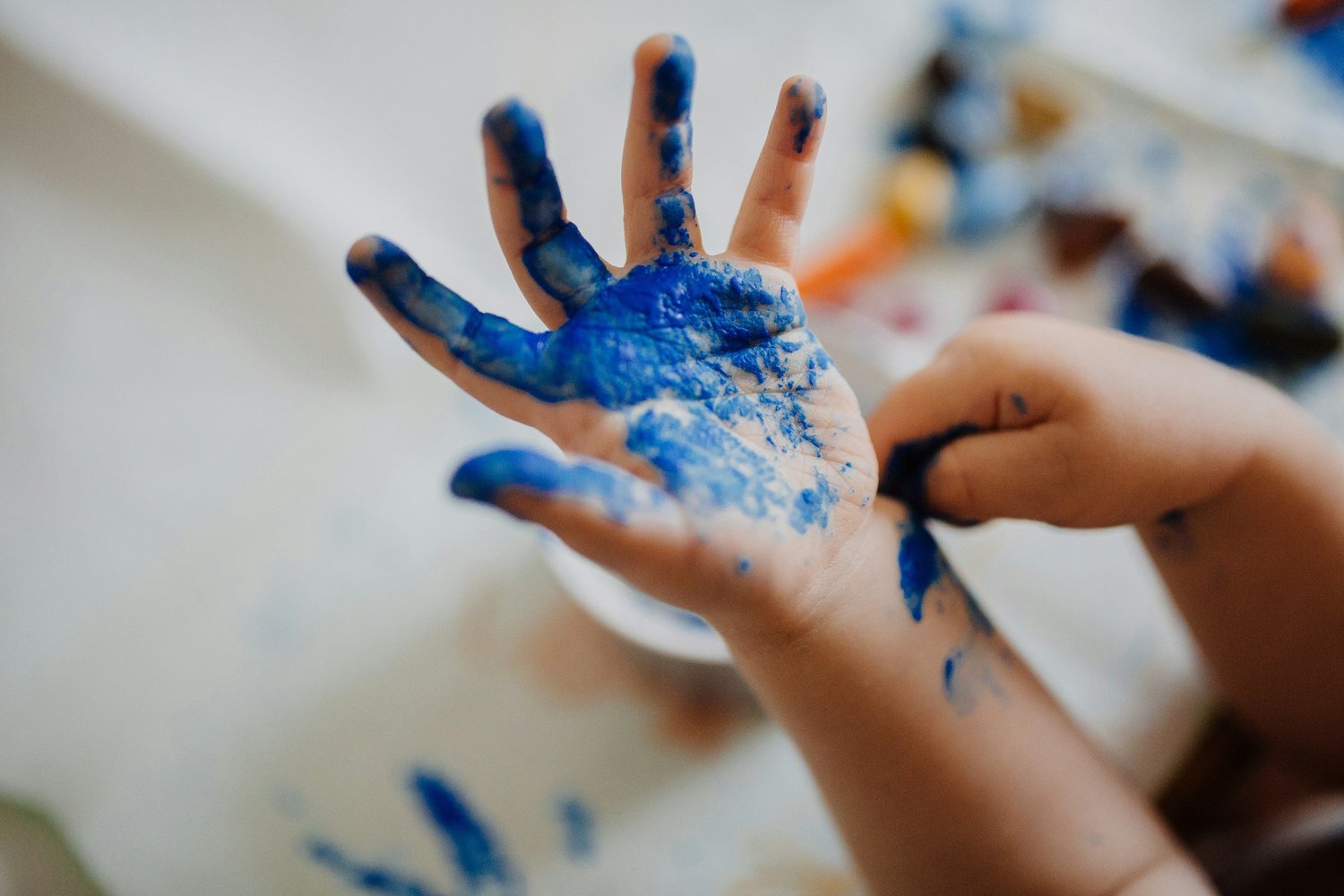
If your kiddo melts down over a scratchy tag, refuses to touch finger paint, or can't stand the feeling of sand on their hands, you're not dealing with a "difficult" child — you might be seeing tactile sensitivity. It just means their touch system is wired to feel certain sensations more intensely than other kids do. A texture that feels like nothing to you can feel genuinely overwhelming to them.
The good news: with a gentle, no-pressure approach, most kids slowly grow more comfortable. Here's what tactile sensitivity can look like, and the OT strategies I actually use to help — never by forcing, always by following the child's lead.
Heads up: this post has Amazon affiliate links — if you grab something through them, Tiny Hands earns a small commission at no extra cost to you. Thanks for keeping the free worksheets free!
What tactile sensitivity can look like
Every kid is different, and a few of these on their own are totally normal. It's the pattern — and how much it's affecting daily life — that matters.
Tags, seams & certain fabrics drive them crazy
Clothing tags, sock seams, stiff jeans, or scratchy sweaters can feel unbearable. You might see constant pulling, fidgeting, or flat-out refusal to wear certain things.
ClothingThey avoid messy play
Finger paint, glue, play dough, sand, or mud feel "yucky." A child with tactile sensitivity may keep their hands stiff and away, or ask to wash up the second anything sticky touches them.
Messy texturesGrooming is a battle
Hair brushing, nail trimming, teeth brushing, or face washing can feel painful. These everyday routines often turn into the biggest daily struggles.
Daily carePicky about food textures
It may be less about taste and more about feel — slimy, mushy, or mixed textures can be a hard no, even for foods they used to eat.
MealtimesLight or surprise touch bothers them
A gentle pat, a hug from behind, or getting bumped in line can feel startling or irritating — while firm, expected pressure (like a big bear hug) often feels just fine.
Unexpected touchGentle ways to help at home
The golden rule: never force it. Forcing touch makes the alarm system louder. Instead, we lower the pressure, give the child control, and build comfort in tiny, happy steps.
Lead with deep pressure
Firm, squeezy input is calming and organizing — the opposite of light, ticklish touch. Big hugs, a weighted lap blanket, "squishes" between couch cushions, or a tight burrito-wrap in a blanket can help a sensitive body feel safe before any tricky textures.
Calming inputBuild a texture ladder
Go from easy to hard. Start with dry textures (rice, pasta, pom-poms), then drier-crumbly (kinetic sand), then wet-messy (paint, slime) — only moving up when they're ready. Each small win builds tolerance.
Gradual exposureOffer tools first
Let them poke the play dough with a stick, scoop the sand with a spoon, or paint with a brush before ever using bare hands. Tools put a comfortable buffer between them and the texture.
Their paceLet them be in control
Their hands, their pace, their choice to stop. A child who knows they can wash up any time is far more willing to dip a finger in. Control turns "scary" into "curious."
Child-ledMake messy play fun & optional
Keep a towel and wipes right there, hide little toys to "rescue" from the sensory bin, and never make it a demand. A bin of dry beans with buried treasure beats a forced finger-paint session every time. A tub of play dough or a simple sensory table makes graded texture play easy.
Low pressurePrep before grooming
Warn before you touch ("brush coming in 3, 2, 1"), use firm strokes instead of light ones, and let them hold the brush or do the first stroke. Predictable, firm, and in-their-control makes grooming so much easier.
Daily routinesRemove the everyday irritants
You don't have to "toughen them up" to tags. Cut out tags, buy seamless socks, size up on soft fabrics. Taking away constant background discomfort frees them to handle the bigger stuff.
Reduce overloadA couple of sensory faves
A weighted lap pad gives the calming deep pressure a sensitive body craves, and a tub of play dough is the perfect low-stakes way to build texture tolerance — squish it, poke it, no mess required.
OT tip: deep pressure before light touch
If a texture or grooming task is coming up, give a few minutes of firm, squeezy input first — wall push-ups, a big hug, carrying something heavy. Deep pressure calms the nervous system and makes the lighter, trickier sensations much easier to tolerate. Think "heavy work, then the hard thing."
Small steps, big comfort
Tactile sensitivity isn't something a child is choosing, and it's not something you have to "fix" overnight. With patience, deep pressure, and lots of child-led wins, most kids slowly widen what feels okay. If it's really affecting daily life — eating, dressing, school — a pediatric OT can help you build a plan that fits your kiddo.
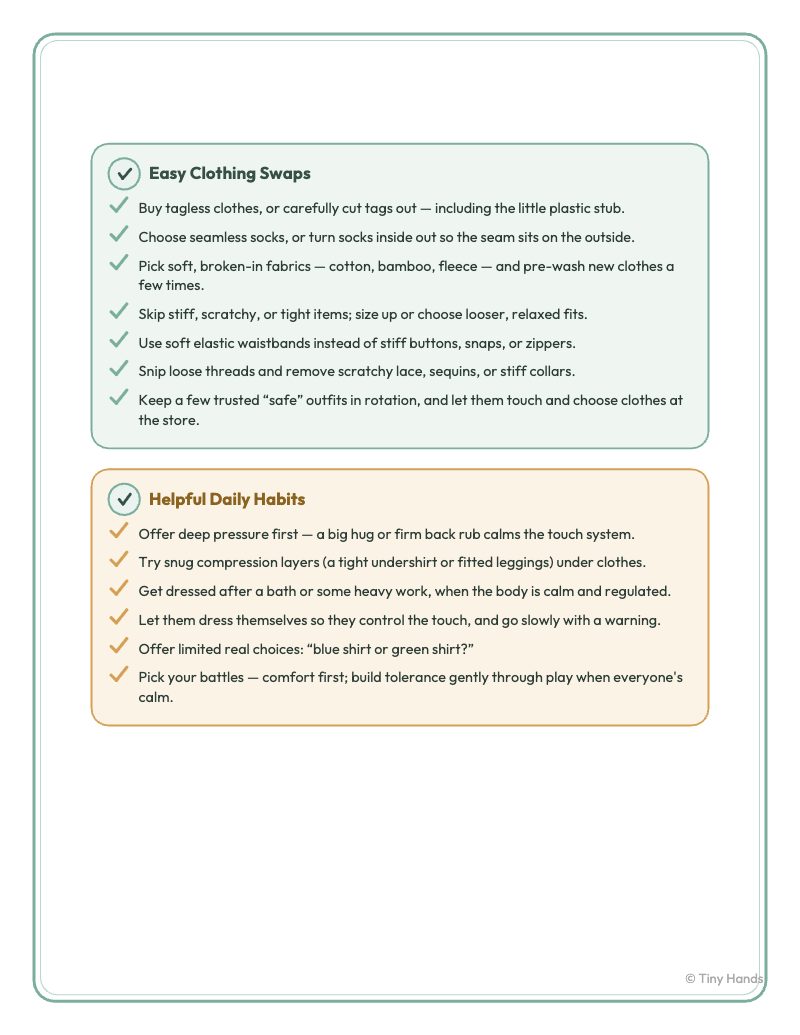
Want the Printable Version?
It's ready to print, right in the membership.
See Clothing SensitivitiesThis post is for learning and support — it isn't a diagnosis. © Tiny Hands