10 Baby Sensory Play Ideas for the First Year
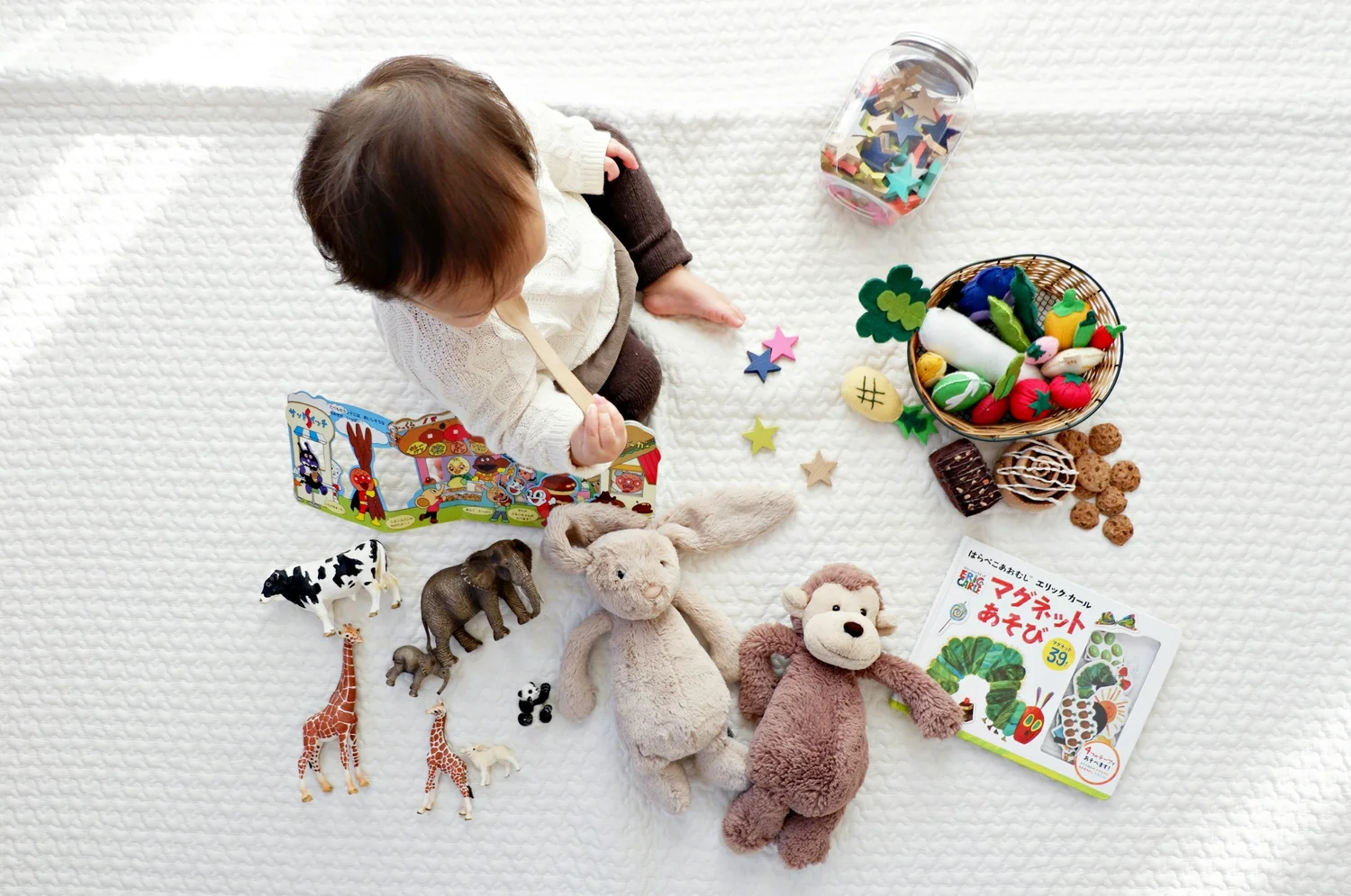
Here's the thing about babies: you don't need fancy toys to grow that little brain. In the first year, your kiddo is basically a tiny scientist, and their whole lab is texture, sound, and "what happens if I grab this?" Every crinkle, squish, and reach is wiring up the hands and senses they'll use for everything later.
So if you've been staring at the toy aisle wondering what's actually worth it — relax. Most of the best baby sensory play is free, already in your house, and takes two minutes to set up. Here are ten I come back to again and again, sorted loosely by age so you can find what fits your baby right now.
Heads up: this post has Amazon affiliate links — if you grab something through them, Tiny Hands earns a small commission at no extra cost to you. Thanks for keeping the free worksheets free!
The ideas
1. High-contrast peek cards (0–3 months)
Newborns see bold black, white, and red long before pastels. Prop a few high-contrast cards near them during tummy time or diaper changes. You'll catch that first long, focused stare — that's their visual system switching on.
Vision · focus2. Crinkle play (2–6 months)
A sheet of tissue paper or a crinkle book is baby magic. The sound rewards every grab, and scrunching it builds the open-close hand motion. Stay close — paper and mouths go together — but let those fingers work.
Grasp · cause + effect3. Mirror tummy time (2–6 months)
Set a baby-safe mirror in front of your kiddo during tummy time. "Who's that?!" gives them a reason to lift their head and hold it — the strong neck and shoulders behind sitting, crawling, and one day, handwriting.
Core strength · tummy time4. Treasure basket (5–9 months)
Fill a low basket with safe household objects — a wooden spoon, a silicone cup, a fabric scrap, a metal whisk. Let them dig, mouth, and compare. Different weights and textures in one spot is real exploration, zero batteries.
Tactile · exploration5. Sensory discovery bottles (4–12 months)
Fill a sealed clear bottle with water and glitter, dry rice, or floating pom-poms, and glue the lid tight. Babies shake, roll, and stare — a self-contained sensory world with nothing to clean up.
Visual tracking · shake6. Cold & texture tray (6–12 months)
Pop a few ice cubes or a chilled silicone teether on a tray and let them poke. Cold is a brand-new sensation, and chasing a slippery cube is sneaky finger work. Great for sore, teething gums too.
Tactile · temperature7. Texture path (6–12 months)
Tape squares of different fabrics to the floor — fuzzy, bumpy, smooth, satiny — and let your crawler travel across them. Hands and knees get a little texture surprise with every "lap."
Tactile · crawling8. Taped squish bag (6–12 months)
Squeeze hair gel and a few drops of food coloring into a freezer bag, press out the air, and tape it flat to the floor or high chair tray. They smoosh and swirl the color — all the squish, none of the mess.
Tactile · mess-free9. Taste-safe spaghetti (8–12 months)
Cook plain pasta, cool it, and pile it on the high chair tray. Grabbing slippery noodles is a workout for the pincer grasp, and since it's all edible, a taste-test is totally fine. Messy? Yes. Worth it? Also yes.
Pincer grasp · edible10. Splash & squeeze (9–12 months)
A shallow tray of water, a sponge, and a cup. Babies slap the surface, squeeze the sponge, and pour it out a hundred times. Squeezing builds hand strength, and the splash never stops being hilarious to them.
Hand strength · water playIf you'd rather grab one ready to go
Some days you just want it in a box — rattles, crinkle paper, a mirror, and a mix of textures all in one. It covers a lot of these first-year senses in a single grab-and-explore set.
OT tip: follow their cues, not the clock
Babies tell you when they've had enough — looking away, fussing, or going still are all "I'm done" signals. Sensory play should feel like fun, never a workout you're pushing through. A happy two minutes beats a forced ten every time.
One sense at a time
You don't need all ten this week — or even this month. Pick whatever matches the baby in front of you right now, follow their lead, and swap when they're ready for more. The big stuff — strong hands, steady eyes, a brain that loves to explore — is quietly stacking up while your kiddo just thinks they're playing.
Easy Play That Grows Little Hands
My beach-and-ocean craft pages are ready when they’re a little bigger — playful first cutting and pasting that grows busy little hands.
Grab It in the LibraryThis post is for learning and support — it isn't a diagnosis. © Tiny Hands